
The Belt and Road Initiative: A Key Pillar for a Global Community with a Shared Future
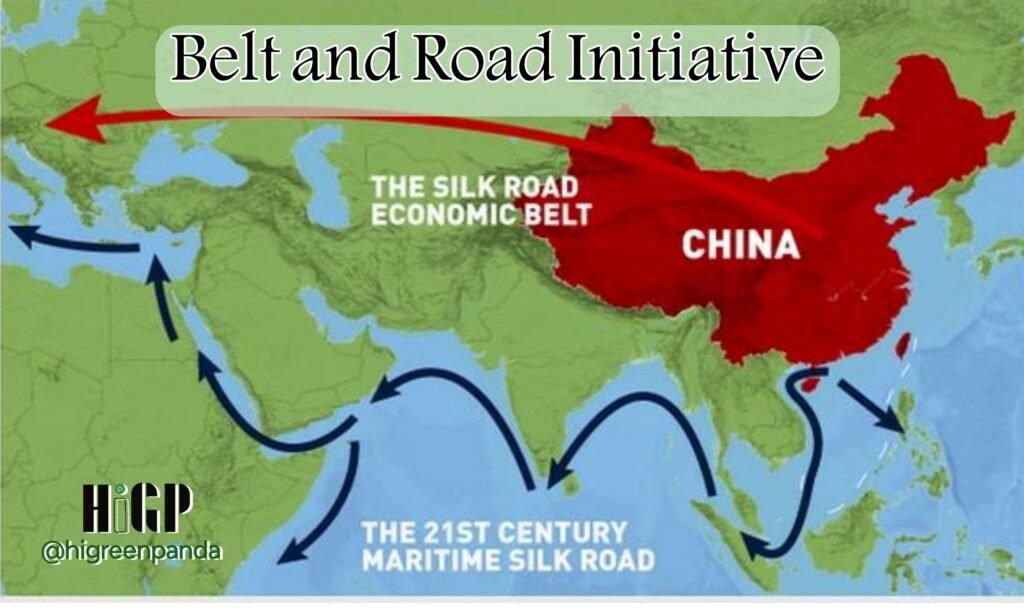
IntroductionMore than two millennia ago, our ancestors, driven by a sincere desire for friendship, traversed plains and deserts to establish the overland Silk Road, which connected Asia, Europe, and Africa, leading the world into an era of extensive cultural exchanges. Over 1000 years later, our ancestors sailed and navigated through waves to open the maritime Silk Road, connecting East and West, initiating a new phase of closer communication between peoples. The ancient Silk Roads, spanning thousands of miles and years, were not merely trade routes but also avenues for cultural exchange, significantly contributing to human progress. In March 2013, President Xi Jinping proposed the vision of a global community with a shared future; and in September and October of the same year, he put forward initiatives to join others in building the Silk Road Economic Belt and the 21st Century Maritime Silk Road (the Belt and Road Initiative, or BRI). The Belt and Road Initiative is a creative evolution that embraces and carries the spirit of the ancient Silk Roads – two of the greatest achievements in human history and civilization. It enriches the ancient spirit with the spirit of the times and the culture of the new era, providing a platform for building a global community with a shared future. Since its launch 10 years ago, and thanks to the joint efforts of all parties, cooperation under the Belt and Road Initiative has expanded beyond China’s borders to become an international endeavor. It has evolved from ideas to actions, from vision to reality, and from a general framework to tangible projects. It has been welcomed by the international community as a public good and a platform for cooperation, achieving concrete results. Over the past decade, cooperation under the Belt and Road Initiative has brought real gains to participating countries. It has contributed to the sound development of economic globalization, helped address global development challenges, and improved the global governance system. It has also opened a new path for all humanity to achieve modernization, ensuring that efforts to build a global community with a shared future yield real results. Belt and Road Initiative: A Chinese Proposal, but Belonging to the Whole WorldToday, the world is undergoing profound changes on a scale unseen in a century. Problems and challenges continue to threaten the progress of human civilization. In response to the changing global situation and the expectations of the international community, and considering the future and interests of all humanity, China proposed the Belt and Road Initiative. The BRI adheres to the spirit of the Silk Road, a great legacy of human civilization, connecting the past, present, and future. China launched this initiative, but it belongs to the world and benefits all humanity. For thousands of years, the ancient Silk Roads served as major arteries for interaction, extending across the valleys of the Nile, Tigris, Euphrates, Indus, Ganges, Yellow River, and Yangtze River. They connected the birthplaces of Egyptian, Babylonian, Indian, and Chinese civilizations, the lands of believers in Buddhism, Christianity, and Islam, and the homes of peoples of different nationalities and ethnicities. These routes increased the interconnectedness of countries in the Eurasian continent, facilitated exchanges and mutual learning between Eastern and Western civilizations, promoted regional development and prosperity, and shaped the Silk Road spirit characterized by peace, cooperation, openness, inclusiveness, mutual learning, and mutual benefit. The millennia-old Silk Roads symbolize communication and cooperation between East and West, demonstrating that by upholding solidarity and mutual trust, equality and mutual benefit, inclusiveness and mutual learning, and win-win cooperation, countries with different ethnic groups, beliefs, and cultural backgrounds can share peace and achieve development together. The Silk Road spirit aligns with the ideal of “all nations uniting in harmony and peace” that the Chinese nation has long upheld, with the Chinese people’s principles of friendliness and good neighborliness and “helping others succeed while striving for our own success,” and with the call of the era for peace, development, and win-win cooperation. It is essential to address these global problems such as slow economic growth, deficiencies in economic governance, and unbalanced economic development. It is no longer acceptable for a few countries to dominate global economic development, control economic rules, and enjoy the fruits of development. The Belt and Road Initiative targets development not only for China but for the entire world. Economic globalization remains an irreversible trend. It is inconceivable for countries to return to a state of isolation or seclusion. However, economic globalization must undergo adjustments in form and content. It must be more open, inclusive, balanced, and beneficial to all. China has not only benefited from economic globalization but has also contributed to it. As an active participant in economic globalization, China has achieved rapid economic growth through positive interactions with the rest of the world and has explored a unique path to modernization, expanding options for other developing countries to achieve modernization. China’s rapid economic growth and steady progress in reform and opening-up have provided strong impetus for global economic stability and growth, as well as an open world economy. China has been a strong advocate and defender of economic globalization. The Belt and Road Initiative aligns with the UN 2030 Agenda for Sustainable Development in concept, measures, and goals. The Belt and Road Initiative, a major step taken by China, aims to promote high-quality development through higher-standard openness and share China’s development opportunities with the rest of the world. The Belt and Road Initiative is also a Chinese solution to global development problems, aiming to drive modernization in participating countries in parallel, making economic globalization more dynamic, inclusive, and sustainable, and ensuring that more fruits are shared more equitably among people worldwide. However, the growing deficits in peace, development, security, and governance, coupled with intertwined traditional and non-traditional security issues such as regional conflicts, arms races, food security, terrorism, cyberattacks, climate change, energy crises, major infectious diseases, and artificial intelligence problems, pose a serious threat to the beautiful planet on which all humans live. In the face of