Impact of China’s Changing Workforce on Manufacturing Costs and Wages
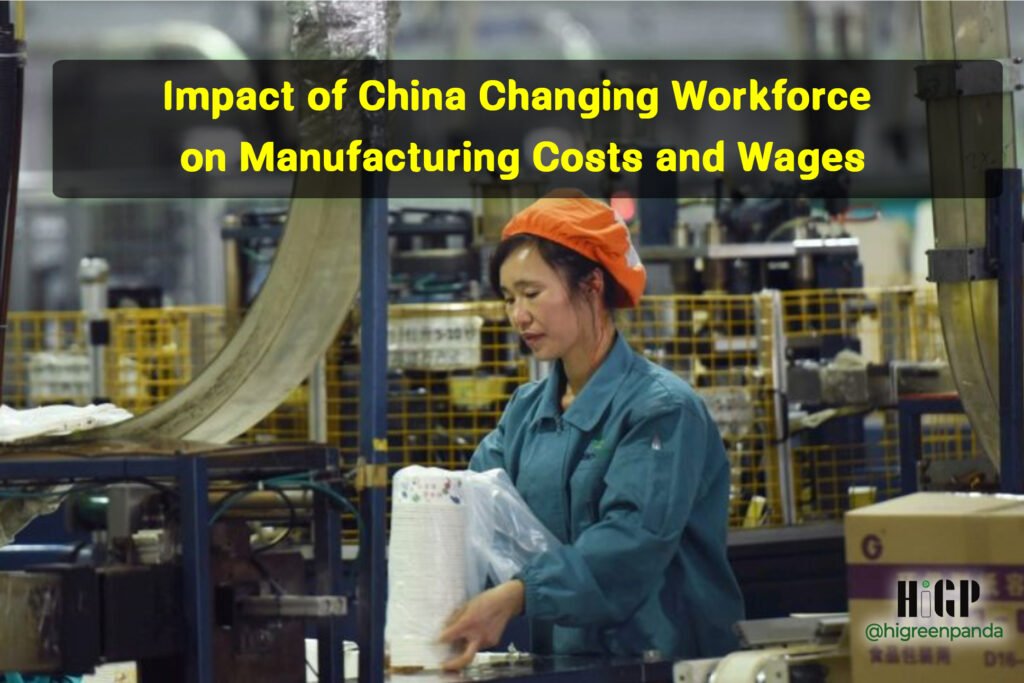
China’s labor market – the world’s largest – is undergoing a period of rapid change. As the population ages, working-age population shrinks, and new forms of employment spread, China seeks to upgrade its workforce skills to increase value and efficiency. Overview of China’s Workforce Basic Numbers: Demographic and Educational Shifts Age and Education:Aging: Education Level: Rising Labor Costs Wages and Income:Wage Growth: Minimum Wages: Income by Industry: Major Labor Market Trends UN Demographic Modeling: Impact of Changes on Manufacturing Effects on Foreign Companies Future Outlook Short-term (2025-2027): Medium-term (2028-2035): Long-term (2035-2050): Adaptation Strategies for Companies: China is experiencing a major transformation in its labor market that will affect the global economy. Companies that adapt to these changes and invest in technology and talent will be in a better position to succeed in the future.
World Economic Forum – 16th Annual Meeting of the New Champions 2025: Entrepreneurship for a New Era
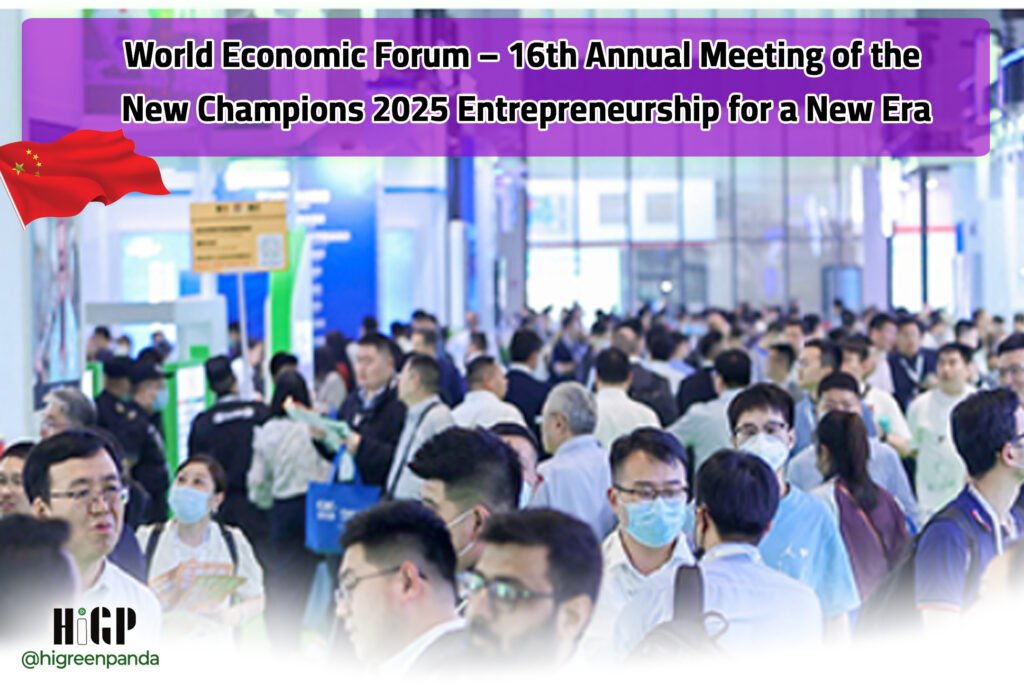
The World Economic Forum convened its 16th Annual Meeting of the New Champions (AMNC 2025) in Tianjin, People’s Republic of China, from 24–26 June under the theme “Entrepreneurship for a New Era.” The event brought together more than 1,700 participants from over 90 countries, including heads of state and government, business leaders, civil society representatives, international organizations, media, and academia.The discussions explored how entrepreneurship and innovation can help revitalize global growth amid fast-paced geo-economic shifts and technological disruption. The program emphasized practical strategies to scale transformative technologies, foster new business models, and strengthen international partnerships, with a particular focus on emerging markets, especially China and Asia.Børge Brende, President of the World Economic Forum, stated:“Despite the profound changes in the global economy, the interconnected challenges we face call for joint solutions. This meeting brought together a diverse set of leaders to explore innovative entrepreneurial approaches capable of shaping sustainable economies of the future.”Chen Shuai, Deputy Director-General of China’s National Development and Reform Commission, reaffirmed China’s commitment to supporting the Forum and hosting the “Summer Davos.” He highlighted the country’s achievements in pursuing high-quality development and greater openness to the world.Key ParticipantsThe meeting drew more than 144 high-level political leaders from around 30 countries and regions, including 40 ministers. Eleven global leaders from government and the private sector chaired key sessions, such as: Rania Al-Mashat – Minister of Planning, Economic Development, and International Cooperation, EgyptNoor Ali Alkhulaif – Minister of Sustainable Development, BahrainRichard Liu Qiangdong – Founder and Chairman, JD.com, ChinaLi Dongsheng – Chairman, TCL, ChinaDai Houliang – Chairman, CNPC, ChinaThey were joined by CEOs and senior executives from leading global corporations and institutions.Core Themes The program revolved around five main pillars:Decoding the Global Economy – Examining projected global growth (2.8% in 2025) and the role of innovation as a new growth driver.China’s Economic Outlook – Assessing the country’s technology-driven development model and leading sectors.Transforming Industries – Exploring how industries adapt to technological, geopolitical, and environmental shifts.Investing in People and Planet – Accelerating the UN Sustainable Development Goals through multi-stakeholder partnerships.Energy and New Materials – Addressing strategies to secure energy and essential materials for sustainable growth. Side Events and ReportsOver 40 sessions were livestreamed to the public, including the opening plenary and discussions on trade, geopolitics, and artificial intelligence. The Forum also launched several key reports during the meeting, such as:Energy Transition Index 2025 Top 10 Emerging TechnologiesFuture of Global FinTech ReportLi Wenhai, Vice Mayor of Tianjin, noted: “The Meeting of the New Champions has provided valuable insights and renewed momentum to support stable global economic growth. Tianjin welcomed global leaders on the shores of Bohai Bay to enrich dialogue and exchange forward-looking ideas.”
Trade Fairs in China: Your Gateway to Discover Products and Suppliers

China is a global hub for manufacturing and trade, hosting a vast number of specialized and comprehensive trade fairs annually. These exhibitions are not just places to display products; they are true gateways to discover the latest innovations, build strong networks, and negotiate directly with suppliers and manufacturers. For importers and businesspeople, visiting these fairs is an essential step to ensure the success of their businesses. Key Trade Fairs in ChinaTrade fairs in China vary to cover almost all industrial and commercial sectors. Among the most prominent of these fairs are: How to Prepare for Visiting ExhibitionsTo make the most of visiting trade fairs in China, good preparation is recommended: Making the Most of Your VisitWhile at the exhibition, follow these tips to maximize benefits:Building Relationships (Guanxi): Take the opportunity to build personal relationships with potential suppliers. Exchange business cards, and be friendly and respectful.Asking the Right Questions: Ask about production capacity, quality standards, factory certifications, and payment and delivery terms.Requesting Samples: If you are interested in a specific product, request samples to evaluate quality before committing to a large order.Documenting Information: Keep accurate records of the companies you visited, products you liked, and contact points.Follow-up After the Exhibition: Do not let communication stop after the exhibition ends. Follow up with interested suppliers, and send thank-you notes. HIGREENPANDA’s Role in Facilitating Exhibition VisitsHIGREENPANDA understands the importance of trade fairs for importers and therefore offers integrated services to facilitate these visits:Business Invitation Service: HIGREENPANDA helps clients obtain official business invitations to visit factories and attend trade fairs in China, which simplifies visa application procedures.Consultation Booking: Clients can book consultations with HIGREENPANDA experts before or during their exhibition visit to receive customized guidance and advice.Escort and Translation: Providing expert translators and escorts to help clients communicate and negotiate effectively within the exhibition.Supplier Search: The company can help clients identify potential suppliers before the visit and coordinate meetings with them. Through these services, HIGREENPANDA ensures that its clients’ trade fair visits are productive and efficient, saving them time and effort and helping them achieve their business goals.
Logistics and Shipping from China: A Comprehensive Guide
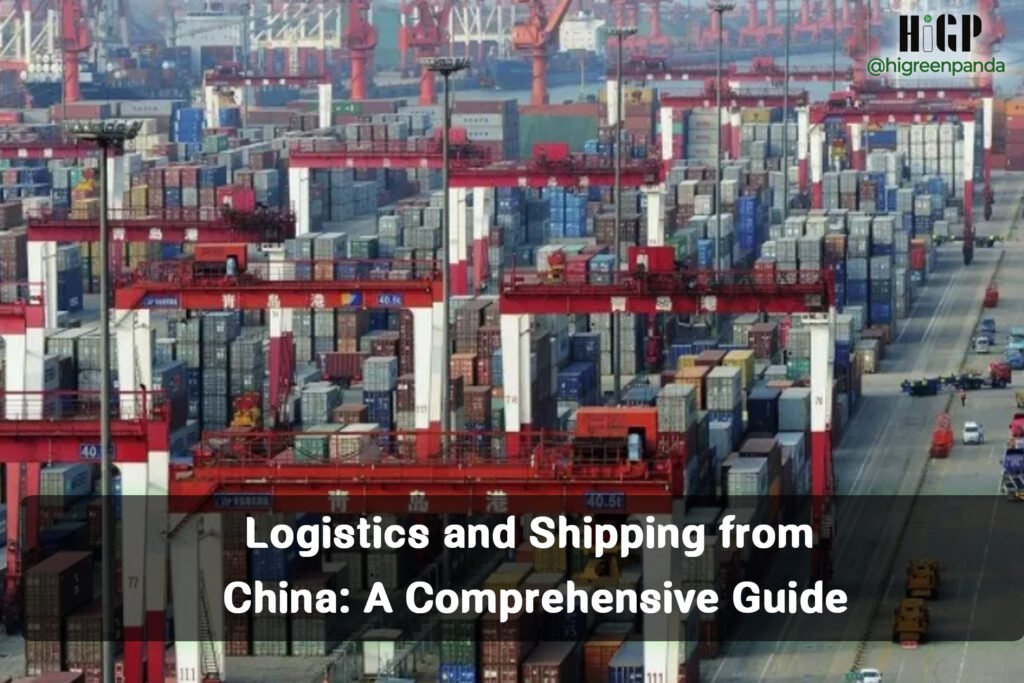
China is a global manufacturing and export hub, making an understanding of its logistics and shipping processes crucial for any company or individual wishing to import goods. The shipping process from China can seem complex due to the multitude of options, regulations, and potential challenges. However, good planning and expert assistance can ensure a smooth and cost-effective shipping operation. Main Shipping Methods from ChinaSeveral main shipping methods are available from China, and the best method depends on the type of goods, their size, weight, urgency, and available budget: Stages of the Shipping ProcessThe shipping process from China involves several key stages: Essential Shipping DocumentsTo ensure a smooth shipping process, the following documents must be prepared accurately:Commercial Invoice: Details of the goods, their value, and terms of sale.Packing List: Details of the contents of each package, its weight, and dimensions.Bill of Lading (B/L) or Air Waybill (AWB): The contract of carriage and receipt of goods.Certificate of Origin: Proves the country of origin of the goods.Other Certificates: Such as quality certificates, health certificates, or conformity certificates, depending on the type of goods and the requirements of the importing country [7]. HIGREENPANDA’s Role in Facilitating Logistics and ShippingHIGREENPANDA is a trusted partner in logistics and shipping from China, offering integrated solutions to simplify this complex process for its clients:Choosing the Best Shipping Methods: Advising on the most suitable shipping methods based on client needs (sea, air, rail, express).Negotiating Prices: Leveraging its extensive network with shipping companies to obtain the best competitive prices.Customs Clearance Services: Handling all export and import customs clearance procedures to ensure compliance and avoid delays.Shipment Insurance: Arranging necessary insurance to protect goods from any potential damage or loss during transit.Tracking and Monitoring: Providing advanced tracking systems that allow clients to monitor the status of their shipments in real-time.Warehousing Solutions: Offering warehousing services in China before shipment or in the destination country if needed.Packaging: Advising or assisting with appropriate packaging to ensure the safety of goods. Through its expertise and extensive network, HIGREENPANDA ensures that the shipping process from China is efficient, safe, and hassle-free, allowing clients to focus on their core business.
China and Central Bank Digital Currencies: Their Impact on Trade
Are we moving to digital currency? Those asking this question should reflect on the use of transaction methods like credit cards, online payments, and QR codes; all are quasi-digital – in other words, the transaction is converted and paid using technology and digital means. Regional Impact Fragmented Banking Systems and Multipolar Blocs:The proliferation of central bank digital currencies enhances alternative cross-border networks, such as mBridge, linking central banks in China, UAE, Saudi Arabia, and others to share liquidity and settlement in local digital currencies. This model presents a stark contrast to the interconnected US dollar system, instead promoting fragmentation into regionally specific blocs with their own digital rails. This fragmented architecture challenges dollar dominance, shifting economic gravity toward emerging power centers, particularly China and other BRICS nations. Central Bank Digital Currencies Reshape Regional Power Dynamics:By enabling countries to assert digital monetary sovereignty, central banks gain direct control over their local money stocks and financial flows, reducing their dependence on private payment networks and traditional US dollar dominance systems, such as SWIFT. This sovereignty extends to cross-border transaction systems like China’s digital yuan integrated with platforms like BIS mBridge, promoting faster and cheaper local currency settlements and weakening intermediaries tied to Western financial infrastructure. This shift also presents new geopolitical levers:Central bank digital currencies facilitate sanctions evasion and grant issuing countries enhanced strategic influence. China’s electronic yuan (e-CNY), for example, is promoted in Belt and Road countries as an alternative to dollar-based transactions, giving these countries a reliable exit route from the US financial sphere. Central Bank Digital Currencies Are Used as Digital Diplomatic Tools:Issuing countries gain economic independence and normative influence through interoperability standards and regional digital currency agreements, shaping trade corridors and future alliances. Impact on Cross-Border Settlements The clear impact on cross-border settlements is most evident in the financial realm – fees ranging from 0.1 to 0.3% versus 0.3 to 0.5% for SWIFT, plus the benefit of real-time and same-day settlement. Local currencies have already dominated bilateral trade (such as 90% of China-Russia settlements in non-US dollar currencies). Will BRICS fuel this trend? We haven’t seen it yet. Geopolitical Implications and Strategic Measures By enabling local currency-based trade and central bank digital currencies, BRICS can erode the central role of the US dollar in global payment systems and reduce dependence on Western dollars, making them resistant/protected from sanctions. Central bank digital currencies enable countries like China and Russia to bypass sanctions and financial scrutiny by redirecting transactions outside US-controlled infrastructure. China’s digital yuan is strategically integrated into trade with developing countries through the Belt and Road Initiative, expanding its financial influence while carving away from dollar dependency. This emerging “digital currency cold war” increases geopolitical tensions. Western powers have responded by strengthening dollar-backed stablecoins and digital dollar initiatives, aiming to maintain their existing financial dominance. Conclusion Central banks worldwide are increasingly focusing on regional cooperation and interoperability as key future directions for digital currencies. While the decision to issue a central bank digital currency remains a sovereign decision, there is growing recognition that cross-border functions and coordinated standards are crucial for the success and efficiency of digital payments. Initiatives like the mBridge project and Agor project highlight this trend, bringing together several central banks and commercial entities to explore wholesale central bank digital currencies to improve cross-border settlements. The goal is to overcome complexities like time zone differences, diverse legal frameworks, and varied technical systems, ultimately promoting a more interconnected and efficient global financial landscape.
Timeline Roadmap for China’s Transformation Toward Knowledge Economy (With Measurement Indicators)
0-3 Months: Establish Capabilities 3-6 Months: Accelerate University-Industry Linkage 6-12 Months: Advanced Manufacturing and Digital Economy 12-24 Months: Deepen Value Addition and Internationalization 24-36 Months: Open Innovation and Ecosystem Expansion Proposed Dashboard Corrective Actions When Stumbling Quarterly Follow-up Metrics
China and Digital Transformation of Traditional Industries
In today’s fast-paced digital age, China’s business environment is undergoing a radical transformation. Technological developments are disrupting traditional operational models, forcing companies across all industries to adapt or risk falling behind. Current Digital Landscape in China Rapid Adoption of Digital Technologies by Consumers:Chinese consumers have enthusiastically adopted digital technologies, fueling the need for companies to adapt and meet their evolving expectations. According to Statista statistics, China had more than 1.092 billion internet users as of December 2023. Disrupted Business Models and Industry Transformation:The rise of digital-native companies like Alibaba, Tencent, and Xiaomi has disrupted traditional industries with innovative business models and customer-centric approaches. Government Initiatives Driving Digital Transformation:The “Made in China 2025” initiative aims to develop sectors like artificial intelligence, 5G, aviation, semiconductors, electric vehicles, and biotechnology. Key Industries Leading Digital Transformation in China Key Drivers of Digital Transformation Emerging Technologies Artificial Intelligence and Machine Learning:AI and machine learning algorithms are revolutionizing industries by enabling smart automation, predictive analytics, and personalized experiences. Cloud Computing:Cloud technologies have made access to powerful computing resources available to everyone, enabling companies of all sizes to scale their operations. Internet of Things (IoT):The interconnection of devices and sensors through IoT has opened new avenues for data collection, real-time monitoring, and process optimization. Challenges and Considerations
Myths and Facts About Green Trade in China

Myth: Green products are always more expensive with no economic benefitFact: Lifecycle savings (energy/maintenance) offset purchase cost in many categories, and government incentives are increasing that reduce total cost of ownership. Myth: Environmental compliance certifications are formalitiesFact: Disclosures and third-party audits have become market entry factors, directly affecting corporate purchasing decisions and global supply chains. Myth: Sustainability means slowing productionFact: Energy efficiency and waste reduction increase productivity and reduce costs, supporting higher quality with fewer defects. Myth: Carbon footprint tracking is not practicalFact: Digital tracking chains and LCA make measurement and auditing feasible, with unified disclosure frameworks facilitating supplier comparison. Myth: Demand for green products is limitedFact: Rapid growth in electric vehicles, solar panels, and sustainable packaging materials, plus rising demand from global retailers. Myth: Greenwashing goes undetectedFact: ESG standards and disclosures and specialized media reduce space for unsupported claims, and contracts link payments to measurable environmental achievements.
China and Free Trade: New Agreements and Partnerships
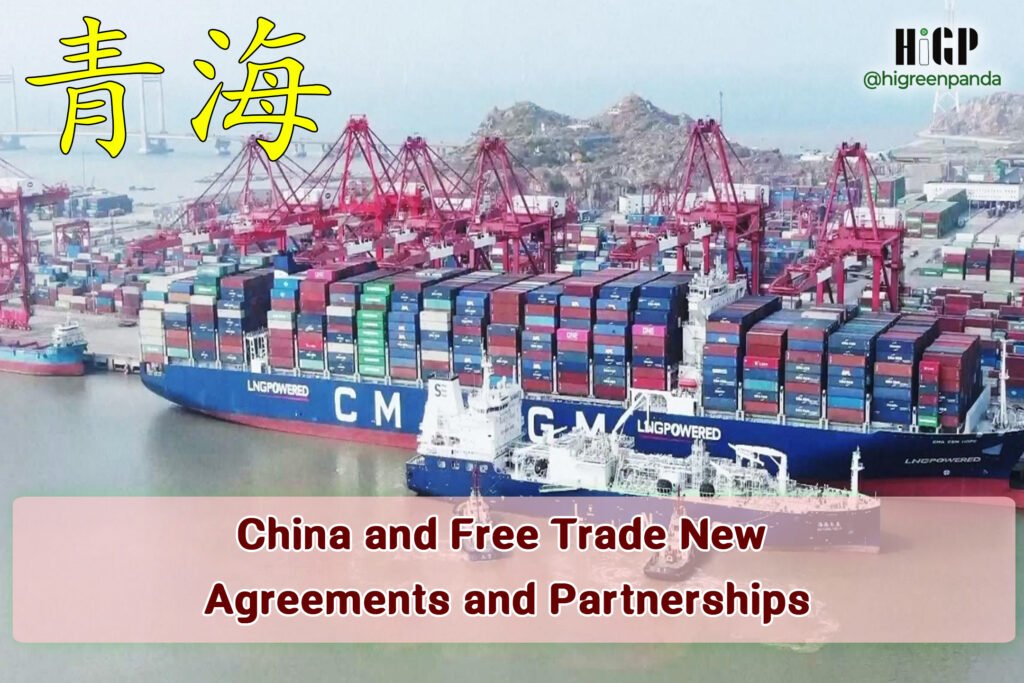
The Chinese government considers Free Trade Agreements (FTAs) as a new platform for further opening up to the outside world and accelerating domestic reforms, and an effective approach for integrating into the global economy and promoting economic cooperation with other economies. Current Status of China’s Free Trade Agreements Currently, China has 24 free trade agreements under construction, of which 16 agreements have been signed and implemented. Regional Comprehensive Economic Partnership (RCEP) The Regional Comprehensive Economic Partnership, signed by 15 countries in Asia-Pacific – China, Japan, South Korea, New Zealand, Australia, and the ten member states of the Association of Southeast Asian Nations (ASEAN) – is the world’s largest free trade agreement. Key Free Trade Partnerships: Economic Benefits: Challenges and Considerations: Despite the benefits, China’s free trade agreements face challenges: Future Outlook: China continues to expand its free trade agreement network, with particular focus on:
China as a Destination for High-Tech Investment