
“Made in China 2025”: How China is Leading the Future of Global Industry?
The “Made in China 2025” initiative is an ambitious strategic plan launched by the Chinese government in 2015, aiming to transform China from the “world’s factory,” which relies on low-cost mass production, into a leading global industrial power focused on innovation, quality, and advanced technology. This initiative seeks to enhance China’s industrial capabilities in ten key sectors, including new-generation information technology, robotics, new energy, agricultural equipment, new materials, biomedicine, and others. Key Objectives of the Initiative“Made in China 2025” aims to achieve self-sufficiency in strategic industries and increase the domestic content of core components to 40% by 2020 and 70% by 2025. It also seeks to improve the quality and innovation of Chinese products, rather than focusing solely on mass production of cheap goods. This transformation aims to make China a dominant player in high-tech manufacturing globally. Impact of the Initiative on Global IndustryThe “Made in China 2025” initiative has elicited mixed reactions globally. While some see it as essential for enhancing China’s competitiveness in the global economy, others view it as a threat to global trade and fair competition, especially from advanced industrial nations that may feel increased pressure from high-tech Chinese products. Nevertheless, the initiative is pushing China towards adopting global standards in quality and innovation, which benefits consumers and companies dealing with Chinese products. HIGREENPANDA’s Role in This TransformationAmidst this significant industrial transformation in China, companies like HiGreen Panda Marketing play a vital role in enabling traders and businesspeople to capitalize on new opportunities. Through its integrated international trade services, such as sourcing reliable products and suppliers, comprehensively managing the import process, and establishing companies and factories in China, HiGreen Panda helps its clients navigate this evolving industrial landscape. Understanding the “Made in China 2025” initiative and its impact on supply chains and quality standards enables HiGreen Panda to provide accurate consultations and effective solutions to its clients, ensuring they access the best Chinese products and technologies.
Innovation and Quality: How Have Chinese Product Standards Changed?
The phrase “Made in China” has long been associated in many minds with low-cost, and sometimes low-quality, products. However, this perception no longer reflects the current reality of the Chinese market. China has undergone a radical transformation in the innovation and quality standards of its products, driven by ambitious government strategies, increased investment in research and development, and growing quality awareness among companies and consumers. From Imitation to InnovationIn the past, Chinese companies focused heavily on imitating foreign products and producing them in large quantities at low cost. But with initiatives like “Made in China 2025,” the focus shifted towards independent innovation and technological development. Chinese companies began investing heavily in research and development, leading to the emergence of high-tech and innovative products in fields such as electronics, electric vehicles, and renewable energy. Improving Quality StandardsThe transformation was not limited to innovation but also extended to fundamental improvements in quality standards. Chinese companies realized that quality is key to competing in global markets and began adopting strict quality management systems and international standards. This trend led to increased consumer confidence in Chinese products, and many Chinese brands are now strongly competing with well-known global brands for their quality. Driving Factors for the TransformationSeveral factors contributed to this transformation:•Government Support: The Chinese government provided incentives and supportive policies for companies investing in innovation and quality improvement.•Increased Investment in Research and Development: R&D budgets significantly increased, enabling companies to develop new technologies and products.•Intense Competition: Local and global competition pushed companies to excel through innovation and quality.•Changing Consumer Demand: Chinese and global consumers are demanding higher quality products and advanced technologies. HiGreen Panda Marketing recognizes the importance of this transformation in innovation and quality standards in China. Through its extensive network and strong relationships with leading Chinese factories and companies, HiGreen Panda can help its clients access Chinese products that meet the highest standards of quality and innovation. Whether you are looking for high-tech products or seeking to manufacture your products to international quality standards, HiGreen Panda provides the necessary support to ensure you get the best that modern Chinese industry has to offer.
How to Benefit from Chinese Government Incentives for Foreign Small and Medium Enterprises?
Corporate Income Tax Incentives for Small and Low-Profit Enterprises All types of small and low-profit enterprises in China can benefit from a reduced corporate income tax rate of 20% with reduced tax base: Annual Taxable Income Tax Base Tax Rate Effective Rate Effective Period Portion less than 3 million yuan Income × 25% 20% 5% 2023.1.1 – 2027.12.31 Eligibility Criteria for Small and Low-Profit Enterprises: VAT Incentives for Small-Scale Taxpayers Monthly Sales Amount Quarterly Sales Amount VAT Incentives Additional Reductions Less than 100,000 yuan Less than 300,000 yuan VAT exemption (2023.1.1 – 2027.12.31) Education fee exemption High and New Technology Enterprises (HNTEs) The reduced tax rate for qualifying enterprises is 15%. Loss carryforward is also allowed for up to 10 years instead of 5 years for ordinary enterprises. Qualification Criteria: Technology-Based Small and Medium Enterprises (TSMEs) Enjoy the same 10-year loss carryforward benefits, plus super deductions for R&D expenses:
Understanding China’s Customs Clearance System for Import and Export
China’s customs clearance system is a complex process that requires a precise understanding of regulations and laws to ensure the smooth movement of goods across borders. Whether you are importing from or exporting to China, compliance with customs requirements is crucial to avoid delays, fines, or even confiscation of goods. This article aims to provide a comprehensive overview of this system. Fundamentals of Customs Clearance in ChinaThe General Administration of Customs of China (GACC) manages all customs activities in the country. Customs aims to:Collect customs duties and taxes.Monitor the movement of goods across borders.Combat smuggling.Protect national security, public health, and the environment.The customs clearance process depends on several factors, including the type of goods, their value, country of origin, and country of destination. Required Documents for Customs ClearanceTo successfully complete the customs clearance process, a set of essential documents must be submitted, which may vary slightly depending on the type of shipment:Commercial Invoice: Contains details of the goods, their value, and terms of sale.Packing List: Details the contents of each package, its weight, and dimensions.Bill of Lading (B/L) for sea freight or Air Waybill (AWB) for air freight: The transport document proving ownership of the goods.Certificate of Origin: Proves the country of origin of the goods, and may be necessary to benefit from free trade agreements.Sales Contract: Between the seller and the buyer.Import/Export License: For certain types of restricted goods.Other Certificates: Such as quality certificates, health certificates, conformity certificates (e.g., CCC for electrical appliances), or inspection certificates (e.g., CIQ) depending on the product type. Customs Clearance Process (General Steps)The customs clearance process typically includes the following steps: Common Challenges and How to Avoid ThemErrors in Documents: Any error or inaccuracy in documents can lead to significant delays or fines. All documents must be reviewed with extreme care.Incorrect HS Code: Using the wrong HS code can lead to incorrect customs duties or legal problems. The correct classification of the product must be ensured.Non-Compliance with Regulations: Some products require special certificates or licenses. Failure to obtain them in advance can lead to goods being detained .Valuation Issues: Customs may disagree with the declared value of the goods, leading to re-evaluation and additional fees.Communication: Communication with Chinese Customs can be challenging due to language barriers or cultural differences. HIGREENPANDA’s Role in Customs ClearanceHIGREENPANDA provides specialized services to help its clients navigate China’s complex customs clearance system, ensuring smooth and efficient import and export operations:Document Preparation: Assists in preparing and reviewing all required documents for customs clearance to ensure their accuracy and completeness.Customs Classification: Provides advice on the correct customs classification of products (HS Code) to avoid errors.Coordination with Customs: Acts as an intermediary between the client and Chinese Customs, tracking shipment status and resolving any issues that may arise.Compliance with Regulations: Advises on product-specific regulations and requirements, and assists in obtaining necessary licenses and certificates.Problem Solving: In case of any delays or customs issues, HIGREENPANDA works to find quick and effective solutions to minimize the impact on the supply chain.Consultations: Offers comprehensive consultations on all aspects of customs clearance, including customs duties, taxes, and trade agreements. Through its expertise and network of relationships, HIGREENPANDA enables its clients to fully comply with Chinese customs regulations, saving time and money and ensuring goods reach their final destination without obstacles.
Understanding International Commercial Terms (Incoterms) When Importing from China
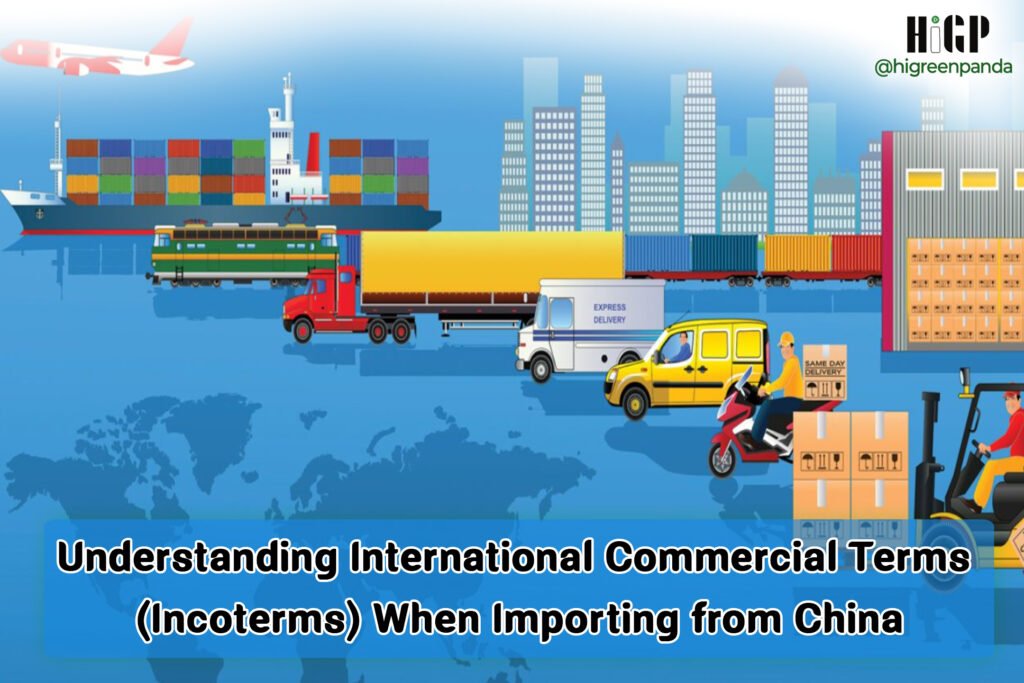
When importing from China, understanding International Commercial Terms (Incoterms) is crucial to ensure smooth commercial operations and avoid potential disputes. These terms define the responsibilities of the seller and buyer regarding shipping costs, insurance, risks, and customs clearance. Choosing the appropriate Incoterm can significantly impact the total cost and the degree of control over the supply chain. What are Incoterms?Incoterms (International Commercial Terms) are a set of internationally recognized rules issued by the International Chamber of Commerce (ICC). These rules are used to interpret the most common commercial terms in international sales contracts. Incoterms primarily define:Who pays for each part of the shipment: (e.g., transportation, insurance, customs duties).When the responsibility for risks transfers: from seller to buyer.Where goods are delivered: the point of delivery.Incoterms are regularly reviewed and updated, with the latest version being Incoterms 2020, although previous versions (such as Incoterms 2010) are still used in some contracts. Key Incoterms When Importing from ChinaThere are 11 Incoterms in the 2020 edition, but some are more common when importing from China: EXW (Ex Works)Responsibility: Minimum responsibility for the seller. The seller makes the goods available at their factory or warehouse.Risks and Costs: All risks and costs transfer to the buyer once the goods are made available at the seller’s premises. This means the buyer is responsible for loading the goods, inland transport in China, export customs clearance, international shipping, import customs clearance, and inland transport in the destination country.Advantages and Disadvantages: Provides the buyer with maximum control and the lowest purchase cost for the product itself, but requires significant expertise in managing shipping and logistics in China. FOB (Free On Board)Responsibility: The seller is responsible for delivering the goods on board the vessel nominated by the buyer at the agreed port of shipment.Risks and Costs: Risks and costs transfer from the seller to the buyer once the goods are loaded on board the vessel. The seller is responsible for export customs clearance and transport to the port and loading. The buyer is responsible for international shipping, insurance, import customs clearance, and inland transport in the destination country.Advantages and Disadvantages: FOB is a popular choice for sea freight, offering a good balance of responsibilities for both seller and buyer. It gives the buyer more control over choosing the international shipping company. CIF (Cost, Insurance and Freight)Responsibility: The seller is responsible for the cost of the goods, freight to the port of destination, and marine insurance.Risks and Costs: Risks transfer from the seller to the buyer once the goods are loaded on board the vessel at the port of shipment (same point as FOB). However, the seller pays the costs of freight and insurance to the port of destination. The buyer is responsible for unloading the goods, import customs clearance, and inland transport in the destination country.Advantages and Disadvantages: CIF is preferred for buyers who want the seller to arrange shipping and insurance. However, it should be noted that risks transfer early, and the insurance provided by the seller may not be sufficient. DDP (Delivered Duty Paid)Responsibility: Maximum responsibility for the seller. The seller delivers the goods to the buyer’s premises in the destination country, paying all costs and duties, including import duties and taxes.Risks and Costs: Risks and costs transfer to the buyer only when the goods are ready for unloading at the buyer’s premises.Advantages and Disadvantages: DDP is the most convenient option for the buyer, as they bear almost no responsibility until the goods arrive. However, the total cost may be higher, and the seller may not always have the best prices for shipping and customs clearance services in the destination country. Tips for Choosing the Right IncotermAssess your experience: If you are a new importer or lack experience in international logistics, DDP might be a good option to mitigate risks.Cost control: If you want full control over shipping and insurance costs, EXW or FOB might be better.Type of goods: Some goods require special care or additional insurance, which may affect the choice of Incoterm.Relationship with supplier: Reliable suppliers may be more flexible with Incoterms.Consult an expert: Consult a logistics expert or a shipping company to help you choose the most suitable Incoterm for your circumstances. HIGREENPANDA provides its clients with full support in understanding and applying International Commercial Terms (Incoterms) when importing from China:Consultations: The company offers specialized consultations to help clients choose the most suitable Incoterm for their needs, considering the type of goods, budget, and experience level.Clarification: HIGREENPANDA clarifies the responsibilities and costs associated with each Incoterm, ensuring a clear understanding for clients.Coordination: Assists in coordinating with suppliers and shipping companies to ensure the agreed Incoterm is correctly applied.Dispute Resolution: In case of any disputes related to Incoterms, HIGREENPANDA provides support to help resolve them. Through its expertise in international trade, HIGREENPANDA ensures that its clients are equipped with the necessary knowledge to make informed decisions regarding Incoterms, contributing to smooth and cost-effective import operations.
Understanding Chinese Business Culture: Key to Success in International Trade
In the intricate world of international trade, success is not limited to understanding market mechanisms and legal regulations; it extends to a deep appreciation of local cultures. When dealing with China, a nation with a rich history and ancient traditions, understanding Chinese business culture becomes paramount for achieving sustainable success. Building strong relationships based on trust and respect is the cornerstone of any successful business partnership in China. Importance of Building Relationships (Guanxi)The concept of “Guanxi” is one of the most crucial aspects of Chinese business culture. Guanxi refers to a network of personal and social relationships that can provide mutual support and opportunities. It goes beyond mere friendship or professional acquaintance; it is about mutual trust and long-term commitment. In China, business decisions are often built on Guanxi as much as on economic merit. Therefore, foreign investors and companies must dedicate time and effort to build Guanxi with potential partners, government officials, and even competitors. This can be achieved through social interactions, appropriate gift-giving, and participation in joint activities. Etiquette of Negotiation in ChinaNegotiation in China differs from negotiation in Western cultures. Patience is a fundamental virtue, as negotiations often take a long time. Direct pressure or confrontation should be avoided; instead, the focus should be on building consensus and solutions that satisfy all parties. It is also important to understand the hierarchy within Chinese companies. Senior officials often make the final decisions, even if they do not actively participate in all stages of negotiations. Respect should be shown to high-ranking officials, and embarrassing anyone in public should be avoided. Effective CommunicationCommunication in China is often indirect and context-dependent. Attention should be paid to body language, tone, and what is not explicitly said. Chinese people tend to avoid direct refusal and may use phrases like “it might be difficult” or “we will consider it” to indicate rejection. Using a professional translator is essential to ensure accurate communication, but more importantly, it is about building a personal relationship with partners. Learning some basic phrases in Chinese can go a long way in showing respect and interest in the local culture. Avoiding Common MistakesTo avoid misunderstandings and potential problems, foreign companies should be aware of some common mistakes:Underestimating the importance of Guanxi: Not dedicating time to building relationships can hinder business progress.Rushing into decisions: Patience is essential at all stages of business dealings.Ignoring cultural differences: Assuming that Western business practices will succeed in China can lead to failure.Not understanding hierarchy: Disrespecting authority or embarrassing partners can harm relationships.Unclear communication: Not paying attention to non-verbal cues or relying entirely on literal translation. HIGREENPANDA’s Role as a Cultural and Business BridgeHIGREENPANDA recognizes the importance of cultural understanding in achieving business success in China. Therefore, its services are not limited to logistical and commercial aspects but extend to providing cultural and advisory support to its clients:Cultural Guidance: Providing guidance on Chinese business etiquette, social protocols, and how to build strong relationships.Effective Mediation: Acting as an intermediary between foreign companies and Chinese partners, ensuring effective communication and avoiding cultural misunderstandings.Strong Network of Relationships: Leveraging the company’s extensive Guanxi network to facilitate negotiations and open doors to new opportunities.Customized Solutions: Offering tailored consultations to help clients adapt to the unique Chinese business environment. Through these services, HIGREENPANDA helps Arab investors navigate the complex cultural landscape in China, enabling them to build strong and sustainable partnerships and achieve their business goals.
Understanding Chinese Business Culture – Building Long-term Relationships
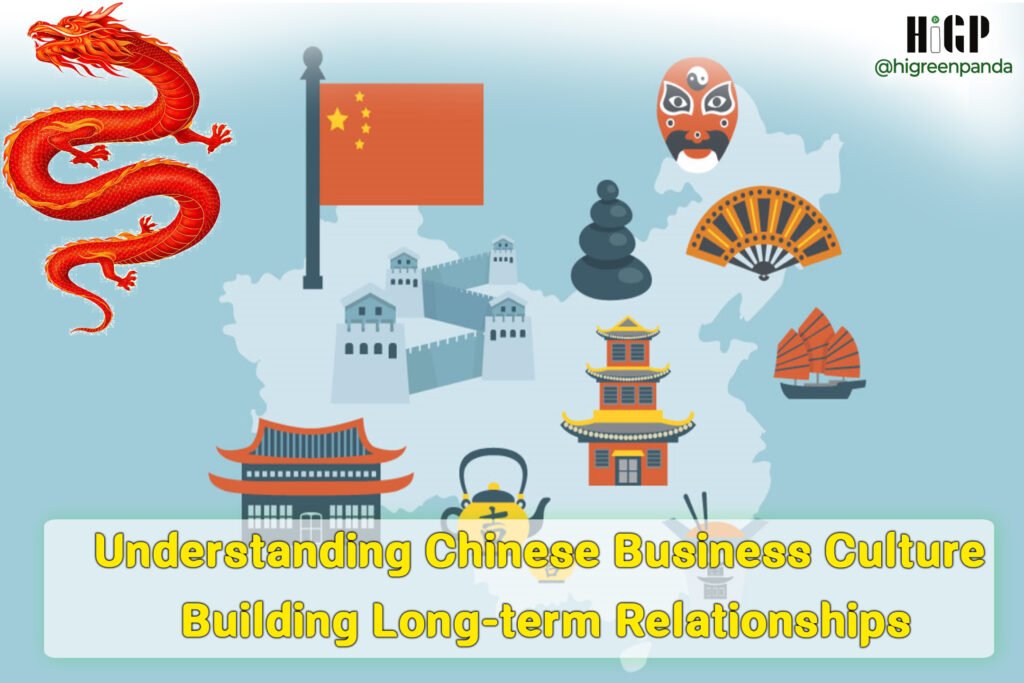
China’s growth and integration into the global economy is driving changes in Chinese business practices. But non-Chinese executives still need to work hard at building trust in relationships with their Chinese business partners. Guanxi (Personal Relationships) Myths:Mainstream thinking about guanxi falls into two traps. First, it doesn’t recognize that China’s business environment is changing. Second, it focuses on the external rituals of guanxi rather than its true essence. Fundamental Differences in Building Trust: Effective Relationship Building Strategies: Evolution in Chinese Business Culture:China’s business environment is becoming more Western, but personal relationships remain a fundamental element. Successful companies are those that combine professional competence with investment in long-term relationships.
Decoding Chinese Digital Platforms (Like 1688.com) to Find Suppliers
1688.com is considered China’s largest online wholesale platform and the largest e-commerce company for local buyers. What is 1688.com? Founded in 1999, it was originally called “Alibaba China Market.” It remains China’s largest online wholesale platform for local buyers, with: Advantages of 1688.com for International Buyers Better prices than other platformsThe sellers you encounter are actual factories and manufacturers of products. Products on 1688.com are 20-30% cheaper than Alibaba and AliExpress. Better suppliers – the best are there1688.com has almost every supplier available in China because they deal almost exclusively with Chinese buyers. Lower minimum order quantity – perfect for small and medium businessesFew restrictions on minimum order quantity compared to other platforms. How to Find the Best Supplier Look for the blue checkmarkVerified suppliers who have been on 1688.com for some time will get a blue checkmark. Understanding important symbols: Challenges for International Buyers Recommended Solutions Use a professional sourcing agent who is:
Promising Trade Opportunities in the Chinese Market: A Guide for Arab Investors
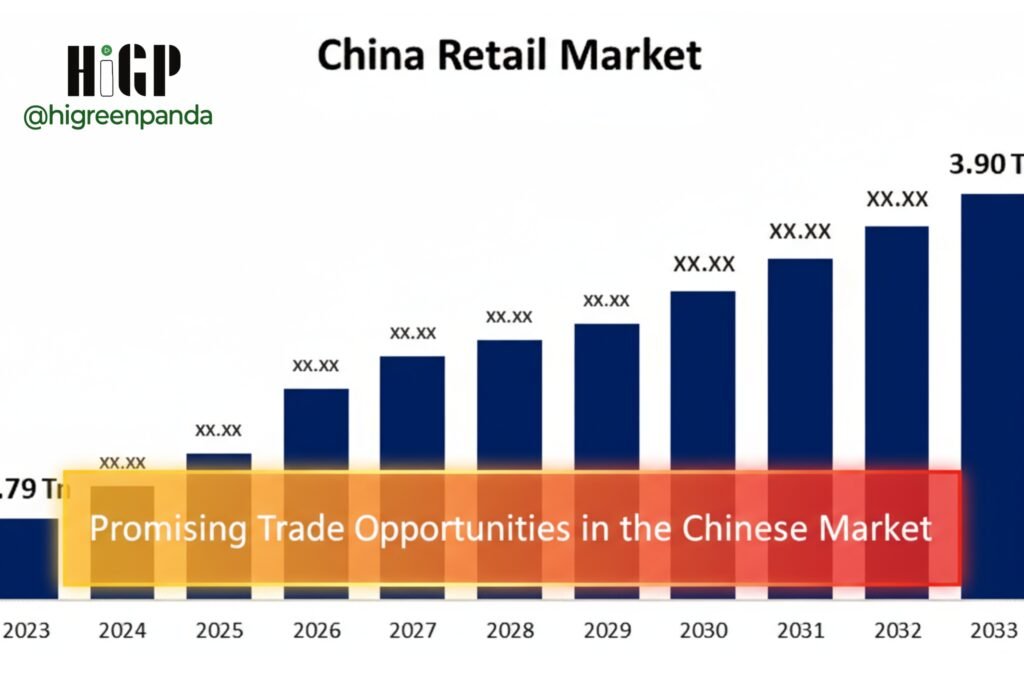
China today is one of the world’s largest economic powers, and its vast and growing market offers unparalleled trade opportunities for investors from all over the world, including Arab investors. As China continues to enhance its economic openness and develop initiatives such as the “Belt and Road,” doors have opened wide for companies seeking to expand and benefit from this tremendous growth. Overview of the Chinese EconomyThe Chinese economy is characterized by being the second-largest economy in the world by nominal GDP, and the largest by purchasing power parity. China has achieved astonishing economic growth over the past few decades, driven by investment, exports, and increasing domestic demand. Despite global challenges, the Chinese economy has shown resilience and adaptability, with the government continuing to implement structural reforms to promote sustainable development [2]. China is a global manufacturing hub, producing a wide range of consumer and industrial goods. However, its economy is increasingly shifting towards services and technological innovation, opening new horizons for investment in sectors such as high-tech, e-commerce, and financial services. Promising Sectors for Investment in ChinaSeveral sectors stand out as promising investment opportunities in the Chinese market: The Role of the “Belt and Road” InitiativeThe “Belt and Road Initiative” (BRI) launched by China is an ambitious project aimed at connecting Asia, Europe, and Africa through a vast network of land and maritime infrastructure. This initiative is not limited to infrastructure but also includes promoting trade, investment, and cultural exchange among participating countries. For Arab investors, the Belt and Road Initiative offers unique opportunities to strengthen trade ties with China. By improving logistics infrastructure and facilitating the movement of goods and capital, the initiative opens new markets and reduces trade costs, benefiting companies seeking to expand in the region. How HIGREENPANDA Helps Arab InvestorsHIGREENPANDA recognizes the immense opportunities and potential challenges faced by Arab investors when entering the Chinese market. Therefore, the company offers a comprehensive range of services designed to facilitate this process and ensure its success:Specialized Consultations: Providing deep insights into the Chinese market, identifying promising sectors, and offering strategic advice.Supplier and Product Sourcing: Assisting investors in finding reliable suppliers and high-quality products that meet their needs.Company Establishment: Full support in legal and administrative procedures for establishing companies in China and Hong Kong.Shipping and Customs Clearance Services: Ensuring a smooth shipping and customs clearance process to reduce costs and avoid delays.Intellectual Property Protection: Assisting in trademark and patent registration to protect investors’ rights. Through its extensive experience and strong network in China, HIGREENPANDA acts as a trusted partner for Arab investors, enabling them to maximize trade opportunities in this dynamic market.
Import Methods from China: Your Comprehensive Guide
China is considered one of the largest global markets for sourcing goods, making the process of importing from China a topic of great importance for businessmen and importers. If you are considering entering the world of importing, it is essential to understand how to deal with this vast market and leverage the available opportunities. In this article, we will review the most prominent import methods, focusing on the difference between direct importing and using an intermediary. Direct Importing:Definition: Means purchasing products directly from suppliers in China without the need for an intermediary.Advantages:Cost Savings: You can reduce costs related to commissions and fees charged by intermediaries.Disadvantages:Risks: You may face greater risks, such as fraud or receiving products that do not meet specifications.Time and Effort: You need to invest more time and effort in research and negotiation. Importing via an Intermediary:Definition: Involves using an intermediary (import and export companies) to facilitate the import process.Advantages:Time Saving: The intermediary helps you deal with complex procedures, saving you time and effort.Risk Reduction: The intermediary can provide you with certain guarantees and help avoid fraud.Disadvantages:Additional Costs: You will need to pay fees to the intermediary, but it is a better option. Ultimately, the choice of the appropriate import method depends on your specific needs and circumstances. Whether you choose direct importing or through an intermediary, it is important to be aware of all procedures and risks associated with importing from China. Through good research and proper planning, you can achieve success in this exciting field.