Shipping and logistics
Air and Land Shipping from China: Cost and Time Comparison
What air, sea, rail and truck shipping from China cost per kilogram and per tonne, how long each takes, what pushes prices up in peak season, and how to choose the right mode for your goods.
作者:萨米·哈吉里阅读约需 10 分钟
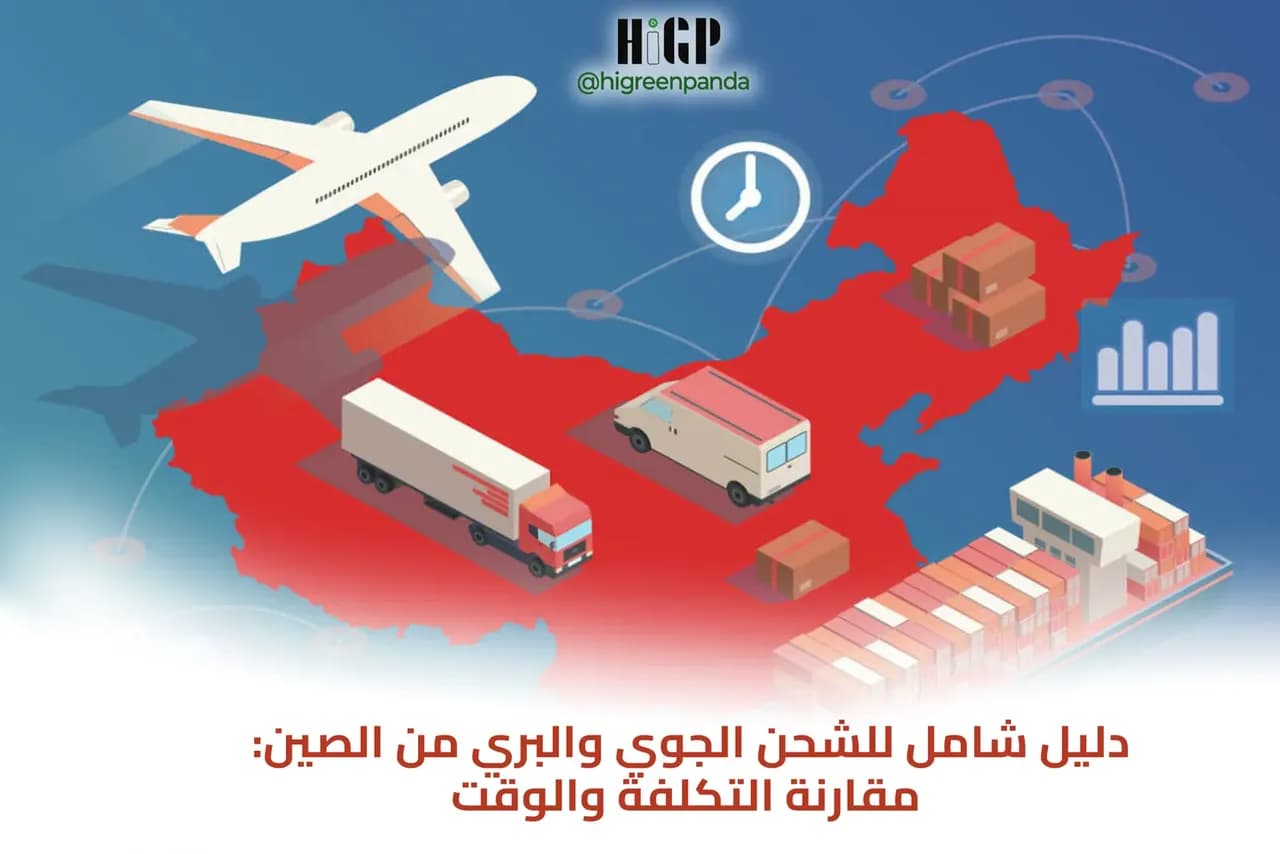
Your supplier quotes an ex-works price, and you still do not know what the goods will cost once they reach your warehouse. Freight can add 5% to more than 30% to the landed cost, and the mode you choose also decides whether your stock arrives in a week or two months. This guide compares air and land shipping from China with sea freight on cost and time, shows what moves the price, and gives you a method for choosing the right mode for each shipment.
What decides the price of shipping from China
Shipping prices from China are not fixed. Four things set them: the transport mode, the destination, the type of goods, and the customs rules at both ends. A forwarder's quote is only valid for a short window, often 7 to 14 days, because carrier rates move with demand and fuel.
Transport mode
- Air: the fastest and most expensive option, suited to high-value, lightweight goods. Expect roughly USD 3 to 8 per kilogram.
- Sea: the lowest cost for heavy and bulky goods, with a longer transit. Expect roughly USD 500 to 3,000 per container, depending on route, container size and season.
- Land (rail and truck): moderate on both cost and time, and a good option for Europe, Central Asia and China's direct neighbours.
Volume and weight
Forwarders price by size bands. Small shipments under 50 kg usually go by express or air. Medium shipments of 50 to 500 kg suit air freight or LCL sea (shared container). Heavy shipments above 500 kg normally justify sea or rail, and once you approach 15 cubic metres a full container (FCL) often costs less than LCL. For air, you pay on the higher of actual weight and volumetric weight (length x width x height in centimetres divided by 6000), so light, bulky goods such as pillows or plastic storage boxes cost far more than their weight suggests.
Season and demand
Timing can move your freight bill by 20% to 50%. The busy periods are October to December, when the world restocks for holiday shopping, and February to April, when factories reopen after Chinese New Year and a backlog of orders ships at once. Quieter periods with more stable prices are January (factories wind down for Chinese New Year, so book before they close) and June to August. For Gulf importers, Ramadan and Eid stock adds its own pressure: goods for Ramadan need to leave China 8 to 10 weeks before it starts if they travel by sea.
Air, sea, rail and truck compared
The figures below are indicative ranges per tonne. They move with fuel prices, carrier capacity and season, so use them to shortlist a mode and then ask two or three forwarders for current quotes.
- Air: USD 3,000 to 8,000 per tonne, 3 to 7 days. Best for high-value products and emergencies.
- Sea: USD 500 to 1,500 per tonne, 15 to 45 days depending on destination. Best for bulky goods and regular trade.
- Rail: USD 1,200 to 2,500 per tonne, 12 to 20 days. Best for Europe and Central Asia.
- Truck: USD 800 to 2,000 per tonne, 5 to 15 days. Best for neighbouring countries and flexible routing.
Air freight
Air freight delivers in 3 to 7 days, with multiple daily flights from Guangzhou, Shenzhen, Shanghai and Hong Kong, accurate real-time tracking and less exposure to damage or loss. The drawbacks are cost (5 to 10 times sea freight per kilogram), limits on heavy or oversized cargo, restrictions on hazardous materials such as lithium batteries, and higher carbon emissions. Use it for electronics, jewellery, samples and prototypes, perishable products, and urgent or seasonal goods that lose value if they arrive late.
Sea freight
Sea freight is the lowest-cost mode for large volumes, with the capacity to move full 20ft and 40ft containers on regular, reliable schedules and lower emissions per tonne. Transit takes 15 to 45 days depending on destination; China to Jebel Ali is typically 15 to 25 days at sea. Schedules are fixed, weather can cause delays, and each extra handling point adds risk of damage. Use it for bulky, heavy, non-urgent goods of low to medium value and for recurring orders. The full sea process is covered in our guide to logistics and shipping from China.
Rail freight
The New Silk Road rail links run from China to Europe in 12 to 18 days and from China to Central Asia in 7 to 14 days, at a cost between air and sea. Rail suits importers who also sell into Europe, Turkey or Central Asia, and it is growing as part of the corridors described in our article on the Belt and Road Initiative and global supply chains. There is no regular direct rail service from China to the Gulf; some forwarders sell rail or rail-and-truck routes through Central Asia and Iran, so ask about transit time, border handovers, insurance cover and any sanctions exposure before you book.
Truck freight
Road freight serves China's neighbours, such as Vietnam, Kazakhstan and South Korea (via ferry links), with high flexibility on routes and schedules. It suits medium-sized consignments and offers door-to-door delivery with continuous tracking. For a Gulf importer, trucking matters mainly on the Chinese side: moving goods from an inland factory to the port or airport, a leg that can take 1 to 3 days and should appear on your quote.
How to choose the right mode for a shipment
- Work out the value per kilogram of your goods. Above roughly USD 30 per kg, air freight often adds only a small percentage to unit cost; below USD 5 per kg, sea is almost always the answer.
- Measure the shipment in cubic metres and compare actual weight with volumetric weight, so you know which one you will be charged on.
- Count back from the date you need the goods on the shelf, and add 7 to 10 days for loading, customs clearance and local delivery on top of the transit time.
- Check restrictions: batteries, liquids, powders, magnets and branded goods may be refused by air or need special documents.
- Ask two or three forwarders for door-to-door quotes on the same Incoterm, and compare the total rather than the headline freight rate.
- For a large order, consider splitting it: a small first batch by air to test the market, and the bulk by sea.
Ways to cut your freight cost
Plan the timing
Plan shipments 3 to 6 months ahead, avoid the October to December peak where you can, and use the quieter months to build stock. Booking early also protects you when carriers cancel sailings during busy periods.
Consolidate cargo
If you buy from several suppliers, have them deliver to one consolidation warehouse in Guangzhou, Shenzhen or Yiwu and ship together. LCL consolidation, sharing a container with other shippers, can save 30% to 50% compared with sending each order separately, and it suits small to medium quantities.
Use a capable forwarder
A good forwarder brings customs experience, a wide network of carriers, the ability to negotiate rates, and extras such as insurance and tracking. Our article on how to choose a reliable shipping agent in China lists the questions to ask before you hand over your cargo.
Improve the packaging
Reduce volumetric weight with light but strong materials, redesign cartons to remove empty space, and combine several products in one package. Taking 10% off carton volume takes roughly 10% off an air or LCL bill.
Customs documents and clearance
Most delays at destination come from paperwork rather than transport. Have these ready before the goods leave China:
- Commercial invoice with a full description of the goods and their values
- Packing list showing the contents, weight and dimensions of each package
- Bill of lading for sea, air waybill for air, or the rail or road consignment note
- Certificate of origin proving where the goods were made
- Special permits or conformity certificates for restricted products such as food, cosmetics or electronics
- HS code for every product line, agreed with your customs broker in advance
- Declared value and quantity that match the invoice exactly
Classify goods correctly under the HS system, declare accurate values and quantities, and use a professional customs agent at destination. In the GCC, most goods pay a 5% customs duty on CIF value, and some product groups need conformity certificates; check the current rules for your product with your broker or national customs authority before shipping.
Risks, insurance and tracking
The main risks are loss or damage during transport and handling, delay from weather or customs issues, theft of high-value goods, and environmental damage from water, heat or humidity. Container temperatures on the route to the Gulf in summer can pass 50 degrees Celsius, which matters for cosmetics, food and electronics.
Cargo insurance comes in three broad forms: all-risks cover, limited cover for named risks only, and increased-value cover for high-value goods. Premiums are usually a small fraction of the cargo value, typically well under 1%, so ask for a quote on every shipment rather than relying on the carrier's liability, which is capped at low amounts per kilogram.
Tracking technology now reduces some of these risks. IoT sensors monitor temperature, humidity and location and send alerts when something goes wrong. Blockchain platforms keep tamper-proof records that document product authenticity and can simplify customs. AI tools predict delays and optimise routes, timing and inventory. Ask your forwarder which of these they actually offer on your route.
Common mistakes when shipping from China
- Comparing freight rates alone and ignoring origin charges, destination handling, duty and local delivery.
- Shipping by air without checking volumetric weight, then paying for space rather than kilograms.
- Booking in October or right after Chinese New Year without extra lead time.
- Paying the supplier's balance before the goods are inspected; once cargo leaves the factory, fixing defects is far harder. See why quality inspection before shipment matters.
- Declaring a low value to cut duty, which risks fines, seizure and a void insurance claim.
- Relying on a single supplier or a single route, with no safety stock for critical products.
How to start safely
Start small. Try a small shipment first, learn from it, and build relationships with reliable suppliers before you commit to full containers. Choose partners with a good record: a reputable forwarder, a professional customs agent and a reliable insurer. Plan for problems by keeping an alternative route, more than one supplier and safety stock for your best sellers.
Watch three trends as you grow: greener shipping options and incentives to reduce emissions, full digitalisation of documents and procedures, and multimodal routes such as sea-air through Dubai or rail-truck through Central Asia that combine modes to balance cost and time.
What to do next
This week, take your next order and write down its weight, volume, value per kilogram and required arrival date. Use the comparison above to pick one or two modes, then ask three forwarders for door-to-door quotes on the same terms, including insurance. Book a pre-shipment inspection before you pay the balance. If you would rather have one team book the freight, inspect the goods and handle the paperwork, HiGreenPanda arranges shipping and freight from China from our offices in Shenzhen and Shanghai.
本文解答的问题
How much does air freight from China cost per kg?
Air freight from China typically costs about USD 3 to 8 per kilogram, or USD 3,000 to 8,000 per tonne. The rate depends on the route, season and whether you are charged on actual or volumetric weight. Peak months from October to December can push rates up by 20% to 50%.
How long does shipping from China take by air, sea and rail?
Air freight takes 3 to 7 days, sea freight 15 to 45 days depending on destination, and rail 12 to 18 days to Europe or 7 to 14 days to Central Asia. Trucking to neighbouring countries takes 5 to 15 days. Add 7 to 10 days for loading, customs clearance and final delivery.
Does land shipping from China cost less than air?
Yes. Rail costs roughly USD 1,200 to 2,500 per tonne and trucking USD 800 to 2,000 per tonne, against USD 3,000 to 8,000 for air. Land routes are slower than air but faster than sea, and they mainly serve Europe, Central Asia and China's neighbours.
When are shipping rates from China lowest?
Rates are usually more stable in June to August and around January, although factories close for Chinese New Year so you must book before the holiday. The most expensive periods are October to December and February to April, when rates can rise by 20% to 50%.
What documents do I need to import goods from China?
You need a commercial invoice, a packing list, a bill of lading or air waybill, and a certificate of origin. Restricted products such as food, cosmetics and electronics may also need special permits or conformity certificates. Correct HS codes and accurate declared values prevent most customs delays.
HiGreen Panda Marketing