Importing from China
How to Inspect a Factory in China Before You Pay the Balance
How to tell a real factory from a trading company, and what to inspect on the finished goods before the final payment leaves your account, with a worked sampling example.
作者:萨米·哈吉里阅读约需 10 分钟
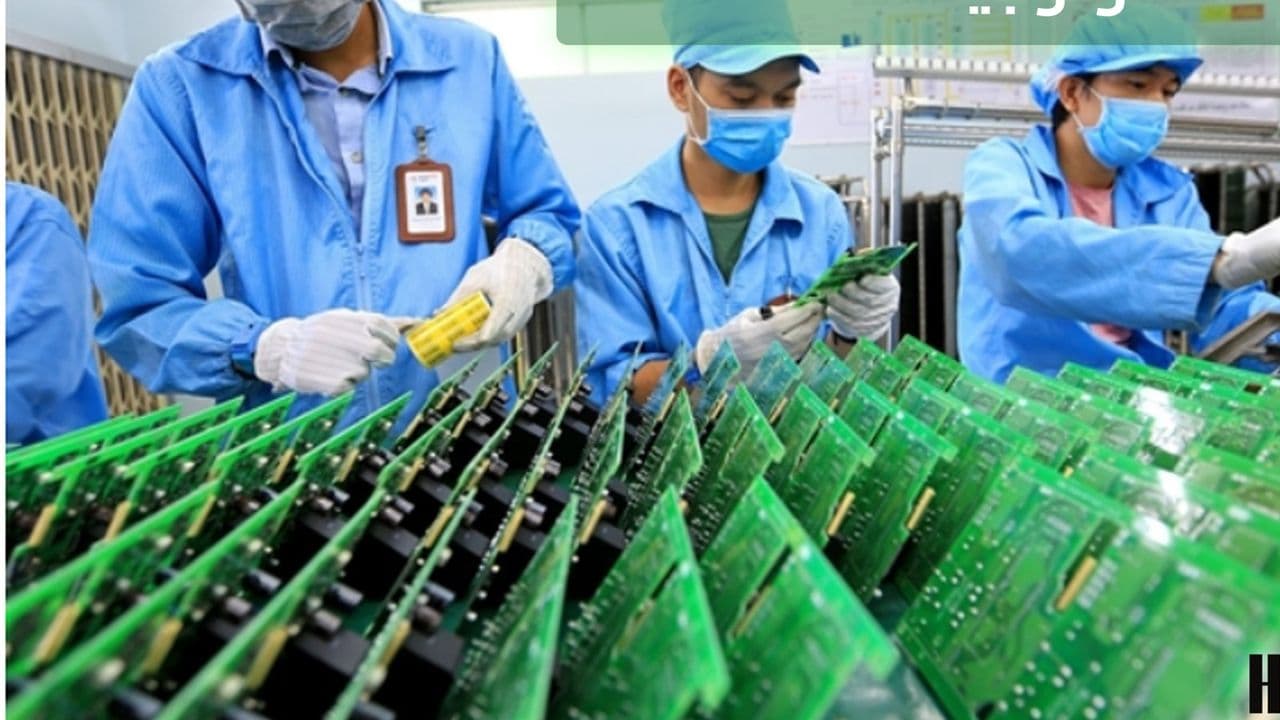
You are about to send a deposit, or the final 70%, to a supplier you have only met online. Two questions matter: is this company the factory it claims to be, and are the goods in front of it the goods you ordered? This guide shows you how to inspect a factory in China in both senses: how to verify the supplier before you commit, and what to check on the finished goods before the balance leaves your account.
Factory or trading company: why it matters
Most suppliers presenting themselves as factories on B2B platforms are trading companies. That is not necessarily fraud. A good trading company or agent earns its margin: it consolidates small orders, handles export paperwork and may manage several factories for you. The problem is paying that margin without knowing, and assuming you have control over production that you do not have.
With a trader, you cannot see the line, the trader may switch factories between orders, and quality can drift without warning. With a factory, you can negotiate on materials and process, not just price. Either can work; you need to know which one you have. For the wider picture, read risk management when importing from China.
Four ways to tell a real factory from a trader
Read the business licence
Ask for a copy of the business licence (营业执照). The registered company name and the business scope (经营范围) show whether it is manufacturing or trading. A scope that includes production or manufacturing (生产, 制造) of your product type points to a factory. A scope limited to sales, wholesale or import and export (销售, 批发, 进出口) points to a trader, and names containing 贸易 or 商贸 (trading) are a further hint.
Then verify the licence yourself. Search the company name or its 18-character Unified Social Credit Code on China's National Enterprise Credit Information Publicity System (国家企业信用信息公示系统). It shows registration status, registered capital, shareholders, the registered address and any listing for abnormal operations. If the name on the licence differs from the name on your invoice or bank details, stop and ask why.
Ask about a slightly different product
Ask whether the line could make a variation: another material, a different wall thickness, a size outside the catalogue. A factory answers in detail about its capability and its limits: the machine size, the mould cost, the tolerance it can hold, the lead time. A trading company tends to say yes, we can do that, to everything, because it will look for someone who can.
Ask for a live video from the workshop
Ask for a live video call from inside the workshop, not photographs. Photographs get borrowed, and so do pre-recorded films. Ask them to walk from the office to the production line, show the machines running, point the camera at the raw material store and the packing area, and hold up a sheet with today's date and your company name. China is on UTC+8, four hours ahead of the UAE and five ahead of Saudi Arabia, so book the call for your morning, during their working day.
Compare the registered address with the factory location
Compare the address on the licence with the location they show on video or give for a visit. A mismatch is not proof of anything: many factories register in an office or industrial park and produce elsewhere, or run a second site. But it is a question worth asking. A genuine supplier will explain it and can show the second site's own licence or lease. Knowing where your product category clusters also helps; see top 10 industrial cities in China.
If the answers still leave doubt and the order is large, visit or send someone. Half a day on site shows the headcount, the number of machines, the state of the floor and whether other buyers' goods are on the line. Take your specification and the approved sample with you.
Tie the payment to the inspection
Protect yourself in the contract, before you pay anything. A common structure is a 30% deposit to start production and the 70% balance after a satisfactory pre-shipment inspection report. Pay only to a corporate account in the name on the licence. A request to pay a personal account or a different company, or a late change of bank details by email, is a warning sign; confirm any change by video call with someone you know. Write into the purchase contract:
- The written specification: dimensions with tolerances, weight, materials, colour references and labelling, with the approved sample as a reference rather than the only standard.
- The inspection standard and the acceptable quality limits (AQL) for critical, major and minor defects.
- Your right, or your appointed inspector's right, to inspect before the balance is due.
- What happens if the goods fail: rework, replacement, re-inspection at the supplier's cost, or a price reduction.
Legal challenges in import and export explains how to make those terms hold up if there is a dispute.
What to inspect before the final payment
Book the pre-shipment inspection when production is finished and at least 80% of the goods are packed, so the inspector sees the real export cartons. Then check five things.
Dimensions and weight against the written specification
Measure against the written specification, not against the sample alone. A sample is one unit made with care; the specification is what every unit in the order must meet. Use the tolerances you agreed, and weigh units as well as measuring them, because a lighter unit often means thinner material.
The actual quantity
Count the cartons, then open a selection and count the units in each. Counting is not a formality: a short shipment is simple to fix while the goods are in the factory and hard to claim for once they have sailed.
Packaging and labelling
Will the packaging survive the voyage? Check carton strength, inner protection, and whether cartons are strapped or palletised as agreed. Scan the barcode and confirm it is right. Check that the importing country's required labelling is printed as customs demands: country of origin, and for many consumer goods sold in the Gulf, Arabic labelling and specific product information. Confirm those rules with your standards authority or clearing agent before production starts, not on inspection day.
The defect rate on a random sample
Draw the sample at random from cartons across the whole lot, never from units the factory selects. Most inspectors use the ISO 2859-1 sampling tables, which set the sample size from the lot size and the maximum number of defects you will accept. Product quality when importing from China explains how to classify defects for your product.
A dated, photographed report
Insist on a written report with dated photographs of each check. That is what makes it possible to negotiate over a problem while the goods are still in China. Once they have shipped and the balance is paid, it is far harder.
A worked example: 5,000 water bottles at AQL 2.5
Suppose you ordered 5,000 stainless steel water bottles. Under ISO 2859-1 at General Inspection Level II, a lot of 3,201 to 10,000 units calls for a random sample of 200 units. Typical limits look like this:
- Critical defects (unsafe, such as a sharp edge or a seal that leaks hot liquid): by common practice zero accepted, so one defect fails the lot.
- Major defects (the unit will not work or sell as intended, such as a dent or the wrong colour): AQL 2.5, accept up to 10, reject at 11.
- Minor defects (small cosmetic marks): AQL 4.0, accept up to 14, reject at 15.
If the inspector finds 12 major defects in the 200, the lot fails. You hold the balance, ask the factory to sort and rework, and book a re-inspection. If instead it finds 8 major and 13 minor defects, the lot passes on both counts, and you pay. Third-party inspection is usually priced per man-day, and the cost moves with the factory's location, the number of product variants and whether lab tests are needed. Set that against the value of a 5,000-unit order and the cost of finding the same defects in your warehouse.
Your process and checklist
Step by step: from first contact to final payment
- Ask for the business licence and verify it on the national publicity system.
- Ask your capability question about a slightly different product.
- Hold a live video call from the workshop.
- Compare the registered address with the production address and ask about any difference.
- Order and approve a sample, then write the specification with tolerances.
- Sign a purchase contract that ties the balance to inspection and agreed AQLs.
- Pay the deposit.
- For a first or large order, arrange a check during production.
- Book pre-shipment inspection when production is finished and at least 80% is packed.
- Review the dated report, resolve any failure, then pay the balance.
Pre-payment inspection checklist
- Business licence verified, and the scope matches your product.
- Registered address and factory location compared.
- Live workshop video seen, machines running.
- Specification signed, with tolerances.
- Dimensions and weight checked against the specification.
- Quantity counted, cartons and units.
- Carton strength and inner packing checked.
- Barcode scanned.
- Required labelling printed as your customs demands.
- Random sample drawn, defects classified and counted.
- Dated, photographed report received.
Common mistakes
- Paying 100% up front to a new supplier.
- Accepting photographs instead of a live video.
- Inspecting against the sample instead of the written specification.
- Letting the factory choose the units to inspect.
- Booking inspection after the balance is paid.
- Discovering your own country's labelling rules only when the goods reach customs.
- Treating a trading company as the problem. The problem is not knowing.
Quality inspection in China before shipment goes further into the types of inspection and what each one catches.
What to do this week
- Ask your current or shortlisted supplier for its business licence and check it on the publicity system.
- Arrange a live workshop video call and work through the checklist above.
- Write your product specification with tolerances, weights and labelling, if you do not have one.
- Add an inspection clause and AQL levels to your purchase contract before the next deposit.
- Decide who will inspect. If you cannot be there yourself, HiGreenPanda's quality inspection team can visit the factory and send you a dated, photographed report before you pay.
本文解答的问题
How can I tell if a Chinese supplier is a factory or a trading company?
Check the business licence: a scope that includes production or manufacturing points to a factory, while sales, wholesale or import and export points to a trader. Ask a detailed question about a slightly different product, and ask for a live video from the workshop. A factory explains its limits; a trader says yes to everything.
How do I verify a Chinese business licence?
Search the company name or its 18-character Unified Social Credit Code on the National Enterprise Credit Information Publicity System. It shows registration status, registered capital, shareholders, address and any abnormal-operation listing. The name should match the one on your contract and bank details.
When should a pre-shipment inspection take place?
Book it when production is finished and at least 80% of the goods are packed, and before the balance is paid. That way the inspector sees real export cartons, and you still have leverage to demand rework or replacement if the goods fail.
What is AQL 2.5 in a factory inspection?
AQL 2.5 is the acceptable quality limit commonly used for major defects. Under ISO 2859-1 at General Inspection Level II, a lot of 5,000 units needs a 200-unit sample, and the lot passes with up to 10 major defects and fails at 11.
Is it safe to pay a Chinese supplier 100% in advance?
For a new supplier it is a risk you do not need to take. A common structure is a 30% deposit and the 70% balance after a satisfactory pre-shipment inspection report, written into the purchase contract with the specification and AQL levels.
HiGreen Panda Marketing