Trade fairs
Canton Fair Negotiation: Best Strategies with Suppliers
Deals at the Canton Fair are often shaped in a few minutes at the booth. Here is how a sourcing agent prepares, builds trust and trades concessions so you leave with terms that hold.
作者:萨米·哈吉里阅读约需 9 分钟
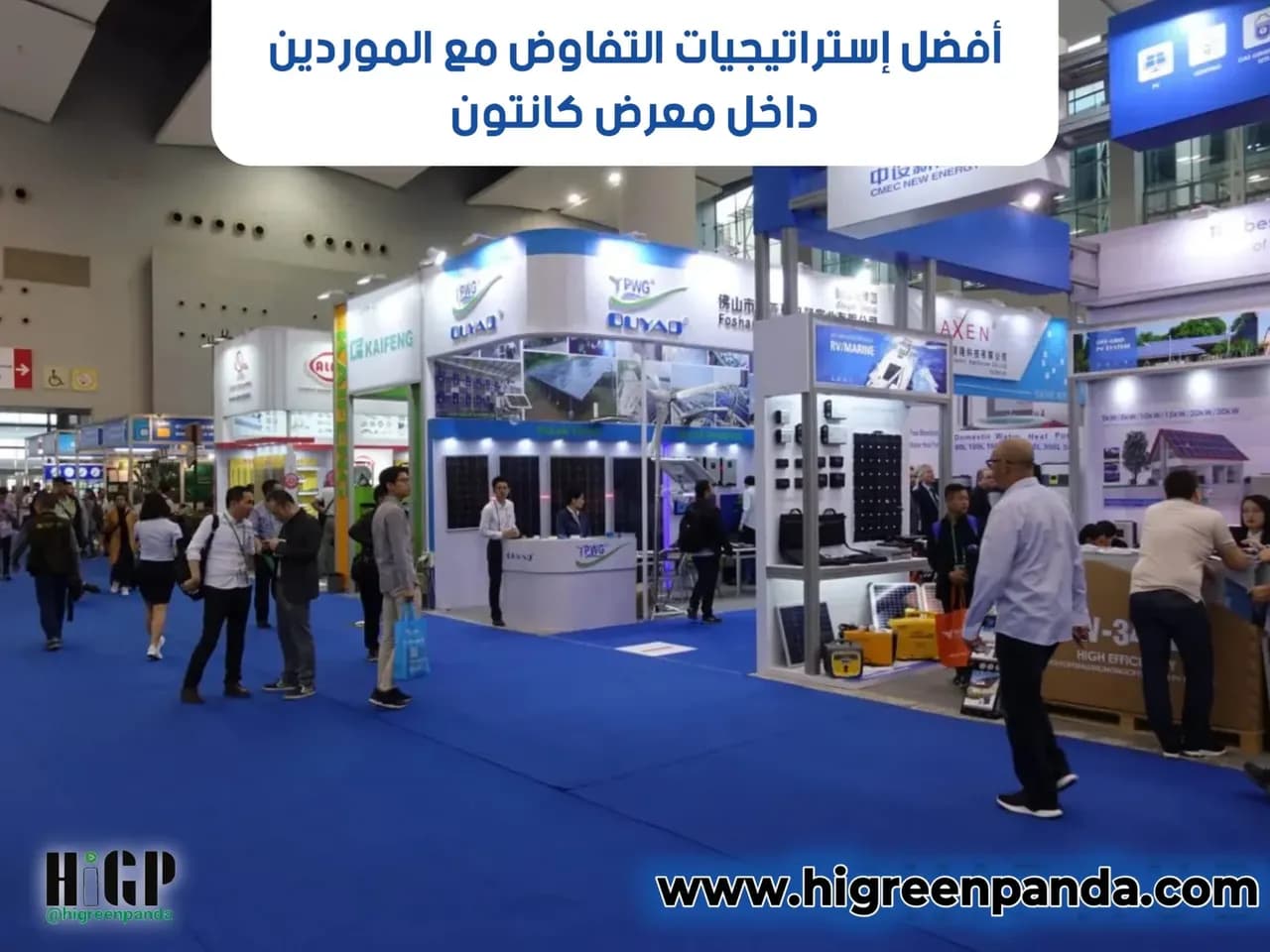
At the Canton Fair you may have 10 minutes at a booth with a supplier who has already met 50 buyers that day. Walk in unprepared and you leave with a price list and nothing else. This guide sets out Canton Fair negotiation the way a professional sourcing agent does it: what to prepare before you fly, how to build trust at the booth, which tactics move price and terms, and how to turn a good conversation into a written deal.
Why negotiating at the Canton Fair is different
The Canton Fair, officially the China Import and Export Fair, runs twice a year in Guangzhou, in spring and autumn, with each session split into phases by product category. Thousands of exhibitors and buyers from around the world pass through its halls, and large orders are often shaped in conversations of only a few minutes.
Three things make it unusual. Time is short, so both sides skip small talk faster than in a factory visit. Competition is visible, because the supplier knows you can walk 20 metres to a rival booth, and you know the same. And the people at the booth are practised negotiators who read small cues, such as how quickly you accept a first price or whether you know your own numbers. Being a potential buyer is not enough; you need a plan. For dates and phases, see our guide to the Canton Fair.
Prepare before you fly
Preparation separates professionals from tourists. Most of the leverage you have at the booth is built in the weeks before the fair.
Research your suppliers
Use the exhibitor list to shortlist 10 to 20 companies in your category. For each, find out its history, size, main export markets, major clients and distance to a shipping port. A factory 1 hour from Shenzhen or Ningbo port has lower inland costs than one 8 hours away. Check whether it is a manufacturer or a trading company; both can be good partners, but they negotiate differently and a trader has less room on price. Our guide on how to choose the right Chinese supplier covers the checks in detail.
Set your walk-away point
Before the fair, write down three limits for each product: your maximum price, your minimum quality standard and your lowest workable order quantity. Work the maximum price back from your selling price at home, after freight, duty, VAT and your margin. These numbers protect you from a deal that feels good at the booth and loses money in the warehouse.
Prepare questions beyond price
Price is only one line of the deal. Prepare questions on:
- MOQ and how flexible it is for a first order or mixed colours and sizes.
- Payment terms, including deposit percentage and when the balance is due.
- Lead time for samples and for mass production, and how it changes in peak season.
- Customisation: logo, packaging, colours, and the MOQ for each.
- Product development: can they adapt a design or develop a new one for you.
- Certificates and test reports needed for your market.
- Price basis: EXW, FOB or CIF, and which port.
Build the relationship at the booth
In Chinese business culture, guanxi, the network of personal relationships and trust, often carries as much weight as the written contract. At the fair you only have minutes to start one, so make them count.
First impressions
Greet the person respectfully, and give and receive business cards with both hands. Look at the card before putting it away. Have cards with your company name, website and WeChat or WhatsApp. If you are travelling with a colleague, make clear who leads; suppliers look for the decision-maker.
Show genuine interest
Ask about their products, their production process and how the company has grown. Curiosity builds trust, and the answers tell you whether they own the factory, which markets they know and how they handle problems. A salesperson who can explain the process in detail is usually closer to real production than one who only reads from a catalogue.
Use an interpreter well
Many booth staff speak workable English, but details such as tolerances, materials and payment conditions are easy to misunderstand. If you bring an interpreter, brief them before the fair on your products, your limits and the terms you will not change. Speak in short sentences, let them translate fully, and watch the supplier rather than the interpreter. Interpreters are in high demand during fair weeks, so book early and agree the daily rate and hours in advance.
Arrive early
Suppliers are more enthusiastic and flexible at the start of the fair, before their order books fill and their staff tire. Use the first 1 to 2 days of your phase for the suppliers that matter most, and the later days for comparison visits.
Negotiation tactics that work
Negotiating at the Canton Fair takes patience, judgement and some tactical skill. These are the methods that work repeatedly in practice.
Let them quote first
Ask for their price before you reveal your target. It gives you a benchmark, and the first quote is sometimes lower than you expected. If you name a number first, it becomes the ceiling for the whole discussion. Ask for the quote in writing, with the price basis, currency, MOQ and validity date.
Negotiate value, not only price
Higher quality or better after-sales service can justify a slightly higher unit price and save you money later. A 3% lower price means little if the defect rate is 5% higher, or if the supplier refuses to replace faulty goods. Compare suppliers on landed cost plus the cost of returns, complaints and delays, not on the unit price alone.
Use the if-then principle
Frame every concession you ask for as a trade. This turns bargaining into collaboration: both sides see a concession as an investment in the relationship rather than a loss. Two examples:
- If we increase our order by 20%, could we receive a 5% discount?
- If we agree to a 50% deposit upfront, can you offer better payment terms on future orders?
Other trades that work: a longer delivery window for a lower price, a repeat-order commitment for free samples, or simpler packaging for a lower MOQ. Never give something without asking for something back.
Protect your payment terms
A common structure is a deposit of around 30% with the balance before shipment, but terms vary by supplier, product and order size. Offering a larger deposit is a concession; use it only in exchange for something you value, and only with a supplier you have verified. Our guide to safe payment strategies with Chinese suppliers explains how to protect your money.
From booth to contract: a step-by-step plan
A handshake at the fair is the start of the deal, not the end. Follow this sequence.
- Record every conversation. After each meeting, photograph the booth, the product and the business card, and note the quoted price, MOQ, lead time and payment terms.
- Ask for the quote in writing. A written quotation or proforma invoice, with price basis and validity date, is far stronger than a note in your phone.
- Order samples. Agree the sample cost and whether it is refunded against the first order. Compare samples from 2 or 3 suppliers side by side.
- Follow up within 48 hours. Send a short message on WeChat or email thanking them and confirming what you discussed. Suppliers prioritise buyers who respond quickly.
- Verify the supplier. Check the business licence and, for larger orders, arrange a factory audit before paying a deposit.
- Negotiate the final terms. Use your samples and competing quotes to settle price, quality standard, packaging, lead time and penalties for delay.
- Sign a purchase contract. Include specifications, approved sample, inspection before shipment, payment schedule and what happens if goods fail inspection.
- Inspect before paying the balance. A pre-shipment quality inspection confirms the goods match the sample before your money leaves.
Expect 2 to 6 weeks between the fair and a signed contract, depending mainly on sample lead times and how quickly you decide. For more on turning meetings into orders, see how to turn your Canton Fair visit into real deals.
Common mistakes at the negotiating table
- Naming your target price first and losing any chance of a lower quote.
- Negotiating only on unit price and ignoring quality, lead time and payment terms.
- Showing that you have already decided. Excitement at the booth weakens your position.
- Agreeing to terms verbally and not getting them in writing before you leave.
- Confusing a trading company with a factory and expecting factory pricing.
- Paying a large deposit at the fair to secure a price, before verifying the supplier.
- Pushing so hard on price that the supplier cuts quality quietly to keep its margin.
- Leaving follow-up for weeks after the fair, when suppliers have moved on to other buyers.
What to do this week
- Confirm which fair phase covers your product and book travel and a hotel near the venue.
- Build a shortlist of 10 to 20 exhibitors and research each one.
- Work out your maximum price, minimum quality standard and lowest workable MOQ for every product.
- Write your question list and 3 or 4 if-then trades you are ready to offer.
- Print business cards and set up WeChat so suppliers can reach you.
If you would like an experienced agent beside you at the booths, HiGreenPanda's trade fair support team in Guangzhou, Shenzhen and Shanghai can prepare your shortlist, interpret and negotiate with you.
本文解答的问题
How do you negotiate prices at the Canton Fair?
Let the supplier quote first, then negotiate the whole package: price, MOQ, payment terms, lead time and quality. Frame each request as a trade, such as a larger order for a discount. Get the final quote in writing before you leave the booth.
Should I pay a deposit at the Canton Fair?
Avoid paying a deposit at the booth before you have verified the supplier and approved samples. Deposits of around 30% are common, with the balance before shipment, but terms vary. Pay only after checking the business licence and signing a contract.
What questions should I ask suppliers at the Canton Fair?
Ask about MOQ flexibility, payment terms, sample and production lead times, customisation, product development, certificates for your market and the price basis (EXW, FOB or CIF). Also ask whether they are a factory or a trading company.
Is the first price at the Canton Fair negotiable?
Usually, yes. Suppliers expect negotiation, and room depends on order size, payment terms and timing. You will often get more flexibility early in the fair and when you offer something in return, such as a larger order or a repeat commitment.
How important is guanxi when negotiating with Chinese suppliers?
Very. Personal trust often carries as much weight as the contract. Greet respectfully, exchange cards with both hands, show interest in the company and follow up quickly, but still put every agreed term in writing.
HiGreen Panda Marketing