Trade fairs
Canton Fair Guide: Dates, Phases and Essential Tips for Buyers
The Canton Fair runs every spring and autumn in Guangzhou, in three phases by product sector. This guide explains the calendar, what each phase covers, and how to prepare, work the floor and follow up.
作者:萨米·哈吉里阅读约需 9 分钟
The Canton Fair is the largest trade fair in China, and a first visit can easily turn into three tiring days of walking halls with little to show for it. This Canton Fair guide explains how the fair's calendar and phases work, which phase suits your products, how to register and prepare, and what to do on the floor and afterwards so that you come home with a shortlist of suppliers rather than a bag of brochures.
How the Canton Fair calendar works
The China Import and Export Fair, known as the Canton Fair, has been held in Guangzhou twice a year since 1957. The spring session usually runs from mid-April to early May, and the autumn session from mid-October to early November. Each session is split into three phases of about five exhibition days, with a gap of a few days between phases while the halls are rebuilt for the next group of sectors. A full session therefore spans about three weeks, but no single product category is on show for more than one phase.
Sessions are numbered in sequence, rising by one each spring and autumn. The autumn 2025 session was the 138th. For how the Canton Fair compares with other Chinese exhibitions, see our overview of trade fairs in China. Many of these fairs now also run online; see our guide to virtual trade fairs in China.
The autumn 2025 dates, as originally published
When this guide was first written, the 138th session was scheduled as follows:
- Phase 1: 15–19 October 2025
- Phase 2: 23–27 October 2025
- Phase 3: 31 October – 4 November 2025
Treat these dates as an example of the usual pattern, not as the next session. Dates for each session are announced on the official Canton Fair website several months in advance. Check there before you book flights or hotels, and confirm again a few weeks before you travel.
What each phase covers
Choosing the right phase is the most important planning decision you make. Visiting the wrong phase means walking past halls of goods you do not buy.
Phase 1: electronics, appliances and industrial goods
Phase 1 is the heavy-industry and technology phase. It covers consumer electronics, household appliances, industrial equipment, construction machinery and vehicles. For the autumn 2025 session it was expected to be the largest phase by exhibitor numbers, with more than 12,000 companies. Come for Phase 1 if you import air conditioners, kitchen appliances, phones and accessories, generators, tools or machinery.
Phase 2: consumer goods and home products
Phase 2 focuses on everyday consumer goods and the home: furniture, decoration materials, kitchenware, gifts and handicrafts, and garden supplies. Furniture and décor are spread across several connected halls, so you can see complete collections and room settings rather than single items. This phase suits retailers, furniture showrooms, hotel fit-out buyers and distributors of household goods.
Phase 3: textiles, clothing, health and office supplies
Phase 3 is dedicated to textiles and clothing, health products and office supplies. In recent sessions it has also included categories such as toys, children's products, shoes and bags. It draws fashion brands, distributors of medical and personal-care products, and stationery traders.
Sector allocations are adjusted from session to session. Building and decoration materials, for example, have moved between phases over the years. Before you commit to a phase, check the current phase list on the official site against your own product categories.
Trends highlighted in the 2025 sessions
The 2025 sessions put more space into sustainability and green technology, with expanded eco-friendly sections, and into products built on artificial intelligence and the Internet of Things. These areas open new product lines, but they also carry more certification risk. Before ordering, confirm what your customs authority and national standards body require for the category.
Finding your way around the venue
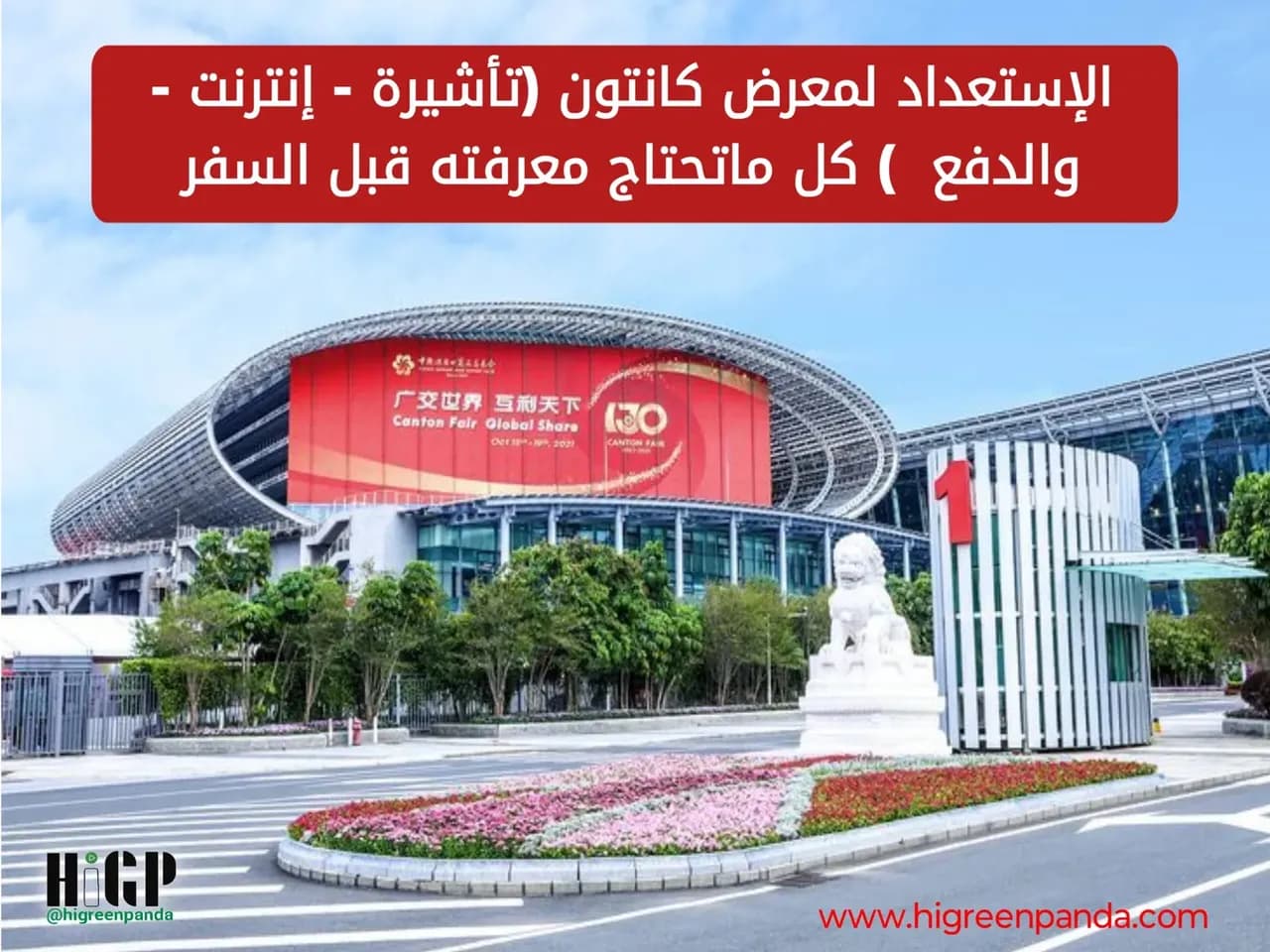
The fair takes place at the China Import and Export Fair Complex in the Pazhou district of Guangzhou, which is served by the city's metro. The exhibition area is about 1.55 million square metres, divided into several areas that each hold numbered halls for related sectors. You cannot see it all, even within one phase.
Hall assignments change between sessions as sectors grow or move, so do not rely on a hall map from a previous visit. Use the official Canton Fair app or website to find the current floor plan, search exhibitors by product, and mark the booths you want to visit in order. Group your visits by hall to avoid crossing the complex several times a day.
How to prepare before you travel
Most of the value of a Canton Fair visit is decided before you land. Work through these steps at least six to eight weeks ahead:
- Choose your phase by matching your product categories to the current phase list on the official site.
- Register online as an overseas buyer on the official Canton Fair website and follow its instructions for obtaining your buyer badge. Registering early avoids long queues at the badge counters and leaves more time for supplier visits.
- Check your visa position. Rules for Gulf and other Arab nationalities have changed in recent years, and some can now enter China without a visa for short trips. Confirm the current rule with the Chinese embassy or visa centre in your country; the fair can issue an invitation letter if you need one.
- Book your hotel early. Guangzhou hotels fill up and raise prices during fair weeks, so stay near a metro line that reaches the venue.
- Build a shortlist of 20 to 40 exhibitors from the online exhibitor directory, with booth numbers, and note what you want to ask each one.
- Prepare your target prices, expected order quantities, required certificates and packaging needs, so you can compare quotes on the same basis.
- Set up WeChat before you travel and add a few contacts, as it is the main tool Chinese suppliers use for business messaging.
Your Canton Fair checklist
- Passport, visa or proof of visa-free entry, and your registration confirmation
- At least 200 business cards, ideally with Chinese on the reverse
- The official app installed, plus a printed map of the halls you plan to visit
- A notebook for booth numbers, contacts, special offers and first impressions
- Mobile data that works in China: an international roaming plan, a local SIM card or a portable Wi-Fi device
- A translation app that works offline or on Chinese networks, since many Google services are blocked there
- Comfortable shoes, water and snacks, and a power bank for your phone
Working the fair floor
Navigation and energy
Arrive around 8:30 to get through security and entry before the heaviest crowds. Keep the printed map alongside the digital one, as phone batteries and signal both fail in crowded halls. Schedule short breaks, carry water, and plan your hardest meetings for the morning when you are fresh.
Etiquette and record-keeping
Offer and receive business cards with both hands, as is customary in China, and look at a card before you put it away. After each useful booth, photograph the supplier's card next to a product and write the booth number, the contact name, the prices quoted, the MOQ and your first impression. By the third day, booths blur together; your notes are what you will negotiate from.
Comparing suppliers
Do not rush into purchases on the first day. Compare suppliers on quality, reliability, after-sales service and future potential, and ask whether you are speaking to the factory or a trading company. Request samples to check product quality before any bulk order. Our article on negotiation strategies with suppliers at the Canton Fair covers how to discuss price and terms without closing too early, and turning your Canton Fair visit into real deals explains how to structure the days.
After the fair: samples, logistics and payment
Arrange sample and catalogue shipping in advance, so you do not carry heavy items home. Many suppliers will courier samples to you; agree who pays the sample cost and the shipping before you leave the booth.
Within a week of returning, send each shortlisted supplier a written summary of what you discussed and a request for a formal quotation with incoterms, lead time and payment terms. Sourcing agents can support you with translators, trade consultants and quality inspection, which matters most on a first order with a new factory. Before paying any deposit, verify the supplier's company details and bank account; our guide to safe payment strategies for Chinese suppliers explains how to avoid common frauds.
Common mistakes at the Canton Fair
- Going to the wrong phase because you relied on an old schedule instead of the current phase list.
- Arriving without a shortlist and spending the first day wandering.
- Paying a deposit at the booth on day one, before comparing at least three suppliers.
- Taking booth prices as final. Quotes at the fair are opening positions, and they depend on quantity, packaging and payment terms.
- Losing track of contacts because cards were not labelled with booth numbers and notes.
- Skipping pre-shipment inspection on the first order. Our article on risk management when importing from China sets out the checks to build in.
What to do this week
Open the official Canton Fair website, find the dates of the next session, and match your product lines to the phase list. Check whether you need a visa for your nationality, start your buyer registration, and write down the ten product categories you most want to source. If you want someone on the ground to book meetings, translate and follow up with factories, HiGreenPanda offers trade fair accompaniment at the Canton Fair.
本文解答的问题
When is the Canton Fair held each year?
The Canton Fair is held twice a year in Guangzhou. The spring session usually runs from mid-April to early May and the autumn session from mid-October to early November. Exact dates for each session are published on the official Canton Fair website several months ahead.
What are the three phases of the Canton Fair?
Phase 1 covers electronics, household appliances, industrial equipment, construction machinery and vehicles. Phase 2 covers consumer and home goods such as furniture, décor, kitchenware, gifts and garden supplies. Phase 3 covers textiles and clothing, health products and office supplies. Allocations change between sessions, so check the current phase list.
What were the Canton Fair 2025 autumn dates?
The 138th session in autumn 2025 was scheduled with Phase 1 on 15–19 October, Phase 2 on 23–27 October and Phase 3 from 31 October to 4 November 2025. For later sessions, check the official Canton Fair website.
How do I register for the Canton Fair as a foreign buyer?
Overseas buyers register online through the official Canton Fair website and follow its instructions for obtaining a buyer badge. Registering early saves time at the badge counters on arrival. Check the site for the current documents required.
How many days should I spend at the Canton Fair?
Each phase lasts about five days, and most buyers need two to three days within one phase to visit a shortlist of suppliers properly. If your products span two phases, plan for the gap between them or choose the phase that covers your main category.
HiGreen Panda Marketing