Economy and the Belt and Road
China's Belt and Road Initiative: Connectivity and Shared Growth
Launched in 2013, the Belt and Road Initiative links China to more than 150 partner countries through ports, railways and trade deals. Here is what the World Bank found, and how Gulf importers can use the new routes.
作者:萨米·哈吉里阅读约需 8 分钟
You hear about the Belt and Road Initiative in every discussion of China and the Arab world, but it is hard to see what it changes for your own shipments. The short answer: new ports, rail links and payment channels are shortening routes and adding options between China and the Gulf. By the end of this guide you will know what the initiative is, what the World Bank's research says it can deliver, where the Gulf fits, and how to turn it into lower transit times and better terms for your imports.
What is the Belt and Road Initiative
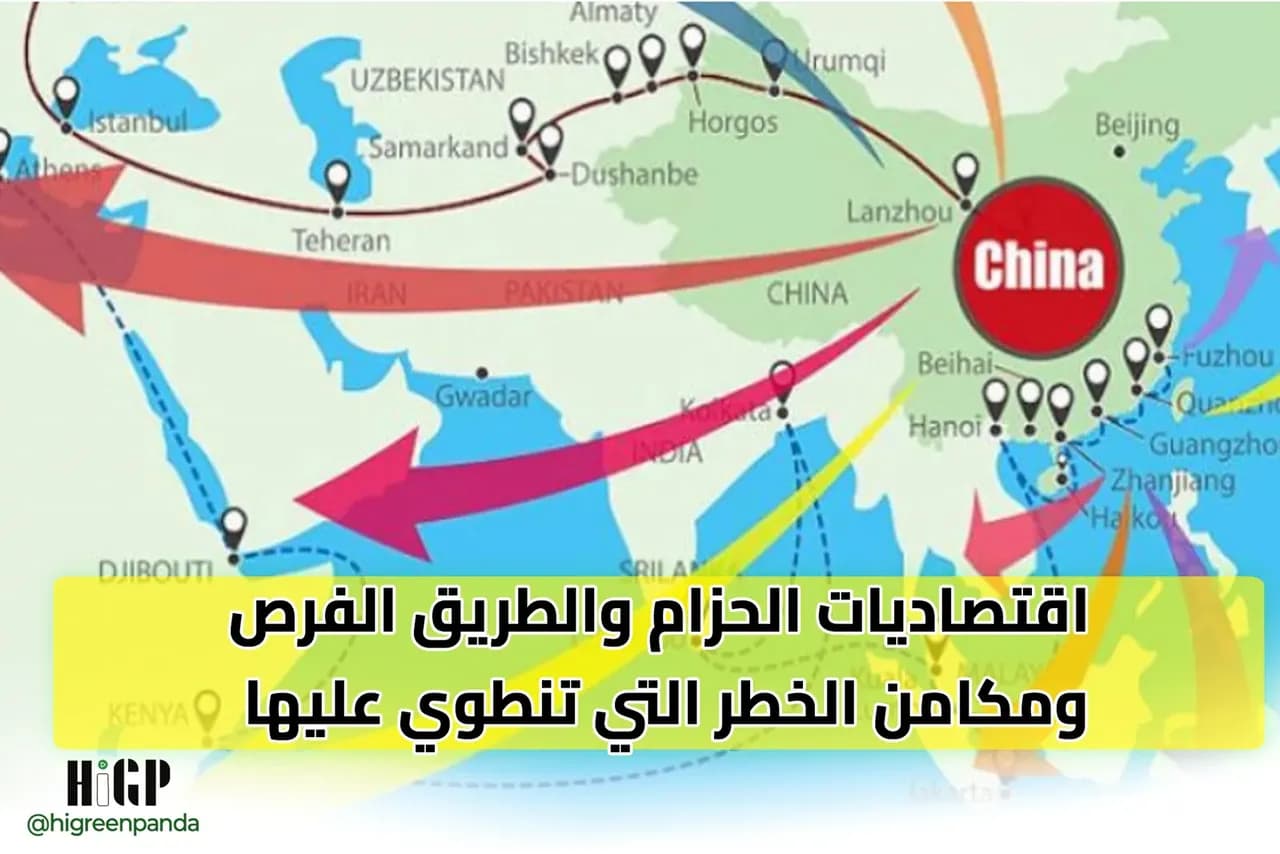
China launched the Belt and Road Initiative (BRI) in 2013. It is a long-term plan to improve connectivity, cooperation and shared development across several continents. The idea is to revive historic trade routes, including the old Silk Road, with modern infrastructure and partnerships, and it places China at the centre of global growth and international cooperation. More than 150 countries have signed cooperation documents with China under the initiative.
The belt and the road
- The Silk Road Economic Belt: land corridors by rail and road from China through Central Asia to Europe and the Middle East.
- The 21st Century Maritime Silk Road: sea routes and ports linking China to South-East Asia, South Asia, the Gulf, East Africa and the Mediterranean.
- Supporting links: power grids, pipelines, digital networks, industrial zones and financial cooperation.
For the political and diplomatic side of the initiative, see our article on the Belt and Road as a pillar for a shared future.
What the World Bank study found
Given the size and complexity of the BRI, the World Bank carried out an independent analysis of the growth potential of its transport corridors. The study, published as Belt and Road Economics, used detailed research and economic modelling. Its aim is to help participating countries get the most from the initiative by matching investments and reforms to their own development priorities. It also adds to the global discussion on the BRI, with emphasis on transparency and China's commitment to constructive engagement.
Trade and investment potential
The BRI's transport corridors can raise trade flows, attract foreign investment and improve living standards in participating countries. The study stresses that these benefits depend on complementary policy reforms by partner economies.
Closing the development gap
Large infrastructure and policy gaps remain in several corridor economies. The BRI helps close them by channelling large-scale infrastructure investment. According to the study, trade in these economies is about 30% below its potential, and foreign direct investment is nearly 70% below potential. That gap is both the problem and the opportunity.
Global gains
If fully implemented, BRI transport projects could raise global trade by 1.7% to 6.2% and increase world real income by up to 2.9%. Travel times along the corridors could fall by up to 12%. The study estimated the projects could help lift 7.6 million people out of extreme poverty and 32 million out of moderate poverty, with benefits reaching well beyond the participating economies.
Why reforms matter
Complementary reforms in trade policy and cross-border facilitation are essential. With them, real income gains for corridor economies could double or even quadruple. That makes close cooperation between China and its partners central to delivering what the initiative promises.
Managing the risks
China acknowledges that mega infrastructure projects carry real risks. By working with partner countries on transparency, debt sustainability and governance, it aims to secure long-term viability and shared success. This cooperative approach is central to the BRI's sustainability and to China's role in managing global development challenges.
Where the Gulf and the Arab world fit in
The Gulf sits on the Maritime Silk Road between China, Africa and Europe. Several BRI-linked projects already affect your routes:
- Khalifa Port, Abu Dhabi: COSCO Shipping operates a container terminal there, opened in 2018, giving Chinese carriers a regional hub.
- Gwadar Port, Pakistan: part of the China-Pakistan Economic Corridor, linking western China to the Arabian Sea.
- Suez Canal Economic Zone, Egypt: the China-Egypt TEDA industrial zone hosts Chinese manufacturers close to Middle East and European markets.
- Djibouti: Chinese-built port and railway links serve the Red Sea and East Africa, relevant for Yemen and Red Sea trade.
Gulf governments have also aligned national plans such as Saudi Vision 2030 with BRI cooperation. On payments, the central banks of the UAE and Saudi Arabia have joined the mBridge project with the People's Bank of China, which tests direct cross-border settlement in digital currencies. Read more in our guide to China and central bank digital currencies, and for trade figures see bilateral trade between China and Arab countries.
How to use Belt and Road routes for your imports
You do not need to be part of a government project to benefit. Follow these steps when you plan your next shipments.
- Map your current route: port of loading, transhipment points, destination port and total door-to-door days.
- Ask your forwarder whether a direct service or a BRI-linked hub such as Khalifa Port gives a shorter or more reliable transit time.
- Compare total landed cost, not just freight: include port fees, inland trucking and customs clearance time.
- Check whether your supplier can ship from an inland dry port or rail hub if the factory is far from the coast; China-Europe and China-Central Asia rail services also connect to some Middle East routes.
- Ask your bank whether it can settle in CNY with your Chinese supplier, and compare the total cost with USD payment.
- Check whether your products benefit from any free trade agreement or reduced duties; the China and GCC free trade talks are still ongoing, so confirm current rates with your customs authority.
- Keep a backup route in case of disruption, for example an alternative Gulf port if Red Sea transits are affected.
Typical transit times to compare
Use these as a starting point when you question a forwarder's quote. Direct sea services from Shanghai, Ningbo or Shenzhen to Jebel Ali usually take about 18 to 25 days port to port. Dammam and Khalifa Port are in a similar range, while Jeddah, Aden and other Red Sea ports can take 20 to 30 days or more when security risks force rerouting. Each transhipment typically adds 3 to 7 days. If a quote is much longer than these ranges, ask where the cargo will wait and why.
HiGreenPanda's shipping and freight team compares these route options from Shenzhen and Shanghai for Gulf importers.
Risks to check before relying on a BRI route
New infrastructure does not remove old risks. Before you commit to a route or a supplier inside a BRI industrial zone, run through this checklist.
- Is the route regular, with a published weekly schedule, or does it depend on one-off sailings?
- Are there security risks on the route, such as Bab el-Mandeb in the Red Sea?
- Could sanctions, export controls or political changes in a transit country interrupt the service?
- Is the host country's debt position stable enough that port fees or rules will not change suddenly?
- Does the supplier in the industrial zone have its own export licence and a track record with Gulf buyers?
Our guide to assessing geopolitical risks in your trade with China shows how to score each of these factors.
Common mistakes
- Assuming every BRI project means a lower freight rate. Some new routes are faster but not lower in price.
- Choosing a route on transit time alone without checking reliability over the last 6 to 12 months.
- Believing BRI membership brings automatic tariff cuts; duties depend on actual trade agreements.
- Ignoring the payment side; CNY settlement can reduce conversion costs but needs a bank that supports it.
- Treating headlines about the BRI as a reason to skip supplier checks and inspections.
What to do this week
Take your last 3 shipments from China and write down the route, transit days and total landed cost for each. Send that list to two forwarders and ask whether a different port, hub or service would save time or money. Call your bank to ask whether it supports CNY payments to China. For the wider economic picture behind these routes, read China as a driving force for the global economy.
本文解答的问题
What is China's Belt and Road Initiative?
It is a global connectivity plan launched by China in 2013. It builds land and sea trade corridors, ports, railways and financial links to revive historic trade routes. More than 150 countries have signed cooperation documents under it.
What did the World Bank say about the Belt and Road Initiative?
The World Bank's Belt and Road Economics study found BRI transport projects could raise global trade by 1.7% to 6.2% and world real income by up to 2.9%. It stressed that partner countries need trade and customs reforms to capture the full benefit, which could double or quadruple their income gains.
Which Gulf countries are part of the Belt and Road?
All GCC states have signed cooperation documents with China under the BRI. Visible projects include the COSCO terminal at Khalifa Port in Abu Dhabi, and Gulf plans such as Saudi Vision 2030 have been aligned with BRI cooperation.
Does the Belt and Road Initiative reduce import duties?
No, not by itself. Duties depend on trade agreements, and the China and GCC free trade talks are still ongoing. Check current rates with your customs authority before you price your goods.
What are the risks of the Belt and Road Initiative?
Large infrastructure projects carry risks around debt sustainability, transparency and governance, which China says it addresses with partner countries. For importers, the practical risks are route reliability, security on routes such as the Red Sea, and sudden changes in fees or rules.
HiGreen Panda Marketing