Economy and the Belt and Road
Chinese Monetary Policy: How It Moves Commodity and Export Prices
A study of 26 years of data shows how Chinese interest rates and money supply move global commodity prices. Here is what it found and how an importer can use it to time orders and protect margins.
作者:萨米·哈吉里阅读约需 8 分钟
When a Chinese supplier raises a quote for steel shelving or cotton towels, the reason often started months earlier, in a decision about interest rates or money supply in Beijing. Chinese monetary policy moves global commodity prices, and those prices feed straight into what factories charge you. This guide explains what a long-run study found, how the effect reaches your purchase price, which signals to watch each month, and how to use them when you place orders.
What the study examined
The study looked at the effect of Chinese monetary policy on global commodity prices using quarterly data from Q1 1996 to Q4 2021, which is 104 quarters. It used a Bayesian structural VAR model. In plain terms, this is a statistical method that tracks how several economic variables move together over time and isolates what happens after one unexpected change, called a shock.
Two policy tools were tested. The first is the interest rate, the price of borrowing, which economists call the price tool. The second is growth in M2, a broad measure of money in the economy that covers cash and most bank deposits, called the quantity tool. The question was simple: when China tightens or loosens either tool, what happens to the prices of metals, food, fuel, agricultural raw materials and beverages?
Keep one limit in mind. A model like this shows the direction and persistence of effects over 26 years. It does not forecast next month's copper price. Use it to understand which way pressure is likely to run, not as a trading signal. For the wider context of why China carries this much weight, see China as a driving force for the global economy.
The key findings in plain terms
Higher interest rates push commodity prices down
A positive interest rate shock, meaning an unexpected rise, has a negative and persistent effect on commodity prices. Prices fall and stay lower for a long period rather than bouncing back quickly. Beverage and metal prices decline more than other groups in response.
Faster money supply growth lifts non-fuel commodities
A positive shock to the M2 growth rate has a strong effect on non-fuel commodity prices. Agricultural raw materials, such as cotton, rubber and timber, and metals are significantly affected. Food and fuel prices, which are already highly volatile, are less affected, because weather, harvests and oil producer decisions dominate them. Our article on agricultural trade between China and the world covers the demand side of these markets.
Money supply matters more than interest rates
Both M2 growth and the interest rate work as macroeconomic stabilisers. However, the quantity tool (M2) appears more effective than the price tool in explaining commodity prices. For you, this means news about credit growth and bank lending in China deserves at least as much attention as headlines about rate cuts.
Policy also moves global uncertainty
Raising interest rates is associated with a sustained increase in global uncertainty, while monetary expansions lead to a long-term decline in it. Higher uncertainty usually shows up as more volatile freight rates, currencies and commodity prices, which makes long fixed-price contracts riskier for both sides.
How policy reaches the price you pay
The chain runs like this: a policy change in China shifts global commodity prices, which changes the cost of the raw materials Chinese factories buy, which changes the quotes they send you. The study's authors draw three conclusions for Chinese export prices:
- Competitiveness: falling global commodity prices can improve profit margins for Chinese exporters. That margin is room for you to negotiate.
- Price stability: expansionary monetary policies help stabilise commodity markets, which makes supplier quotes more predictable.
- Long-term planning: understanding these relationships helps companies, buyers included, plan purchasing and export strategies.
The exchange rate adds a second channel. Most Gulf currencies are pegged to the US dollar: SAR 3.75, AED 3.6725 and QAR 3.64 to the dollar, with Oman and Bahrain also pegged and Kuwait using a basket. For most Gulf importers, therefore, the USD/CNY rate decides what a yuan-priced quote costs at home. Importers in Yemen, whose rial is not pegged, carry an extra layer of currency risk. Trade flows between the two regions are covered in bilateral trade between China and Arab countries.
Which products are most exposed
- Metal-heavy goods: steel furniture frames, hardware, cables, building materials and simple machinery.
- Goods made from agricultural raw materials: cotton textiles, rubber tyres and footwear, timber furniture.
- Beverage inputs: coffee, tea and cocoa products processed in China.
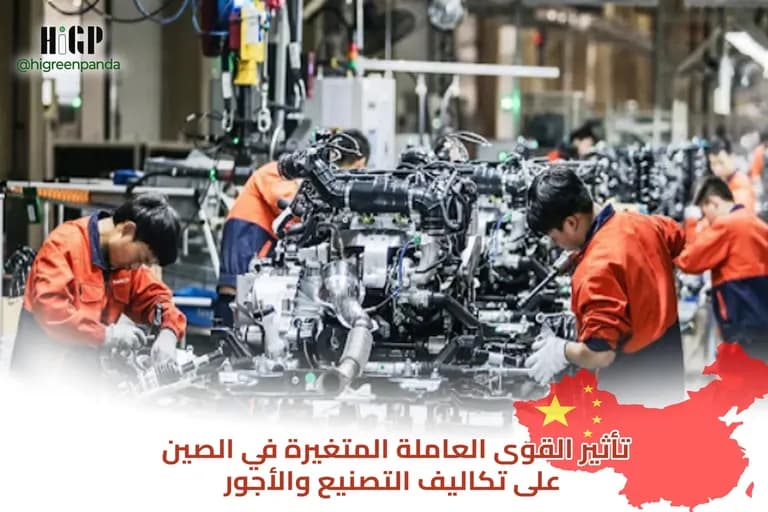
- Less exposed: products where labour, design or electronic components make up most of the cost. Wage trends matter more here, as explained in the impact of China's changing workforce on manufacturing costs.
Which signals to watch and when
You do not need an economics team. A short monthly check of a few published figures tells you which way pressure is running. Dates below are typical and can shift around public holidays.
- Producer price index (PPI): published by the National Bureau of Statistics around the 9th or 10th of each month. It measures factory-gate prices and is the closest single guide to where quotes are heading.
- M2 and total social financing: published by the People's Bank of China, usually in the middle of the month. Faster growth points to rising non-fuel commodity prices, according to the study.
- Loan Prime Rate (LPR): the 1-year and 5-year benchmark lending rates, announced on the 20th of each month.
- Policy rate and reserve requirement ratio (RRR): the central bank's 7-day reverse repo rate and any RRR cut, announced when decided rather than on a fixed date.
- USD/CNY central parity: the daily reference rate set at 9:15 Beijing time.
- Commodity benchmarks: LME copper and aluminium, Shanghai rebar and Zhengzhou cotton futures for the materials in your products.
How to use this when you place orders
- List your top 10 products by spend and name the main raw material in each. Ask suppliers for a rough cost breakdown: material, labour, packaging.
- Set a monthly calendar: PPI around the 10th, M2 mid-month, LPR on the 20th. Note the direction, not every decimal.
- When China is easing, with faster M2 growth or rate cuts, and metal or cotton prices are rising, confirm prices early, ask for quotes valid for 30 days instead of 7, and consider bringing forward orders you already plan.
- When China is tightening or commodity prices are falling, ask for re-quotes, keep contracts short and use the supplier's improved margin to negotiate.
- For contracts longer than 3 months, agree a price adjustment clause tied to a named public index, for example a band of plus or minus 5% before either side can reopen the price.
- Compare quotes in USD and CNY. If you pay in yuan, decide in advance at what USD/CNY rate you will buy currency.
- Keep a cost buffer in your landed-cost budget for material-heavy products, sized to how much their prices moved over the past 12 months.
Payment method also affects currency cost and speed. If you are weighing yuan settlement or newer options, read China and central bank digital currencies.
Common mistakes importers make
- Treating a rate cut headline as a signal on its own, while ignoring M2 and credit data, which the study found explain more.
- Assuming food and fuel prices will follow Chinese policy; the study found them less affected than metals and raw materials.
- Accepting 7-day quote validity on large metal orders during a period of rising prices.
- Signing 12-month fixed prices with no adjustment clause, then facing a supplier who stops shipping when costs rise.
- Watching only the exchange rate and forgetting that the supplier's own input costs move too.
- Reading a 26-year statistical relationship as a precise forecast for next quarter.
What to do this week
Pick your five highest-spend products and write down the main raw material in each. Look up the latest Chinese PPI and M2 figures and note whether each is rising or falling compared with the previous month. Then check your open quotes: if any material-heavy order has a validity of less than 14 days, ask the supplier to extend it or confirm the price now. For contracts running past 3 months, draft a simple price adjustment clause before your next negotiation. If you want a second view on timing and contract terms for a specific product line, HiGreenPanda offers business consulting from its offices in Shenzhen and Shanghai.
本文解答的问题
How does Chinese monetary policy affect commodity prices?
A study of data from 1996 to 2021 found that unexpected rises in Chinese interest rates push commodity prices down for a long period, especially metals and beverages. Faster growth in M2 money supply lifts non-fuel commodities, particularly metals and agricultural raw materials. Food and fuel prices were less affected.
Does China's money supply matter more than its interest rate?
For commodity prices, the study found that M2 growth, the quantity tool, explains more than the interest rate, the price tool. Both act as stabilisers. In practice, importers should follow Chinese credit and money supply data as closely as rate announcements.
When does China announce its Loan Prime Rate?
The Loan Prime Rate is announced on the 20th of each month, moving to the next working day if the 20th falls on a holiday. It covers 1-year and 5-year benchmark rates. The central bank's 7-day reverse repo rate and any reserve requirement ratio changes are announced when decided.
How can importers protect themselves from rising Chinese export prices?
Know the main raw material in each product and track its benchmark price and China's monthly PPI. When prices are rising, confirm quotes early and ask for longer validity. For long contracts, use a price adjustment clause tied to a public index rather than a fixed price.
Why does the USD/CNY rate matter for Gulf importers?
Most Gulf currencies, including the Saudi riyal, UAE dirham and Qatari riyal, are pegged to the US dollar. The USD/CNY rate therefore decides what a yuan-priced quote costs in local currency. Importers in countries without a dollar peg, such as Yemen, face additional currency risk.
HiGreen Panda Marketing