Industries and sectors
Labour Costs in China: How the Changing Workforce Affects Prices
China's workforce is ageing, shrinking and becoming better educated, and wages keep rising. Here is what that means for factory prices, lead times and where you source your products.
作者:萨米·哈吉里阅读约需 9 分钟
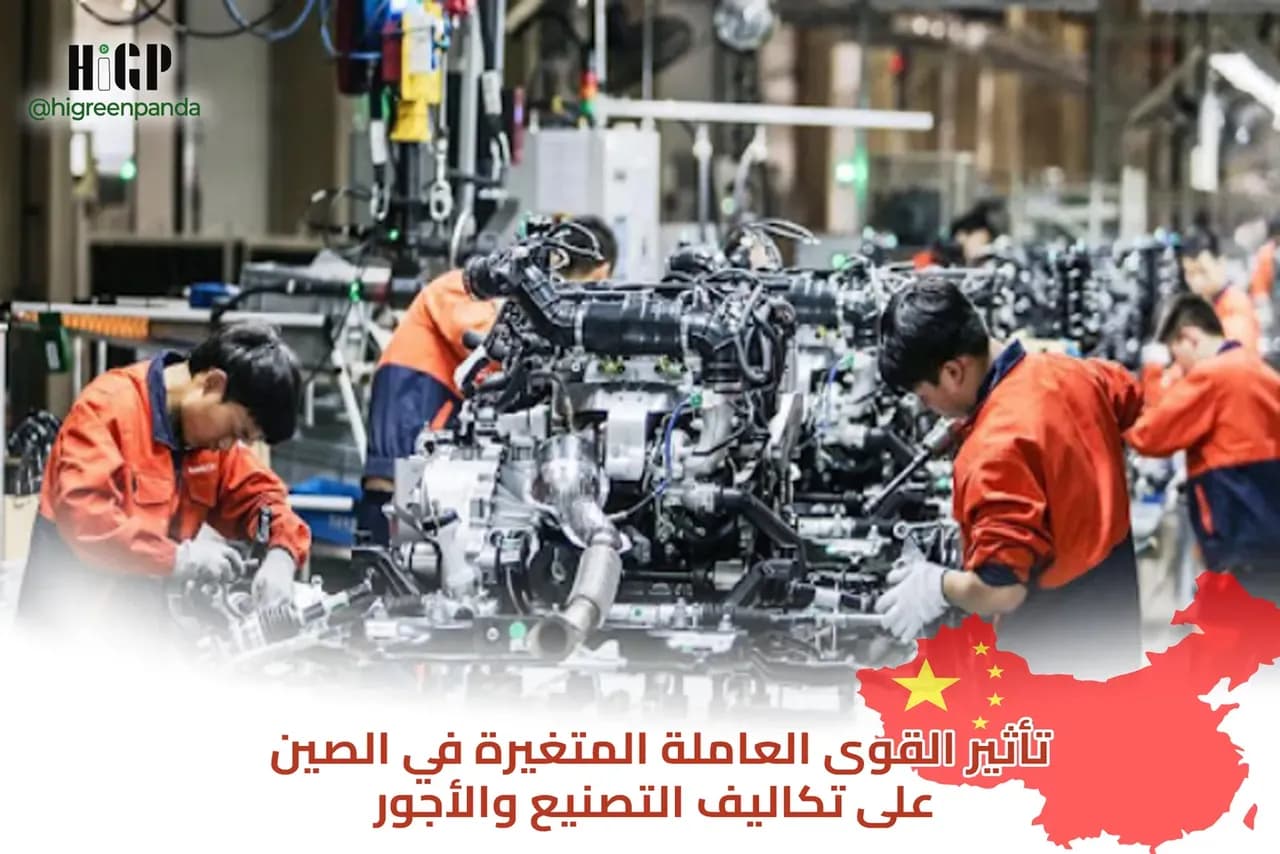
Your supplier has raised prices again and blames wages, and you want to know whether that is true and whether it will continue. Rising labour costs in China are real: the country has the world's largest labour market, but it is ageing, the working-age population is shrinking, and young people are moving away from factory jobs. By the end of this guide you will know the key figures on China's workforce and wages, how they feed into the prices you pay, and what you can do to protect your margins.
China's workforce in numbers
Size of the labour market
China's total employed population was 733.5 million in 2022, down from 746.5 million in 2021. A national workforce report counted 402 million workers at the start of 2022, up from 391 million in 2017. Migrant workers, who move from rural areas to cities and staff most factories and building sites, numbered about 295 million in 2022, roughly 72% of that 402 million figure.
An older and better-educated workforce
The average worker's age rose to 38.3 years in 2022 from 37.1 in 2017, and the average age of industrial workers was about 38.3 years. Most professional and technical workers are between 30 and 50.
Education has risen too. Average years of schooling reached 13.8 in 2022, up from 13.6 in 2017. More than 85% of workers have a high school diploma or higher, and about 35% have a university degree. Workers in services average 14.5 years of education, in industry 13 years, and in agriculture 12.5 years. A better-educated workforce expects better pay and conditions, and is less willing to do repetitive assembly work.
How wages and labour costs have risen
Wage growth
Per capita wage income was 20,590 yuan (about USD 2,990) in 2022, up 4.9% on the previous year, and made up 55.8% of disposable income. Migrant workers earned an average of 4,615 yuan (about USD 670) a month in 2022, up 4.1% from 2021. Those are the workers on the production lines that make most of the goods you import. How higher earners spend is covered in luxury goods trade in China.
Minimum wages by region
Each province sets its own minimum wage and reviews it every few years. Around 2022 to 2023, monthly minimums ranged from 1,420 yuan (about USD 206) in parts of Liaoning to 2,590 yuan in Shanghai, and 14 provinces and cities had a top-tier minimum above 2,000 yuan (about USD 290). Several regions have raised their rates since. Check the current figure on the human resources and social security bureau website of the province where your supplier operates.
Income varies widely by industry
In 2021, the average annual wage in urban non-private units was 106,837 yuan (about USD 15,530). The highest-paid sector was information transmission, software and IT services at 201,506 yuan (about USD 29,290). The lowest was accommodation and catering at 53,631 yuan (about USD 7,795), a staffing pressure tracked in our China tourism recovery dashboard. Factories compete for workers with better-paid sectors, which keeps pressure on manufacturing wages.
Trends reshaping China's labour market
An ageing and shrinking population
China's workforce is older on average than those of developing manufacturing economies such as Mexico and Vietnam, but much younger than those of Germany and Japan. In 2022 China's population fell by about 850,000, the first decline in decades. United Nations projections put the population at about 1.313 billion by 2050 and below 800 million by 2100. Fewer young workers means factories must pay more, automate, or both.
The growth of flexible work
About 84 million people, around 20.9% of the workforce, work in new forms of employment such as ride-hailing, courier and food delivery. Many young workers prefer this flexibility to fixed factory shifts, which widens the gap on production lines.
Stronger worker protection
- In 2021 the government issued guidelines requiring delivery platforms to ensure riders earn at least the minimum wage.
- Rules on recommendation algorithms that took effect in 2022 require platforms to protect the rights of workers managed by algorithms.
- A revised law on the protection of women's rights and interests was passed in October 2022.
- In August 2021 the Supreme People's Court and the labour ministry published guiding cases stating that the "996" schedule (9am to 9pm, six days a week) breaks labour law.
For you, stronger enforcement means that compliant factories carry higher costs for overtime and social insurance. A quote far below the market can be a sign that a factory is cutting corners on workers, which is a supply risk as well as an ethical one.
What this means for manufacturing and the prices you pay
Rising production costs
Four forces push factory costs up: continuing rises in minimum and average wages, higher living costs in manufacturing centres, the cost of hiring and training skilled staff, and the cost of complying with labour regulations. The effect on your price depends on how labour-intensive your product is. Garments, shoes, furniture, handmade gifts and hand-assembled goods feel wage rises most; our guide to the China textile industry covers fabric sourcing. Products made on automated lines, such as many plastic parts or electronic components, feel them less. Raw material costs are the other big driver; see our Q&A on China's mining industry.
Shortages in traditional factory work
There is a structural gap in traditional manufacturing. Younger people are less willing to work in factories and prefer better-paid service jobs, and employers need workers with higher skills. You see this most after Chinese New Year, when many workers do not return. Lead times stretch and quality can dip in February and March while new staff are trained.
The shift towards automation
Factories are responding by investing in automation and digital systems, upgrading traditional lines, focusing on higher-value products, and training and retraining their workers. Our article on how China leads the smart manufacturing revolution explains how robots and AI are changing production. An automated supplier may quote a higher MOQ but hold its price and quality more steadily. The China EV market shows how far that upgrade has gone. The national policy behind this upgrade is Made in China 2025.
How to protect your margins as an importer
You cannot stop wages rising, but you can plan for it. Work through these steps with each of your main suppliers.
- Ask each supplier what share of the product cost is labour, and what increase they expect over the next 12 months.
- Agree a price validity period in writing, and a formula for how material or wage changes will be passed on.
- Place orders for labour-intensive products well before Chinese New Year, and avoid tight deadlines in February and March.
- Compare quotes from factories in coastal provinces with factories in inland provinces, where wages are often lower.
- Ask whether the factory has automated key steps, and visit or audit it to see the line for yourself.
- Review product design with the supplier to remove manual steps that add cost without adding value.
- Keep an alternative supplier, in China or another country, for your most labour-intensive products.
If you are weighing whether to have products made to your own design, our guide to contract manufacturing in China sets out the advantages and disadvantages.
How foreign companies are adapting, and what comes next
Foreign companies have four main options: relocating some production to countries such as Vietnam, India or Bangladesh; investing in automation to reduce reliance on labour-intensive work; moving up the value chain to higher value-added products; and selling more into China's own domestic market. Many use a mix, keeping complex products in China and moving simpler ones elsewhere. China still offers supplier clusters, infrastructure and skills that are hard to match; see our article on opportunities in China's manufacturing sector.
Changing demographics also open new opportunities in technology, services and the digital economy, healthcare for an ageing population, and education and vocational training. Our guide to China's healthcare industry sets out the openings for foreign companies.
- 2025 to 2027: labour costs keep rising, automation investment increases, services and technology grow, and traditional factories struggle to recruit.
- 2028 to 2035: a major shift towards a knowledge-based economy, a gradual decline in the workforce, and more focus on productivity and new skills.
- 2035 to 2050: serious demographic pressure, greater reliance on technology and artificial intelligence, big changes in the nature of work, and more competition to attract global talent.
Companies that adapt do three things: invest in technology such as automation, efficient processes and research and development; develop talent through training and partnerships with universities; and diversify geographically by building a supply network across several regions and countries. These themes also ran through the World Economic Forum's 2025 Annual Meeting of the New Champions.
Common mistakes importers make about Chinese labour costs
- Assuming last year's price will hold without a written validity period.
- Choosing the lowest quote without asking how the factory pays and treats its workers.
- Scheduling urgent orders for the weeks after Chinese New Year.
- Moving all production to another country for a small saving, without counting longer lead times, weaker supplier clusters and quality risk.
- Ignoring inland Chinese provinces, which can offer lower wages with the same supply chain.
- Treating every price increase as unjustified, rather than asking for a cost breakdown.
What to do this week
- List your five most labour-intensive products and their current unit prices.
- Ask the suppliers of those products for a cost breakdown and their expected increases.
- Check the current minimum wage in each supplier's province.
- Plan your order calendar around Chinese New Year for the next 12 months.
- Request one comparison quote from an inland Chinese factory or a supplier in another country.
HiGreenPanda's product sourcing team can gather comparison quotes from coastal and inland factories and check how each one is set up before you order.
本文解答的问题
Are labour costs in China still rising?
Yes. Per capita wage income rose 4.9% in 2022 and migrant workers' average monthly income rose 4.1% to 4,615 yuan. Provinces continue to review minimum wages every few years, and an ageing workforce keeps pressure on factory pay.
What is the minimum wage in China?
Each province sets its own. Around 2022 to 2023, monthly minimums ranged from 1,420 yuan in parts of Liaoning to 2,590 yuan in Shanghai, and several regions have raised them since. Check the provincial human resources and social security bureau website for the current rate.
Why are Chinese factories short of workers?
The population is ageing and began to shrink in 2022. Younger, better-educated people prefer service jobs or flexible work such as delivery, which about 84 million people now do. Factories respond with higher pay, automation and training.
Is it still worth manufacturing in China?
For many products, yes. China offers supplier clusters, infrastructure and skilled workers that are hard to match elsewhere. Some labour-intensive production is moving to countries such as Vietnam, India and Bangladesh, but moving brings longer lead times and new quality risks.
How do rising wages in China affect import prices?
The effect depends on how much of the product cost is labour. Hand-assembled goods such as garments and furniture feel wage rises most, while automated products feel them less. Ask your supplier for a cost breakdown and agree how changes will be passed on.
HiGreen Panda Marketing