Industries and sectors
China Innovation: How the World's Factory Became an R&D Hub
Chinese companies now lead global output in most advanced industries and spend close to US levels on R&D. Here is what that shift means for how you source, price and protect products from China.
作者:萨米·哈吉里阅读约需 7 分钟

If you still think of Chinese suppliers as copy-and-cut-price factories, you may be missing where the best products, and the best margins, now come from. China innovation has moved from slogans to measurable output: research from the Information Technology and Innovation Foundation (ITIF) shows Chinese companies advancing quickly, often very fast, and on a very large scale. By the end of this article you will know what the data shows, which sectors matter most, and how to find and vet suppliers who design as well as manufacture.
What the research shows about advanced industries
According to ITIF, by 2020 China led global production in 7 of 10 advanced industries, while the United States led in 3. The five largest industries on that list, with global production and China's share, were:
- Computers and electronics: USD 1,317 billion global production; China leads with 26.8%.
- Chemicals: USD 1,146 billion; China leads with 29.1%.
- Machinery and equipment: USD 1,135 billion; China leads with 32.0%.
- Motor vehicles: USD 1,093 billion; China leads with 24.3%.
- Basic metals: USD 976 billion; China leads with 45.6%.
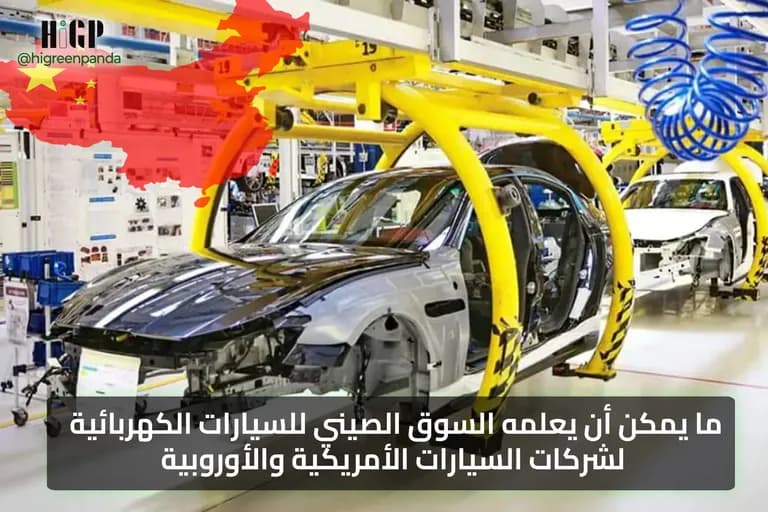
These are not low-value sectors. Machinery, electronics and vehicles need engineering, tooling and design capability, and leading them means Chinese suppliers are increasingly the source of components and finished goods for brands worldwide, including brands you already buy from.
How much China spends on research and development
ITIF reports that China's R&D spending grew from USD 136 billion in 2007 to USD 781 billion in 2023, close to sixfold growth. That places China near the United States, which spent USD 823 billion. Figures like these are usually adjusted for purchasing power, so treat them as a measure of scale rather than an exact comparison of cash.
Where the money goes
The spending shows up in large corporate research centres, university and government labs, and in thousands of mid-sized manufacturers with their own engineering teams. For you, the practical effect is at supplier level: more factories can now modify a design, develop a new model or build tooling in-house, rather than only producing to a buyer's drawing. The rise of automation is part of this; our article on robots and artificial intelligence in Chinese manufacturing covers how smart factories are changing output and consistency.
Where China is moving from copying to innovation
Chinese companies are moving from imitation to genuine innovation in several areas. Each one affects what you can source.
- Artificial intelligence and robotics: smart devices, industrial automation, service robots and AI features built into consumer electronics. See how AI is improving Chinese manufacturing efficiency.
- Renewable energy: solar panels, inverters, batteries and energy storage, and electric vehicles and their parts. This is directly relevant to Gulf solar and storage projects; read our guide to investment in China's green energy sector.
- Biotechnology: pharmaceuticals, diagnostics and medical devices, all of which face strict registration rules in the Gulf.
- Quantum computing: still mostly at the research stage and not yet a sourcing category for most importers.
- Semiconductors: China is investing heavily in chip design and production; mature-node chips and power electronics are widely available, while the most advanced chips remain limited by export controls.
What this means for you as an importer
You can buy design, not only production
An OEM supplier makes your design. An ODM supplier offers its own designs, which you can brand and adapt. Many Chinese ODMs now bring products to market faster than their Western competitors, so you can launch a differentiated range without funding all the engineering yourself. If you are weighing these models, our article on contract manufacturing in China sets out the advantages and disadvantages.
Prices reflect more than labour
China is now able to combine quality, innovation and price. That is good for you as a buyer, but the lowest quote is no longer the only story. Suppliers with real engineering teams charge for development, tooling and certification, and rising wages also push up costs; see the impact of China's changing workforce on manufacturing costs. Compare suppliers on total value: defect rates, speed of new models and after-sales support.
Intellectual property works in both directions
When a supplier owns the design, you need a written licence or exclusivity agreement, or a competitor can sell the same product next month. When you bring the design, protect it in China: register your trademark there, and consider design or utility model protection before sharing drawings.
New products need new certificates
The more advanced the product, the more likely it needs conformity approval at home. Saudi Arabia registers regulated products through the SABER platform, the UAE runs the ECAS and EQM schemes, and many low-voltage electrical goods and toys sold in the GCC need the G-Mark. A new model from an innovative supplier will not have these approvals yet, so budget 4 to 12 weeks and the testing cost before launch, depending on the product and the lab. Ask the supplier early whether it has shipped the product to the Gulf before and which test reports it can share; a supplier that already holds IEC or EN test reports usually makes local certification faster.
How to find and vet innovative Chinese suppliers
- Decide whether you need an OEM (your design) or an ODM (their design, your brand), and write a short brief with target price, volume and destination market standards.
- Search within the right industrial cluster and shortlist suppliers that show their own product development, not only a catalogue.
- Ask each supplier for its patent list and check the numbers on the China National Intellectual Property Administration (CNIPA) database. Invention patents are examined in depth; utility models and design patents are not.
- Ask to see the R&D team and test lab during a visit or video call, and ask how many new models they launched last year.
- Request a sample built to your destination market's standards, with the relevant test reports.
- Agree ownership of tooling, designs and any modifications in the contract before paying for development.
Before you place the first order, check that:
- The supplier owns, or is licensed to use, the design it is selling you.
- The product carries certificates valid for your market, not only for China.
- Tooling paid for by you is recorded as your property in writing.
- The product is not subject to export controls in China or restrictions in your destination market.
- Spare parts and firmware support will be available for the product's expected life.
HiGreenPanda's product sourcing team in Shenzhen and Shanghai shortlists and visits suppliers with in-house development capability for clients.
Challenges and risks
If China succeeds in becoming a leader in innovation, it poses a major challenge for Western countries, because Chinese firms will be able to combine quality, innovation and price. For Gulf importers that competition mostly helps, but it carries risks: trade tensions can bring new tariffs or restrictions on some technology products, export controls can change with little notice, and fast product cycles mean a model you stock may be replaced within a year. Keep more than one supplier for important lines, and watch trade policy in every market you sell to.
Common mistakes when sourcing innovative products
- Assuming every supplier with a showroom has its own R&D; many trading companies show other factories' products.
- Treating a utility model or design patent as proof of real innovation.
- Buying an ODM design without an exclusivity or licence agreement.
- Paying for tooling without a written record that it belongs to you.
- Judging suppliers only on unit price and ignoring defect rates, update speed and support.
What to do this week
- Pick one product line where you currently buy a generic model and could benefit from a newer design.
- Shortlist three suppliers in the relevant cluster that show their own product development.
- Look up their patents on the CNIPA database and note which are invention patents.
- Ask each for a development timeline, tooling cost and sample lead time for a model adapted to your market.
- Check that your trademark is registered in China before you share any designs.
本文解答的问题
Is China becoming a leader in innovation?
The data points that way. ITIF research shows China led global production in 7 of 10 advanced industries by 2020, and its R&D spending reached about USD 781 billion in 2023, close to the United States at USD 823 billion.
How much does China spend on research and development?
ITIF reports that China's R&D spending grew from USD 136 billion in 2007 to USD 781 billion in 2023, close to sixfold growth. That puts it near the United States, which spent USD 823 billion.
In which technology sectors is China innovating most?
The main areas are artificial intelligence and robotics, renewable energy, biotechnology, quantum computing and semiconductors. For importers, renewable energy, smart electronics and automation products are the most practical sourcing categories today.
What is the difference between OEM and ODM suppliers in China?
An OEM supplier manufactures your own design to your specification. An ODM supplier offers products it has designed, which you can brand and adapt. With an ODM, get a written licence or exclusivity agreement so competitors cannot sell the same design.
How can I check if a Chinese supplier really does R&D?
Ask for its patent list and verify it on the CNIPA database, noting which are invention patents. Visit or video-call the engineering team and test lab, and ask how many new models it launched last year.
HiGreen Panda Marketing