Industries and sectors
What the China EV Market Teaches Automakers and Importers
Battery electric cars went from about 5% to about 27% of new car sales in China in four years, while Europe and the US lagged. Here is why, the three lessons Western automakers draw, and what they mean for Gulf importers.
作者:萨米·哈吉里阅读约需 9 分钟
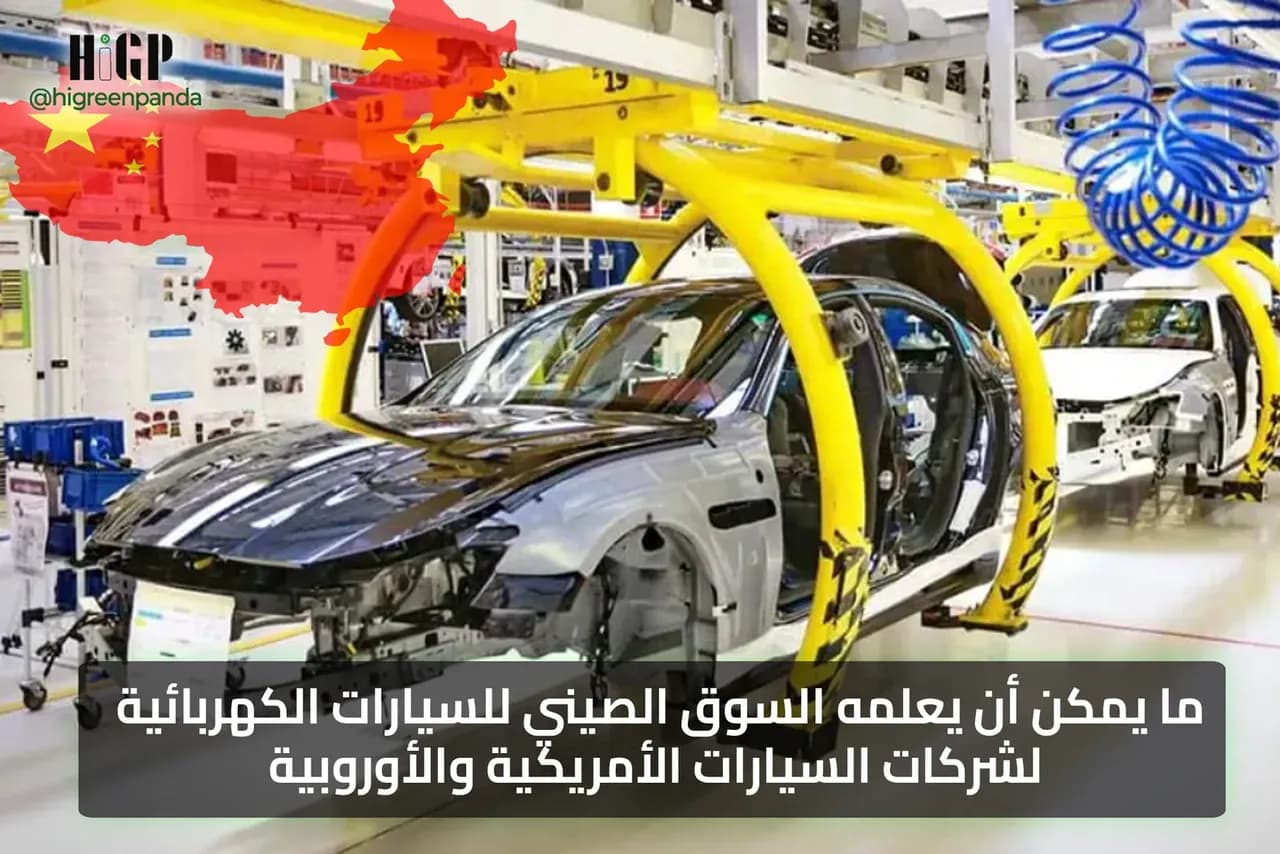
If you sell cars, parts or chargers in the Gulf, electric vehicles are arriving in your market, and many of them come from China. The China EV market moved faster than any other: battery electric cars went from a niche to more than a quarter of new car sales in four years. Understanding why it happened, and why American and European automakers fell behind, tells you which EVs and EV products will sell at home and which will sit in a showroom. By the end of this guide you will know the numbers, the three main lessons and the practical checks to make before importing.
How far the China EV market has pulled ahead
In 2020, battery electric vehicles made up about 5% of personal vehicles sold in both China and Europe, and about 2% in the United States. By 2024 the battery electric share in China had risen to about 27%. Europe had plateaued at about 13%, and the United States still lagged at about 8%.
These figures count battery electric cars only. China's wider category of new energy vehicles also includes plug-in hybrids, so the total share of electrified cars there is higher. Figures differ between sources and change every month. For current data, check the China Association of Automobile Manufacturers (CAAM) and the International Energy Agency's annual Global EV Outlook before you build a business plan on them.
Why China moved faster than Europe and the United States
The reasons behind the gap are well understood. They fall into four groups.
Industrial policy for new automakers
Chinese industrial policy supported emerging carmakers as well as established ones. That allowed a large number of new brands to enter the market, build factories and compete on technology. The same policy push built a domestic battery industry, which our guide to investment in China's green energy sector covers in more detail.
Direct incentives for buyers
Consumers received direct incentives to buy electric. These have included purchase subsidies and relief from vehicle purchase tax, and in some large cities electric cars have been easier to register than petrol cars. The incentives have been reduced over time, so check the current rules if you are comparing prices inside China.
Charging infrastructure and running costs
Indirect incentives mattered as much. China expanded public charging on a massive scale, and charging at home is relatively low-cost compared with the EU and the United States. A driver who can charge at low cost and find a public charger easily has fewer reasons to hesitate.
Competition on price and speed
With many brands fighting for the same buyers, Chinese carmakers cut prices, shortened development cycles and released new models quickly. That pressure is also why Chinese EV makers are now looking hard at export markets, including the Gulf.
What this means for the Gulf
The Chinese experience shows that buyers follow infrastructure. Where charging is easy and electricity is affordable, adoption rises; where it is not, even good cars sell slowly. Gulf electricity prices are generally moderate, and public charging networks are growing but still thin outside the main cities. That makes home and workplace chargers, cables, and installation and maintenance services a practical entry point for traders who are not ready to import vehicles. Our guide to investment opportunities in China's technology sector covers the supplier base behind many of these products.
Lesson 1: sell to micro-markets, not one market
To succeed in the move from combustion engines to electric vehicles, Western automakers need a deep and constantly updated understanding of their different customer segments. Chinese makers treated their home market as many small markets: compact city cars for first-time buyers in large cities, family SUVs for suburban households, premium technology-led models for younger professionals, and low-cost vehicles for smaller towns.
The Gulf is also several markets in one. A family in Riyadh that drives to Dammam, around 400 km away, has different range needs from a Dubai commuter. Fleet and taxi operators judge cost per kilometre and downtime. Government and corporate buyers care about warranty and service contracts. Before you import, decide which segment you are serving and choose models, range and price for that segment alone.
Lesson 2: more models are not enough without the right price and performance
Offering more electric models does not by itself drive adoption. The models must meet customer expectations on price and performance, which means investing in the technology behind them. Chinese makers kept costs down through control of battery supply and through battery chemistries such as lithium iron phosphate (LFP), which trades some energy density for lower cost and longer life.
For a Gulf importer, performance has a local meaning. Summer temperatures above 45°C strain batteries and air conditioning. Ask each supplier how the battery's thermal management performs in sustained heat, what range loss to expect with the air conditioning running, and what the battery warranty covers in years and kilometres. A car that performs well in Shanghai may disappoint in a Kuwaiti August.
Lesson 3: match in-car technology to each segment
Enthusiasm for technology varies between customer segments. Western automakers therefore need to offer different levels of infotainment and other in-car technology instead of one package for everyone. Chinese makers compete hard on large screens, voice assistants and driver-assistance features, backed by the same software strength described in our guide on how China leads the smart manufacturing revolution.
For importers, the key question is whether that technology works in your market. Cars built for the Chinese domestic market may run software in Chinese only, rely on apps and map services that do not work outside China, or receive no over-the-air updates abroad. Insist on export-specification models with Arabic and English interfaces, local maps and a confirmed update path.
How to import EVs or EV products from China
Whether you buy vehicles, spare parts, chargers or accessories, work through these steps:
- Pick your segment and product. Vehicles need a large budget and a service network; chargers, cables and accessories can start with a much smaller first order.
- Shortlist suppliers with export experience. For vehicles, prefer the manufacturer or its authorised exporter; for parts and accessories, check the factory's licence and export history. Our guide to contract manufacturing in China explains the trade-offs of private-label products.
- Confirm the specification for your country. Ask for export-spec models, GCC-compliant certification and the documents your standards authority requires, such as SASO approvals in Saudi Arabia. Confirm the list with your national standards body.
- Check warranty and after-sales. Get the battery and vehicle warranty in writing, and confirm who supplies spare parts and diagnostic tools in your country.
- Plan shipping for lithium batteries. EVs and battery packs are regulated as dangerous goods in transport. Your forwarder will need the safety data sheet and battery test documents, and vehicles usually ship by RoRo vessel or in containers under specific rules.
- Order a trial quantity and test it in local conditions through a full summer before committing to volume.
Where smaller importers can start
You do not need a vehicle dealership to trade in the EV supply chain. Wall-mounted AC chargers, portable chargers, charging cables and adapters, battery-monitoring tools, tyres and interior accessories for popular Chinese models all sell alongside the cars. MOQs for these products are often a few hundred units rather than a container of vehicles, and many factories will add your brand. Check that chargers carry the right plug standard and the electrical safety certification your country requires, because an uncertified charger can be refused at customs or rejected by installers.
Checklist before you pay a deposit
- Is the model an export specification, not a domestic-market car?
- Does the software support Arabic or English, local maps and updates outside China?
- Is the battery warranty stated in years and kilometres, and is it valid in your country?
- Does the manufacturer authorise this export, or is it a parallel export that may void the warranty?
- Do you have the conformity certificates your country needs for registration or sale?
- Has your forwarder confirmed the dangerous goods documents and the shipping method?
Common mistakes when entering the EV trade from China
- Judging by the price in China. Domestic prices may reflect local incentives and a price war. Your landed cost includes freight, duty, certification and after-sales support.
- Buying domestic-market cars. Chinese-only software and unsupported apps turn a modern car into a hard sell.
- Ignoring the heat. Range, charging speed and battery life all suffer in extreme temperatures without good thermal management.
- No service plan. Without parts, diagnostic tools and trained technicians, one fault can cost you the customer.
- Selling one model to everyone. The main lesson of the China EV market is that segments differ; your stock should reflect that.
For the wider shift behind these vehicles, see how China invests in renewable energy despite declining global demand for traditional energy.
What to do next
This week, write down the one customer segment you want to serve and the product that fits it: a vehicle, a charger or a parts range. Then ask your national standards authority which certificates it needs, and request export-specification details and warranty terms from three Chinese suppliers. If you want help shortlisting and verifying EV suppliers on the ground in China, book a consultation with HiGreenPanda's team in Shenzhen and Shanghai.
本文解答的问题
Why is China ahead in electric vehicles?
Industrial policy supported new carmakers and a domestic battery industry, and buyers received direct incentives. China also built public charging on a massive scale, and home charging costs are relatively low. Strong competition between many brands pushed prices down and sped up new models.
What share of new cars in China are electric?
Battery electric cars were about 27% of personal vehicle sales in China in 2024, up from about 5% in 2020. Including plug-in hybrids, the share of new energy vehicles is higher. Check CAAM or the IEA Global EV Outlook for the latest figures.
What can Western automakers learn from the China EV market?
Three main lessons: understand customer segments as separate micro-markets, make sure electric models meet expectations on price and performance rather than simply adding more models, and offer different levels of in-car technology for different segments.
Can I import Chinese electric cars to the Gulf?
Yes, but choose export-specification models that meet your country's standards, such as SASO requirements in Saudi Arabia. Confirm the warranty is valid locally, that software works outside China, and that parts and service are available. EV batteries also require dangerous goods documentation for shipping.
Do Chinese EVs cope with Gulf summer heat?
It depends on the model's battery thermal management. Ask each supplier for performance data in sustained high temperatures, expected range loss with air conditioning, and battery warranty terms. Test a trial unit through a full summer before ordering in volume.
HiGreen Panda Marketing