Quality and inspection
Innovation and Quality: How Chinese Product Standards Have Changed
Made in China no longer means one low grade. Learn what changed in Chinese product standards, what drove it, and how an importer finds factories that work to the level you need.
作者:萨米·哈吉里阅读约需 8 分钟
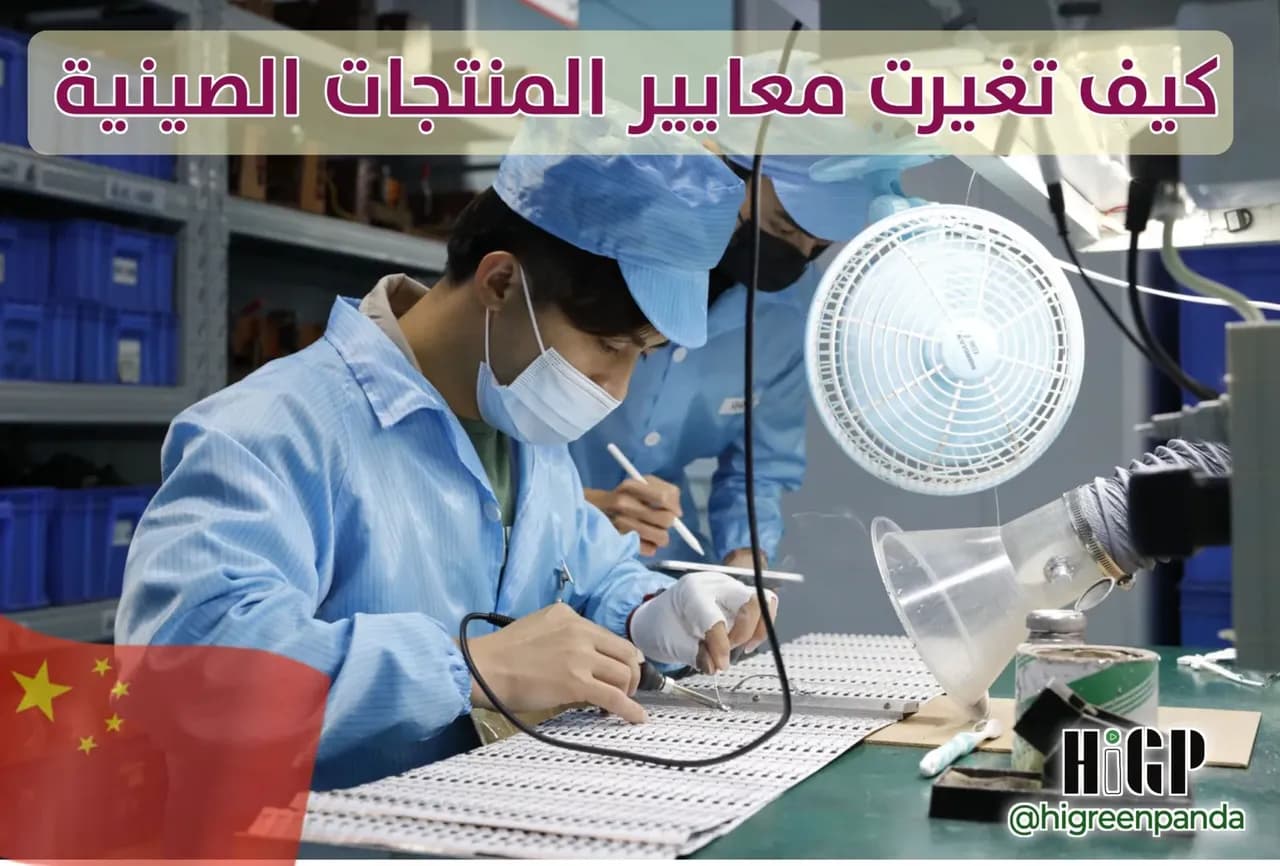
Many buyers still picture "Made in China" as low price and uncertain quality. That picture is out of date, and acting on it costs you: either you avoid suppliers who could make a better product than your competitors sell, or you assume every Chinese factory is now world-class and skip the checks. Chinese product standards have risen sharply over the past two decades, but the range between the best and worst factories is still wide. This guide explains what changed, why, and how you, as an importer, find and verify the factories at the top of that range.
From imitation to innovation
In the 1990s and 2000s, many Chinese factories grew by copying foreign designs and producing them in large volumes at low cost. Margins were thin, and competition was mostly on price. That model has not disappeared, but it no longer defines Chinese industry.
The shift in government strategy
In 2015 the State Council launched "Made in China 2025", a plan to move industry from volume to value. It focused on independent innovation, advanced manufacturing and stronger quality control in sectors such as robotics, new energy vehicles, aerospace, medical devices and new materials. Later five-year plans kept the same direction. Companies that invest in research can apply for National High-Tech Enterprise status, which brings a reduced 15% corporate income tax rate instead of the standard 25%.
Where Chinese innovation now leads
The results are most visible in electronics, electric vehicles and batteries, solar panels, drones, telecoms equipment and home appliances. Chinese brands such as BYD, Huawei, DJI, Haier and Xiaomi now compete with established global names on features and reliability, not only on price. Factories have also automated fast; our article on how China leads smart manufacturing looks at robots and AI on the production line.
How quality standards have improved
Innovation came with better quality management. Chinese exporters learned that foreign buyers, retailers and regulators reject goods that fail tests, and that repeat orders depend on consistency.
International management systems
China has more ISO 9001 certified organisations than any other country. Serious exporters also hold sector standards: ISO 14001 for environmental management, IATF 16949 for automotive parts, ISO 13485 for medical devices. For regulated products, look at our guide to China's medical devices industry and how its stricter rules affect buyers.
China's own national standards
Products sold inside China must meet national GB standards. Some are mandatory (GB), others recommended (GB/T). Many products, including electrical goods, toys and car parts, need the China Compulsory Certification (CCC) mark to be sold in China. The market regulator, SAMR, has tightened enforcement and recalls. These rules apply to the Chinese market; a product built to GB standards is not automatically compliant with SASO rules in Saudi Arabia or other GCC regulations, so you still need certification for your own market.
What drove the change
- Government support: subsidies, tax incentives and supportive policies for firms investing in innovation and quality.
- Research and development spending: national R&D spending has risen every year and has exceeded 3 trillion CNY a year since 2022, according to China's National Bureau of Statistics. Companies such as Huawei spend a large share of revenue on research.
- Intense competition: thousands of factories compete in each sector at home and abroad, so the ones that survive must offer better products, not only lower prices.
- Changing consumer demand: Chinese consumers now buy premium goods and expect them to last, and global buyers demand advanced features and tested safety.
- Rising labour costs: higher wages pushed factories to automate, and automation tends to improve consistency.
What this means for you as an importer
The key point is that China does not produce one quality level. It produces every level, and the factory gives you the level you specify and pay for. A USD 4 power bank and a USD 15 power bank may look alike in photos but differ in cell grade, protection circuits and real capacity.
This works in your favour. You can now source products from China that match or beat European and Japanese goods in function, often at a lower landed cost. You can also commission your own designs: many factories offer ODM (their design, your brand) and OEM (your design, their production). Our guide to contract manufacturing in China sets out the advantages and risks of each.
What has not changed is the need to verify. Better factories exist, but so do sellers who show a top-tier sample and ship a lower grade.
Sectors where the gap between factories is widest
The rise in standards is uneven. In some sectors the best Chinese factories lead the world; in others, the result depends heavily on what the buyer specifies and checks.
- Solar panels and batteries: Chinese makers produce most of the world's solar modules and lithium batteries, but tiers differ sharply. Ask for the cell brand, cycle-life test data and IEC certificates such as IEC 61215 and IEC 61730 for panels.
- Consumer electronics: leading factories supply global brands, while small workshops assemble from mixed-grade parts. Ask for the bill of materials and fix the key components in your contract.
- Home appliances: large Chinese brands export worldwide. For your own-brand appliances, check the safety and energy-efficiency labelling that Saudi Arabia and the UAE require for many product groups.
- Machinery: quality has improved quickly in CNC machines, packaging lines and construction equipment. Check spare parts supply and after-sales support in the Gulf before you buy.
- Textiles and furniture: mature industries where materials and finishing vary most with price.
In every sector, ask the supplier to show you what changes between its price tiers. A capable supplier can explain exactly what you get for each extra dollar: thicker steel, a branded motor, a better battery cell or more testing.
How to find suppliers that meet high standards
- Define the quality level you want. Name the materials, components, certifications and target markets. "Same quality as brand X" is a start; a written specification is better.
- Look for export experience in demanding markets. Ask which countries the factory ships to. Regular exports to the EU, US, Japan or Korea suggest it can meet strict testing.
- Ask for evidence of research capacity. How many engineers? Does it hold patents? You can search Chinese patents on the CNIPA website. Does it have High-Tech Enterprise status?
- Check certificates at the source. Request ISO and product certificates, then confirm the certificate numbers with the issuing body or lab.
- Visit or audit the factory. Look at test equipment, incoming material checks and how rejected units are handled.
- Order and test samples. Test them yourself or at an accredited lab against your specification and your market's rules.
- Inspect every production order. Keep a signed golden sample and tie the final payment to a passed pre-shipment inspection.
For the inspection steps in detail, see how to ensure product quality when importing from China.
Checklist: signs of a modern, quality-focused factory
- Current ISO 9001 certificate that you have verified.
- Its own quality control team, separate from production.
- In-house test equipment relevant to your product, with calibration records.
- Documented incoming material inspection.
- Engineers who can discuss changes to your design, not only the sales team.
- Test reports from recognised labs such as SGS, Intertek, Bureau Veritas or TÜV.
- Environmental and safety compliance; see our guide to choosing environmentally friendly suppliers.
- Willingness to accept third-party inspection without argument.
Common mistakes when judging Chinese quality
- Assuming all Chinese goods are low quality and missing better suppliers your competitors will find.
- Assuming a famous Chinese brand name means every factory in that sector works to the same level.
- Choosing the lowest quote, then expecting the quality of the highest.
- Treating a CCC mark or GB compliance as proof the product meets GCC rules.
- Accepting certificates as PDFs without checking them.
- Skipping inspection because the sample was excellent.
What to do this week
Pick one product you sell today and write down its weak points: returns, complaints, parts that fail. Then ask three Chinese suppliers with export experience in the EU or Japan to quote for an improved version, and ask each for its ISO certificate, test reports and the number of engineers on staff. Verify one certificate and order samples from the best two. If you want a partner in China to find such factories and manage production, HiGreenPanda supports manufacturing projects from Shenzhen and Shanghai.
本文解答的问题
Are Chinese products good quality now?
Many are. Chinese factories now make products that compete with global brands in electronics, electric vehicles, solar and appliances. But quality varies widely between factories, and you get the level you specify and verify, so audits and inspections are still needed.
What is Made in China 2025?
Made in China 2025 is an industrial strategy launched by the State Council in 2015. It aimed to move Chinese industry from low-cost volume towards innovation, advanced manufacturing and higher quality in sectors such as robotics, new energy vehicles and medical devices.
What are GB standards in China?
GB standards are China's national standards. Mandatory ones carry the code GB and recommended ones GB/T. They govern products sold in China; goods for export must also meet the rules of the destination market, such as SASO in Saudi Arabia.
What is the CCC mark and do I need it for export?
The China Compulsory Certification mark is required for many products sold inside China, including many electrical goods and toys. It is not an export certificate. For goods going to the Gulf, check your own market's requirements, such as SABER registration in Saudi Arabia.
How do I know if a Chinese factory is innovative?
Ask how many engineers it employs, whether it holds patents and whether it has National High-Tech Enterprise status. Search its patents on the CNIPA website, and check whether it exports to demanding markets such as the EU, US or Japan.
HiGreen Panda Marketing