Importing from China
Commercial Disputes When Importing from China: A Practical Checklist
Most commercial disputes when importing from China are decided before the order is placed. This checklist covers the contract, inspections, negotiation, arbitration and enforcement, with three clauses you can adapt.
作者:萨米·哈吉里阅读约需 9 分钟
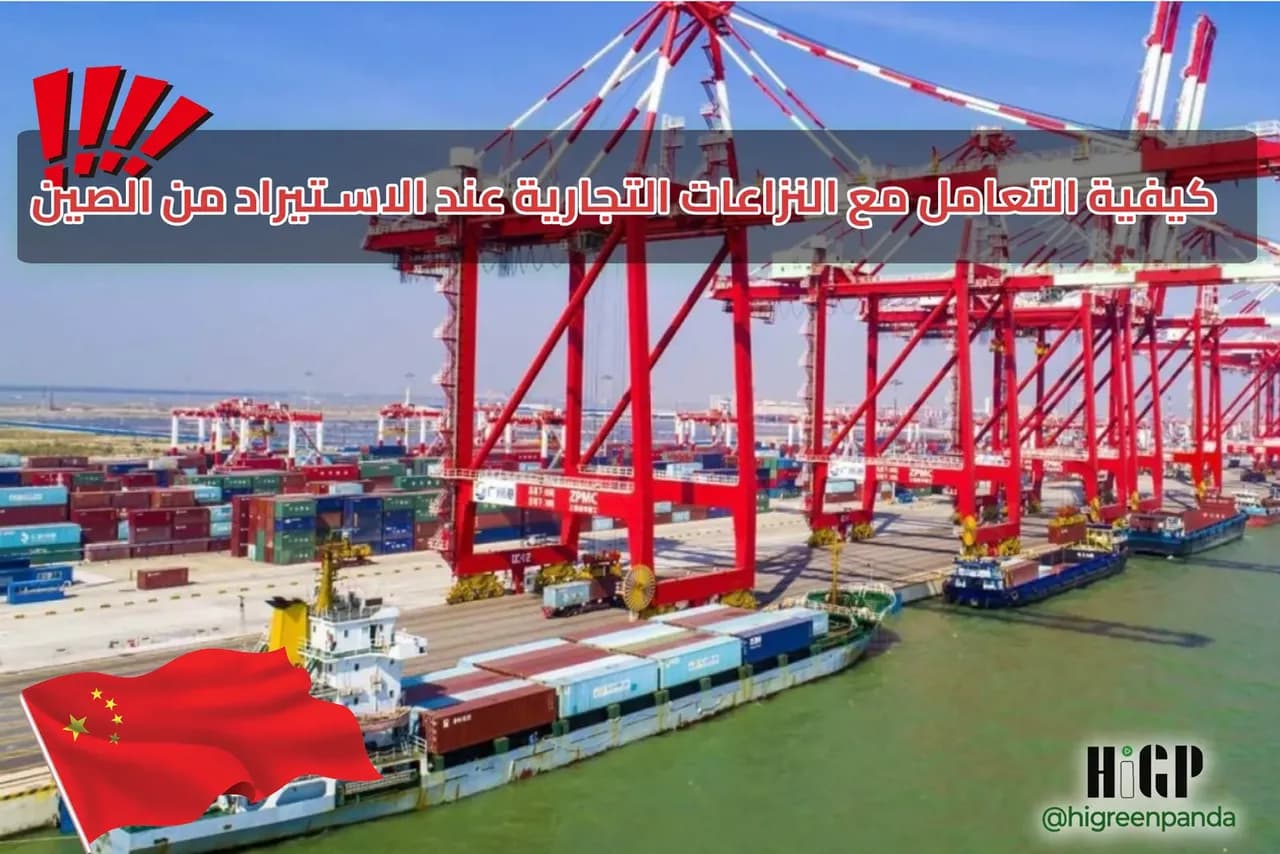
A container arrives in Jeddah or Jebel Ali, you open it, and the goods are not what you paid for. At that point, how much you recover depends almost entirely on what you agreed before the order was placed. This guide walks you through commercial disputes when importing from China in four stages: before contracting, during production, when a dispute arises, and arbitration and enforcement. By the end you will have a checklist for each stage, three contract clauses you can adapt, and three numbers to measure how well you are doing.
Why the contract decides most disputes
Most disputes with Chinese suppliers fall into a few types: quality below the approved sample, short or late shipment, a specification the factory changed without asking, and copied designs or moulds sold to others. In each case the supplier will ask one question: what exactly did we agree? If the answer is a WhatsApp chat and a proforma invoice, you are negotiating from weakness. Relying on chats instead of contracts is one of the common mistakes when importing from China.
A court judgment from your home country is often hard to enforce in mainland China, and suing in a Chinese court means Chinese-language proceedings and local counsel. That is why well-drafted import contracts use arbitration and why the paperwork you build before production matters more than any argument you make after delivery. For a wider view of the legal risks, read our guide to legal challenges in import and export from China.
Before contracting: what to fix in writing
Specifications and inspection plan
Write down drawings, materials, dimensions, tolerances, colours (with Pantone references where relevant), packaging and labelling. Name the standards the goods must meet for your market, for example CE, RoHS or FCC, and any Gulf requirements such as SASO certification for Saudi Arabia or ECAS for the UAE. Attach an inspection plan that states when During Production Inspection (DPI) and Pre-Shipment Inspection (PSI) will happen and which acceptance level applies. Many importers use the ISO 2859-1 sampling tables with AQL 2.5 for major defects and 4.0 for minor ones; set stricter levels for products where a defect is a safety issue.
Incoterms and insurance
Choose an Incoterm that matches what you can actually manage. Under EXW you are responsible for export clearance in China, which a foreign buyer usually cannot do without a local agent, so FCA or FOB is normally the better choice. State the Incoterms version (Incoterms 2020) and the named place, for example FOB Shenzhen (Yantian). The Incoterm also decides who insures the cargo: under FOB and FCA you arrange cover yourself; under CIF the seller only has to buy minimum cover, while CIP requires broader all-risks cover.
Payment that keeps leverage on your side
Never pay 100% up front to a new supplier. Two structures work well. The first is an irrevocable letter of credit under UCP 600 with precise documentary conditions, including a clean inspection certificate from a named third party. The second is staged payment, commonly a 30% deposit and 70% released only after a passed PSI report and a copy of the bill of lading. Whatever you choose, link payment to inspection results, not to the supplier's word.
Governing law and forum
Name the governing law, the arbitration institution, the seat (city), the language and the number of arbitrators. Use a bilingual contract in English and Chinese and state which version prevails. Check that the supplier's full Chinese company name matches its business licence and that the contract carries the company seal (chop), not just a signature.
Intellectual property and moulds
Sign a confidentiality agreement before sharing designs. For China, an NNN agreement (non-disclosure, non-use, non-circumvention) governed by Chinese law and enforceable in a Chinese court is usually more useful than a generic NDA or non-compete. If you pay for moulds or tooling, the contract must say they are your property, where they are stored, and that they cannot be used for anyone else.
Supplier audit
Visit the factory or send someone to audit it, pull a credit report, and verify the business licence on China's National Enterprise Credit Information Publicity System. Approve a signed and dated reference sample, often called the Gold Sample, and keep one sealed copy with you and one at the factory.
- Detailed specifications with drawings, materials and required standards (CE, RoHS, FCC or your market's equivalent)
- DPI and PSI inspection plan with agreed AQL levels
- Incoterm with version and named place (FCA or FOB rather than EXW where needed)
- Secure payment: irrevocable L/C with precise documents, or staged payments tied to inspection
- Governing law, arbitration institution, seat, language and number of arbitrators
- NNN agreement and written transfer of mould ownership
- Factory visit or audit, credit report, verified licence and an approved Gold Sample
During production: build your evidence file
Disputes are won on evidence. Keep every exchange in writing, and if you agree something on a call, confirm it by email the same day. Store sample approvals with dated photos. Book an independent third-party inspection before shipping; typical rates are around USD 250 to 450 per inspector-day, depending on the city and the product. Our article on quality inspection before shipment explains what each inspection type covers.
- All communication documented and saved, including chat exports
- Final sample approvals signed, dated and photographed
- Independent inspection before shipping, with the report in hand before the balance is paid
- Every change to specifications, quantities or dates made through a written addendum signed by both sides
- Insurance in place for the agreed Incoterm, with the policy number filed with the order
When a dispute arises: a step-by-step response
Move quickly but calmly. Chinese suppliers generally respond better to a clear, documented request that lets them keep face than to threats, and a working relationship is worth protecting if the factory is otherwise sound. Our guide to building strong relationships (guanxi) explains why.
- Stop further payments and do not release the goods for sale if the problem is serious.
- Record the defect: photos, videos, quantities affected, carton numbers and the shipping documents.
- Get a neutral inspection report or an accredited laboratory test. Your own opinion carries little weight; a third party's report carries a lot.
- Send a written notice that cites the contract clause, the evidence and the remedy you want.
- Set a short negotiation window of 7 to 14 days and offer concrete options: partial refund, reproduction at the supplier's cost, a discount on the next order, or a replacement shipment.
- If talks fail, try institutional mediation before arbitration. Most arbitration centres offer it, and it is quicker and less costly.
- If mediation fails, file for arbitration under your contract clause.
Three numbers to track
Track three numbers across all your suppliers each year. If you miss them, the fix is usually upstream, in specifications or supplier selection, not in better arguing.
- At least 70% of disputes closed amicably, without arbitration
- 45 days or less from notice to settlement
- At least 95% of orders passing the first inspection
Arbitration and enforcement when you need them
Choosing the institution
Four institutions appear most often in China trade contracts. CIETAC is based in Beijing, works in Chinese or English, and its awards are straightforward to enforce against assets in the mainland. HKIAC in Hong Kong is often seen as neutral ground, and Hong Kong awards are enforced in the mainland under a separate arrangement between the two jurisdictions. ICC and SIAC (Singapore) are widely used for larger contracts. For small claims, fees and legal costs can consume much of what you recover, so use each institution's online fee calculator before deciding.
Details the clause must include
Specify the institution, the seat, the language, the number of arbitrators (one is faster and less costly for most import disputes) and the procedural rules. A clause that names a non-existent institution or leaves the seat blank can be challenged and waste months.
Planning enforcement
An award is only worth what you can collect. Arbitral awards are enforced across borders under the 1958 New York Convention; China and all six GCC states are parties, but check the UN list for your own country. Before filing, find out where the supplier holds assets, such as bank accounts, receivables or its factory, and target enforcement there.
Ready clauses you can adapt
Have a lawyer review these templates against your contract and your country's law before using them.
Balanced arbitration clause
"Any disputes arising from or relating to this contract shall be referred to arbitration at [Institution] under its current rules. The arbitration venue shall be [City], the language of proceedings shall be [Language], and the governing law of this contract shall be the law of [Country]. The arbitral tribunal shall consist of [Number] arbitrators."
Inspection and quality clause
"During Production Inspection (DPI) and Pre-Shipment Inspection (PSI) shall be conducted by an accredited third party. Successful inspection constitutes a prerequisite for payment release."
Specification changes clause
"No modification to specifications or schedules shall be valid except by written contractual addendum signed by both parties, and purchase price shall be updated according to the agreed formula."
Common mistakes that weaken your position
- Ordering on a proforma invoice with no specifications or inspection terms attached
- Paying the full balance before seeing an inspection report
- Using EXW without an agent who can handle Chinese export clearance
- Copying an arbitration clause that names the wrong institution or no seat
- Agreeing changes by voice message and never confirming them in writing
- Contracting with a trading company while believing it is the factory, then finding no assets to enforce against
- Waiting weeks to complain, which lets the supplier argue the goods were damaged after delivery
Many of these mistakes are covered in more depth in our guide to risk management strategies when importing from China.
What to do this week
Take your current supplier contract, or your next purchase order, and check it against the pre-contract list above. Add the three clauses where they are missing, confirm the Incoterm and payment terms, and book a PSI for your next shipment. If you want someone to inspect goods at the factory before you pay the balance, HiGreenPanda arranges pre-shipment quality inspection in China.
本文解答的问题
How do I resolve a dispute with a Chinese supplier?
Document the problem with photos, quantities and a neutral inspection or lab report, then send a written notice citing the contract clause and the remedy you want. Allow 7 to 14 days of negotiation with options such as a partial refund or reproduction. If that fails, try institutional mediation, then arbitration under your contract.
Which arbitration institution is best for contracts with Chinese suppliers?
CIETAC, HKIAC, ICC and SIAC are the most common choices. CIETAC awards are straightforward to enforce against assets in mainland China, while HKIAC offers a neutral seat with a mainland enforcement arrangement. Compare fees with each institution's calculator, as costs matter for smaller claims.
Can I enforce an arbitration award against a Chinese company?
Yes. China is a party to the 1958 New York Convention, so foreign arbitral awards can be enforced by Chinese courts, subject to limited grounds for refusal. Before filing, identify where the supplier holds assets, because an award is only as useful as what you can collect.
Should I use EXW or FOB when importing from China?
FOB or FCA is usually safer for a foreign buyer. Under EXW you are responsible for export clearance in China, which you normally cannot handle without a local agent. State the Incoterms 2020 version and the named port or place in the contract.
What payment terms protect me if the goods are defective?
Avoid paying 100% up front. A common structure is a 30% deposit with the 70% balance released only after a passed pre-shipment inspection and a copy of the bill of lading. An irrevocable letter of credit that requires a third-party inspection certificate gives similar protection.
HiGreen Panda Marketing