Legal and intellectual property
Assessing Geopolitical Risks and Their Impact on Your China Trade
Wars, sanctions, cyber attacks and extreme weather now shape what you pay and when your goods arrive from China. This guide shows how to assess geopolitical risks and protect your supply chain.
作者:萨米·哈吉里阅读约需 8 分钟
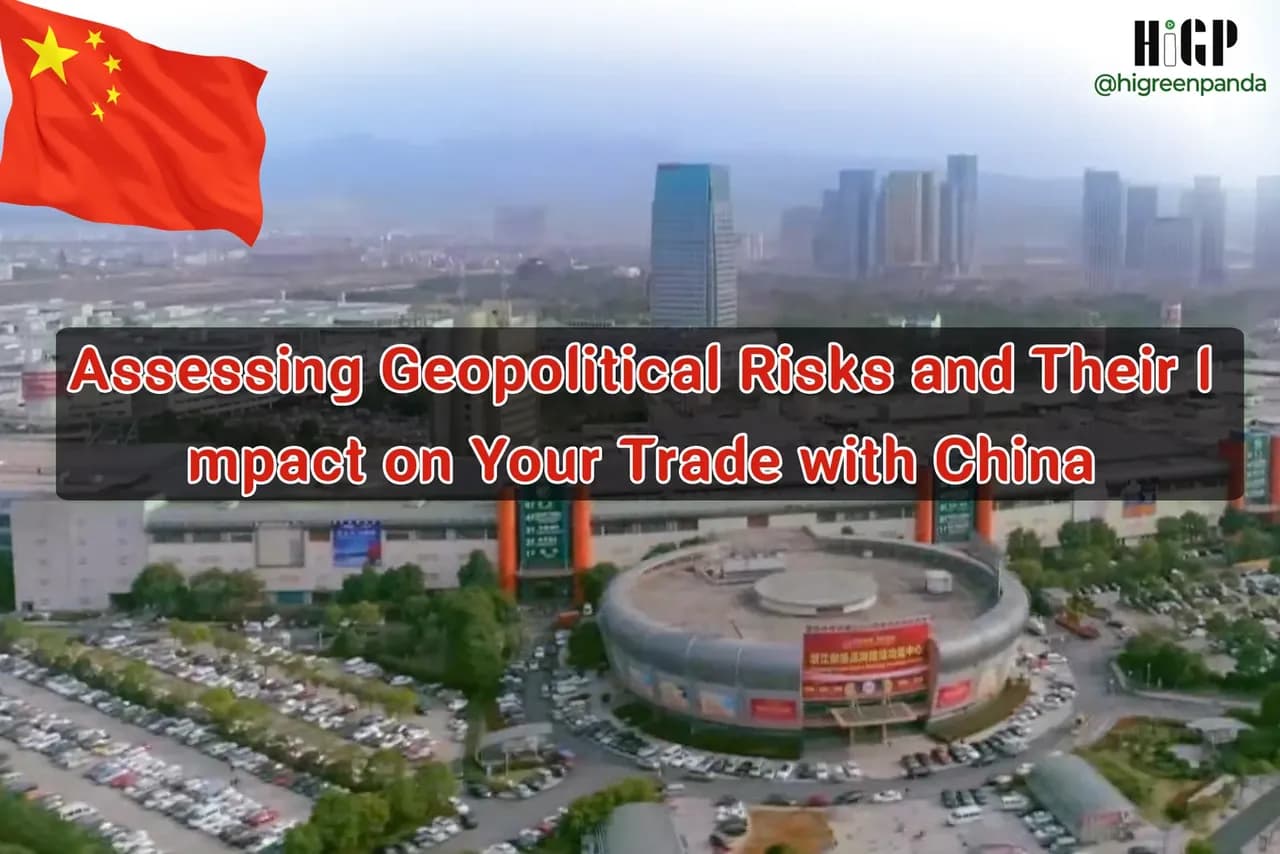
A world organised for decades by globalisation and geo-economics has rapidly become a world shaped by geopolitical risks. If you import from China into the Gulf or Yemen, those risks are no longer abstract: they show up as higher freight, delayed containers, frozen payments and suppliers you suddenly cannot use. By the end of this guide you will know the main risks for your trade with China, how each one reaches your business, and a practical way to assess and reduce them.
The key geopolitical risks for traders
Four risks dominate the current outlook. None of them will disappear quickly, so plan around them rather than waiting for them to pass.
Tensions between Russia and NATO
The Russia–Ukraine conflict continues to create a humanitarian crisis and to expose the world to greater risks in capital flows, trade and commodity markets. For you, the effect is indirect but real: energy and grain prices move, which feeds into factory costs in China and freight fuel surcharges, and wide sanctions regimes mean banks screen more payments more slowly.
Cyber attacks
Cyber attacks are becoming more frequent and severe, and are increasingly used as a tool of state policy. As critical national infrastructure is digitised, many essential services, including ports, shipping lines and banks, become vulnerable. At the level of a single importer, the most common damage is more ordinary: email accounts hacked so that fraudsters send fake "new bank details" in a supplier's name.
Strategic competition between the United States and China
China's growing military presence in the South China Sea, its technological advance and continuing trade tensions with the United States have raised geopolitical tension. Tariffs, export controls and sanctions lists can change which Chinese companies can use US dollar payments, which components are restricted, and how carefully your bank reviews transfers. Goods that contain restricted technology may need extra checks even when they are going to the Gulf, not the US. If you plan to invest rather than import, see our guide to China tech investment.
Climate risks
Climate change has brought more frequent and severe storms, droughts, floods and forest fires, damaging infrastructure and disrupting supply chains. South China's typhoon season, roughly July to October, can close ports such as Yantian and Nansha for one to several days at a time. Floods and heatwaves have also led to power rationing for factories in some provinces, which delays production.
How geopolitical risks hit your trade with China
Geopolitical events reach a Gulf importer through a handful of channels. Knowing them helps you see which parts of your business are exposed.
- Freight and routing: conflict near shipping lanes such as Bab el-Mandeb or the Strait of Hormuz can bring war-risk surcharges, higher insurance premiums, longer routes and skipped port calls. Shipments to Jeddah and Aden are more exposed to Red Sea disruption than those to Jebel Ali or Dammam.
- Payments: sanctions and compliance screening can delay or return transfers, especially in US dollars or to and from higher-risk jurisdictions.
- Supplier availability: a supplier added to a sanctions list, or hit by power rationing, can stop shipping with little notice.
- Input costs: commodity and energy price swings flow into factory quotations, often within one or two quotation cycles.
- Regulation: new export controls or import rules can change what documents you need or which products can move at all.
Our guide to risk management strategies when importing from China covers the operational side of these risks in more depth.
How to assess geopolitical risk step by step
You do not need a research department. A simple scoring exercise, repeated every quarter, is enough for most importers.
- List your top 10 products by revenue, and for each one note the supplier, the supplier's province, the loading port, the shipping route and your payment method.
- For each of the four risks above, score how likely it is to affect that product in the next 12 months, from 1 (unlikely) to 5 (very likely).
- Score the impact if it does, from 1 (minor delay) to 5 (you cannot supply customers for months).
- Multiply likelihood by impact. Anything scoring 12 or more needs a written mitigation plan; 6 to 11 needs monitoring.
- Assign one person to own each high-scoring risk and review the scores every three months, or immediately after a major event.
A worked example
Say you import LED lighting from one factory in Zhongshan, shipped from Nansha to Jeddah and paid in US dollars. Climate risk (typhoon closures in late summer) might score 3 for likelihood and 2 for impact: 6, so you monitor it. Red Sea disruption on the Jeddah route might score 3 and 4: 12, so it needs a plan, such as a quoted alternative via Jebel Ali and overland, or extra safety stock before the busy season. Payment delay from sanctions screening might score 2 and 3: 6. Supplier concentration, with one factory and no backup, might score 3 and 5: 15, which makes a second supplier your first priority.
Mitigation strategies that work
Diversify supply chains
Reduce dependence on a single supplier. For your most important products, qualify a second supplier, ideally in a different province and shipping from a different port. A second supplier does not need half your volume; even 20% to 30% keeps the relationship live and the tooling ready. HiGreenPanda's product sourcing team can shortlist and audit alternative factories in China.
Improve regulatory transparency
Understand both local and international rules that apply to your goods: Chinese export rules, your own country's import requirements, and any sanctions or export-control lists that touch your products or suppliers. The compliance checklist for importing from China is a good starting point, and legal challenges in import and export explains where contracts need to be tightened.
Invest in cybersecurity
Protect your data and operations. For most importers, that means a few firm habits rather than expensive systems.
- Two-factor authentication on email and banking accounts
- A rule that any change to supplier bank details is confirmed by phone or video call with a known contact
- Supplier bank details recorded in the signed contract, not only in email
- Separate staff for approving and sending payments above an agreed limit
Choose shipping terms and insurance with risk in mind
Your Incoterm decides who pays when a route changes or a surcharge appears. Under FOB, you book the freight, so surcharges and rerouting costs fall on you, but you also control the carrier and can switch quickly. Under CIF or CFR, the supplier books, which is simpler but gives you less control when things go wrong. Whichever you use, buy cargo insurance on an all-risks basis and ask your broker whether war and strikes cover is included for your route; for Red Sea ports it often needs to be added separately.
Monitor political developments
Stay up to date with political changes. Follow your freight forwarder's market updates, your bank's compliance notices and official announcements on trade agreements. Relations between China and the Arab world are generally expanding; our overview of bilateral trade between China and Arab countries shows where the opportunities are growing.
Recommendations for companies
- Build geopolitical risk analysis into strategy and governance. Put the quarterly risk score on the management agenda, not only in the purchasing team.
- Treat international cooperation as essential. Work closely with forwarders, banks, inspection firms and suppliers who can warn you early.
- Build resilience and adaptability. Hold safety stock of 4 to 8 weeks for critical items, keep alternative routes quoted, and write force majeure and delay clauses into contracts.
Common mistakes when handling geopolitical risk
- Relying on one supplier or one port for a product that makes up a large share of revenue.
- Assuming a risk only affects Western buyers. Sanctions screening and shipping disruption affect Gulf trade as well.
- Changing payment details on email instructions alone. This is still the most common way importers lose money.
- Ignoring the typhoon season when promising delivery dates to your customers between July and October.
- Reacting after the event. Rates and space tighten fast; importers with a plan and alternative quotes act first.
- No written contract terms on delays. Without them, disputes over who bears extra cost are hard to resolve.
What to do this week
- List your top 10 products with supplier, port, route and payment method.
- Score each against the four risks and highlight anything scoring 12 or more.
- Set a written rule that bank detail changes need phone confirmation.
- Ask your forwarder for an alternative route and quotation for your two most important shipments.
- Pick one high-risk product and start qualifying a second supplier.
本文解答的问题
What are the main geopolitical risks when trading with China?
The main risks are tension between Russia and NATO, cyber attacks, strategic competition between the United States and China, and climate-related disruption. They affect freight costs, payment speed, supplier availability and regulation.
How do geopolitical risks affect shipping from China to the Gulf?
Conflict near shipping lanes can bring war-risk surcharges, higher insurance premiums and longer routes. Shipments to Red Sea ports such as Jeddah and Aden are more exposed to disruption around Bab el-Mandeb than those to Jebel Ali or Dammam. Ask your forwarder for surcharges in writing when you book.
How can a small importer reduce geopolitical risk?
Diversify suppliers across provinces and ports, understand the rules that apply to your goods, protect email and payments with simple security habits, and follow political developments through your forwarder and bank. Review the risks every quarter with a simple likelihood and impact score.
Do US sanctions affect trade between China and Arab countries?
They can. If a Chinese supplier appears on a sanctions list, banks may delay or return US dollar payments to it, even when the goods are going to the Gulf. Check your supplier's name against published sanctions lists and ask your bank before paying a new supplier.
When is typhoon season in South China?
The main typhoon season runs roughly from July to October. Ports such as Yantian and Nansha can close for one to several days during a storm, so build a buffer into delivery dates during those months.
HiGreen Panda Marketing