Investing in China
Investment in Chinese Infrastructure: 5 Sectors Open to Foreigners
Foreign capital still shapes China's growth, and five sectors stand out for foreign companies. Here is what each one offers, how you enter it, and what to check before you commit money.
作者:萨米·哈吉里阅读约需 8 分钟
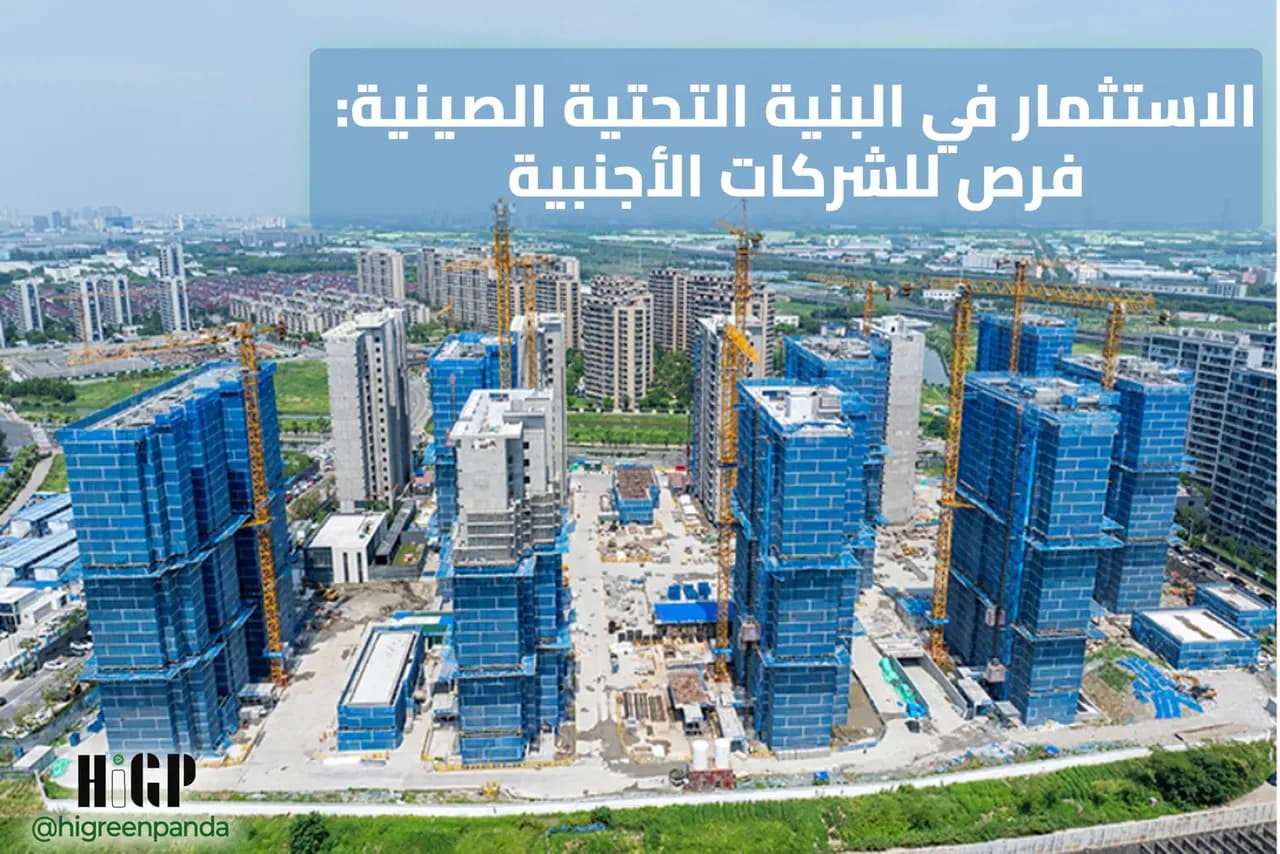
You have capital, a trade relationship with China, and a question: where can a foreign company actually put money into China and expect a fair chance of a return? Investment in Chinese infrastructure is no longer only about roads and ports. By the end of this guide you will know the five sectors that attract most foreign interest, how a Gulf investor usually enters each one, and what to check before signing anything.
Why China still wants foreign capital
Foreign investment has been a major driver of China's growth since the reform period began, and the country continues to open further sectors to outside companies. The central legal basis today is the Foreign Investment Law, in force since 1 January 2020. It gives foreign-invested companies the same treatment as local ones, except in areas named on the national Negative List.
The Negative List is short and updated regularly. If your activity is not on it, you can usually set up a wholly foreign-owned company. If it is on it, you may need a Chinese partner, a cap on your shareholding, or you may be barred entirely. Always read the current version on the website of the Ministry of Commerce (MOFCOM) or the National Development and Reform Commission (NDRC) before you plan. For the wider picture of how capital flows in, see our guide to foreign direct investment in China.
Infrastructure here means more than concrete. China now talks about "new infrastructure": data centres, 5G networks, charging stations, logistics hubs, clean-energy grids and industrial internet platforms. Much of the opportunity for a foreign company sits in supplying, operating or building on top of this physical and digital base.
The five sectors attracting foreign investment
1. Fast-moving consumer goods sold through e-commerce
Rapid technological change and a strong online shopping culture have given international consumer brands direct access to hundreds of millions of Chinese buyers. Food, personal care, baby products and household goods sell through Tmall, JD.com, Douyin and cross-border e-commerce channels.
For a Gulf company, the lowest-risk entry is often cross-border e-commerce, which lets you sell into China without a local entity in the first phase. Once sales are steady, a local company, warehouse and distributor network become worth the cost. Expect margins to be squeezed by platform fees, paid traffic and heavy promotion calendars such as 11.11 and 618.
2. Hydrogen and clean technology
China is pushing towards a lower-carbon economy, and global companies look for investments that fit that direction. Hydrogen production and storage, solar, wind, battery storage and energy-efficiency equipment all receive policy support. The country has published a national hydrogen plan covering 2021 to 2035, and provinces add their own targets and subsidies.
This matters to Gulf investors because the region is building its own green hydrogen and solar capacity. Partnerships that combine Chinese equipment and supply chains with Gulf projects are common. Read more in our guide to investment in China's green energy sector.
3. Automation, advanced technology and smart manufacturing
China's manufacturing sector actively seeks cooperation and knowledge exchange with foreign industry leaders, with a focus on bringing advanced technology into automated production lines. Robotics, precision components, industrial software and testing equipment are all in demand.
Foreign firms that bring a technology Chinese factories lack often receive the best terms: land, tax reductions and faster approvals in industrial parks. The trade-off is intellectual property exposure, so register patents and trademarks in China before you share drawings.
4. Financial services, insurance and investment products
China's banking, financial services and insurance sectors have seen significant growth in foreign direct investment in recent years. Most foreign ownership caps in banking, securities, fund management and life insurance were removed between 2018 and 2020, and several global groups now run wholly owned operations.
This sector suits large institutions, not small traders. Licences from the National Financial Regulatory Administration or the China Securities Regulatory Commission take many months and require substantial capital. A smaller investor usually participates indirectly, through funds or partnerships, after taking licensed professional advice.
5. Healthcare facilities and research and development
An ageing population and rising demand for high-level treatment and wellness have made China a target for international hospital operators, health-technology firms, pharmaceutical companies and medical-device makers. Private hospitals, rehabilitation centres, elderly care and clinical research all attract foreign money.
Rules here are strict. Medicines and medical devices need registration with the National Medical Products Administration (NMPA), which can take one to three years depending on the product class. Wholly foreign-owned hospitals are allowed only in pilot cities, so check the current list with local health authorities before you plan a facility.
How a foreign company enters: the main routes
Your choice of vehicle decides your costs, your control and how you move money home. These are the options most Gulf investors weigh.
- Wholly foreign-owned enterprise (WFOE): full control, can trade, invoice in CNY and hire staff. Setup usually takes 4 to 8 weeks for the licence, plus 2 to 6 weeks for bank accounts, depending on city and business scope.
- Joint venture with a Chinese partner: required in some restricted sectors; gives you local networks but shared control. Your contract terms matter more than the licence.
- Representative office: can do market research and liaison only; it cannot sign sales contracts or invoice customers.
- Free trade zone entity: some zones offer lighter rules, faster customs and tax incentives. Compare zones in our guide to free trade zones in China.
- Indirect participation: funds, minority stakes or supply partnerships, suited to investors who want exposure without running an operation.
Incentives vary by region and by how closely your project matches national priorities. Before you pick a city, read how to benefit from Chinese government incentives for foreign SMEs and compare what inland provinces offer against coastal hubs.
Step by step: from idea to operating company
- Define the activity in one sentence and check it against the current Negative List and the Catalogue of Industries for Encouraging Foreign Investment.
- Shortlist two or three cities or zones and ask each investment promotion bureau in writing what incentives apply to your activity.
- Choose the vehicle (WFOE, joint venture or zone entity) and decide the registered capital you can realistically inject over the agreed period.
- Reserve the company name, prepare notarised and legalised shareholder documents from your home country, and sign a lease for a registered address.
- Apply for the business licence, then register with tax, customs (if you import or export) and the foreign exchange system through your bank.
- Open the capital account and basic CNY account, inject capital and start hiring once the work-permit route for foreign managers is clear.
Most delays come from step 4, when home-country documents are missing a legalisation stamp or a Chinese translation. Start that paperwork first.
What to check before committing money
- Is the activity on the Negative List, and does it need a separate industry permit beyond the business licence?
- Does the local partner or supplier hold the licences they claim? Ask for a copy of the business licence and verify it on the National Enterprise Credit Information Publicity System.
- How will profits leave China? Dividends are paid after tax filings and audit, so plan your cash cycle around that.
- What corporate income tax rate applies? The standard rate is 25%, with reduced rates for qualifying high-technology firms and some regions.
- Who owns the intellectual property, and is your trademark registered in China in the right classes?
- Have you set aside funds for 6 to 12 months of running costs before revenue arrives?
Common mistakes foreign investors make
- Following headlines instead of rules. A sector being "encouraged" in the news does not mean your specific activity is open. Read the list itself.
- Choosing a city only by name. Shanghai and Shenzhen are expensive. Inland provinces may offer better land and tax terms for manufacturing; see our guide to China's developing regions.
- Signing a joint venture on trust. Control of the company seal, bank account and board decides who runs the business. Put it in the articles of association.
- Underestimating registered capital. It is a legal commitment to inject money within the agreed period, not a figure to inflate for show.
- Skipping local accounting. Monthly tax filings are due even when there is no revenue. Missed filings block bank transfers and licence changes.
What to do next this week
Write one sentence describing the activity you want to invest in, then check it against the current Negative List on the MOFCOM website. Pick the one sector above that fits your existing trade or expertise, not the one with the most coverage. Ask two investment promotion bureaus for their incentive terms in writing and compare them side by side.
If you decide a company is the right vehicle, HiGreenPanda can handle company formation in China from name reservation to bank account on the ground in Shenzhen and Shanghai.
本文解答的问题
Can a foreign company invest in infrastructure in China?
Yes, in most sectors. Under the Foreign Investment Law, foreign firms receive the same treatment as Chinese firms except in activities named on the Negative List. Some areas require a Chinese partner or cap foreign shareholding, so check the current list before you plan.
Which sectors in China are most attractive to foreign investors?
Five sectors stand out: fast-moving consumer goods sold through e-commerce, hydrogen and clean technology, automation and advanced manufacturing, financial services and insurance, and healthcare facilities with research and development. Each has different licence requirements and capital needs.
How long does it take to set up a foreign-owned company in China?
A wholly foreign-owned enterprise usually receives its business licence in 4 to 8 weeks, followed by 2 to 6 weeks to open bank accounts. The city, business scope and how quickly your home-country documents are notarised and legalised all move the timeline.
What is the Negative List for foreign investment in China?
It is the official list of sectors where foreign investment is prohibited or restricted, for example by requiring a Chinese partner. Anything not on the list is generally open on equal terms. The list is updated regularly and published by MOFCOM and the NDRC.
What tax does a foreign company pay in China?
The standard corporate income tax rate is 25%. Qualifying high-technology enterprises and firms in certain regions or zones can receive reduced rates. VAT and withholding tax on dividends also apply, so take local accounting advice for your structure.
HiGreen Panda Marketing