Investing in China
Investment in China's Education Sector: Rules and Real Openings
China's education market is huge, but the 2021 tutoring crackdown and strict foreign-investment rules closed many doors. This guide shows which ones are still open and how Gulf investors and traders can use them.
作者:萨米·哈吉里阅读约需 8 分钟
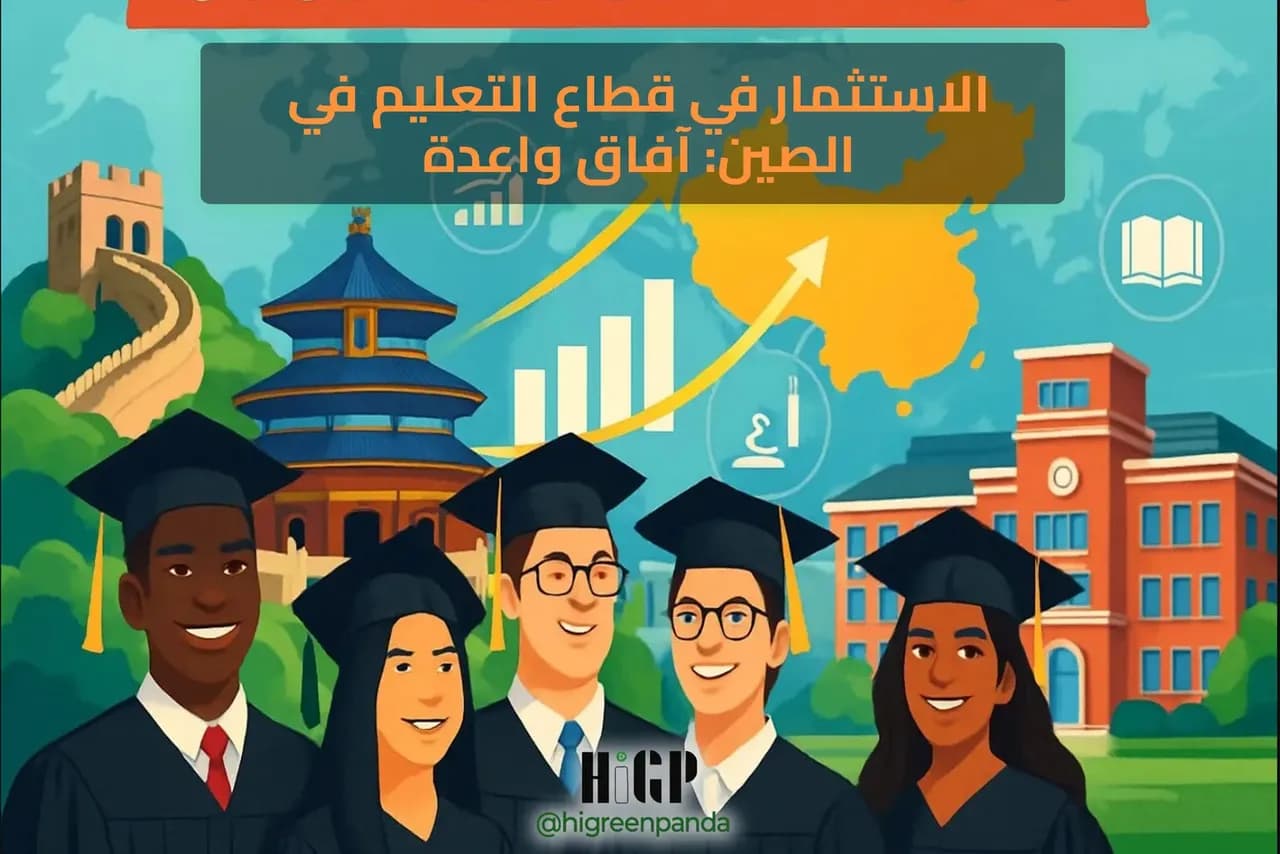
China has hundreds of millions of students and parents who spend heavily on learning, so it is natural to look at the market as an investor or supplier. The problem is that the rules changed sharply in 2021, and foreign money is kept out of large parts of the system. Investment in China's education sector is still possible, but only in the right segments and the right structure. By the end of this guide you will know how big the market is, what is off limits, where the real openings are, and how a Gulf investor or importer can take part.
How big is China's education market?
China runs the largest state education system in the world. As of 2022 it had about 293 million students, 18.8 million teachers and more than 518,500 schools.
- Nine years of education are compulsory: six years of primary and three years of lower secondary school.
- Higher education is now common. More than 10 million students graduated from university in 2022.
- Demand runs across every level, from pre-school to vocational training and adult learning, and families treat education as a priority spend.
Size alone does not make a market open to you. In education, what you may own and teach matters more than how many students there are.
What foreign investors can and cannot do
The Double Reduction policy
In July 2021 the government launched a broad campaign against the private tutoring industry, known as the Double Reduction (Shuang Jian) policy. Its aim was to reduce both homework and after-school tutoring. For-profit tutoring in school curriculum subjects was banned, and new curriculum tutoring companies can no longer be set up as profit-making businesses. Many of the country's largest listed education companies lost most of their core business within months. The rules also bar foreign capital from curriculum tutoring institutions, including through franchising or contractual control structures.
Where foreign capital is restricted or prohibited
China's Negative List for foreign investment sets the limits. Compulsory education (the nine years of primary and lower secondary) is closed to foreign investment. Pre-school, high school and higher education are open only through Sino-foreign cooperation, in which the Chinese partner leads. Check the current Negative List, published by the National Development and Reform Commission and the Ministry of Commerce, before you plan any structure; it is updated from time to time.
Where there is more room
- Non-curriculum training, such as arts, sports, coding and STEM activities, subject to local licensing and pricing rules.
- Vocational and adult training, which the government actively encourages.
- Education technology and equipment: hardware, software and content sold to schools, training centres and families.
- Schools for the children of foreign nationals, under their own approval regime.
For the general rules on entity types and approvals, read our guide to foreign direct investment in China.
Trends shaping the sector
Technology in the classroom
China has been one of the largest investors in education technology since about 2015. The pandemic sped up the shift, as schools moved to virtual classrooms and online platforms in a matter of weeks. China is now the largest edtech market by number of users, with more than 400 million students using digital learning tools. Much of the hardware behind this, from interactive whiteboards to tablets and classroom cameras, is designed and made in China. Artificial intelligence is now being built into tutoring apps and marking tools, a theme covered in our article on robots and artificial intelligence in China.
STEM learning
National policy has pushed science, technology, engineering and maths hard. In recent years K-12 STEM programmes have expanded across the country, supported by new technology and supplementary materials: robotics kits, coding platforms, lab equipment and maker spaces.
International schools
In February 2023, New Oriental Education International published its Chinese International Schools Research 2023 White Paper, which found a net increase of 19 international schools in mainland China in 2022 compared with 2021. Growth continues, but it is modest and depends on each city's rules and demand from both foreign and Chinese families.
Vocational and adult education
Vocational education has strong government backing. In April 2022 the Standing Committee of the National People's Congress passed a revised Vocational Education Law, which gives vocational qualifications equal standing with general education and encourages companies to take part in training. For foreign firms with technical know-how, joint training programmes with Chinese colleges or employers are one of the more open routes.
Chinese tutoring companies looking abroad
After the Double Reduction rules, many Chinese tutoring companies turned overseas. Firms that used to prepare students for study abroad are now focusing on the children of Chinese citizens living outside China, and on language and skills learners in other markets. For Gulf partners this matters: Saudi Arabia and the UAE have both introduced Mandarin teaching in some public schools, which creates demand for teachers, textbooks and learning platforms that Chinese companies want to supply.
Openings for Gulf investors and importers
For most readers, the practical opportunity is not owning a school in China. It is trading with and partnering with China's education industry.
- Sourcing education equipment. Interactive panels, STEM and robotics kits, science lab equipment, school furniture and e-readers are made at scale in Shenzhen, Guangzhou and the Yangtze River Delta. Gulf schools and distributors buy these in volume. Our product sourcing service helps importers find and vet these manufacturers.
- Distribution and licensing. Chinese edtech and content companies seeking Arab markets need local distributors who understand Ministry of Education approvals in each Gulf country.
- Mandarin learning. Growing Mandarin teaching in Gulf schools creates demand for bilingual materials and teacher training partnerships.
- Vocational partnerships. Technical training programmes built with Chinese colleges or manufacturers, delivered in the Gulf.
When you import education equipment, check the product standards and certifications required in your country, such as SASO requirements in Saudi Arabia, and specify them in the purchase contract. Electronics for children often face stricter safety rules. Arrange a pre-shipment quality inspection before paying the balance.
How to enter China's education market step by step
The barriers are high even in open segments. You need service experience, technical expertise and strong sales channels. The biggest obstacle is the regulatory environment itself, together with the need to adapt content and technology to local standards, language and teaching preferences.
- Decide your role: supplier of equipment, content licensor, training partner, or investor in a permitted segment.
- Check the current Negative List and local rules for that exact activity, and confirm it is not curriculum tutoring or compulsory education.
- Choose a structure. For training or services inside China, that may be a wholly foreign-owned enterprise with the right business scope, or a cooperation agreement with a licensed Chinese institution.
- Find partners with the licences you lack. Ask to see the partner's business licence and education permits, and check the scope matches what they will do for you.
- Adapt your content and product. Chinese language versions, local curriculum alignment and data rules for children's personal information all apply.
- Protect your content and brand with Chinese trademark and copyright registrations before launch.
- Start with a pilot in one city or one product line before committing larger capital.
Common mistakes in the education sector
- Assuming the pre-2021 tutoring model still works. For-profit curriculum tutoring is closed, including to foreign-backed structures.
- Relying on an old version of the Negative List. It changes, and education is one of the most restricted areas.
- Partnering with a Chinese institution without checking that its licence covers the activity you are paying for.
- Importing classroom electronics without confirming certification and safety requirements in your home country first.
- Launching content without localising it for Chinese teaching methods and parental expectations.
What to do this week
- Write down which role you want: supplier, distributor, licensor, training partner or investor.
- Read the latest Negative List entries for education and note what applies to your plan.
- If you are sourcing equipment, list the certifications your home market requires and ask three manufacturers for samples and test reports.
- If you are considering a partnership, request the partner's business licence and education permits and have them checked.
For investors weighing education against other sectors, our guide to investing in China's developing regions shows where costs and incentives differ outside the big cities. Our guide to China tech investment covers technology sectors and incentives.
本文解答的问题
Can foreigners invest in education in China?
Yes, but only in some segments. Compulsory education is closed to foreign investment, and pre-school, high school and higher education require Sino-foreign cooperation with a Chinese partner in the lead. Non-curriculum training, vocational training, edtech and education equipment are more open.
What is the Double Reduction policy in China?
It is a policy launched in July 2021 to reduce homework and after-school tutoring for school pupils. It banned for-profit tutoring in school curriculum subjects and barred foreign capital from curriculum tutoring institutions. Many large tutoring companies shrank sharply or moved into other areas as a result.
How big is China's education system?
As of 2022, China had about 293 million students, 18.8 million teachers and more than 518,500 schools. Nine years of schooling are compulsory, and more than 10 million students graduated from university in 2022.
Is vocational education a good opportunity for foreign companies in China?
It is one of the more open areas. The revised Vocational Education Law passed in April 2022 strengthened government support and encourages companies to take part in training. Foreign firms with technical expertise often work through joint programmes with Chinese colleges or employers.
Can I import education equipment from China to the Gulf?
Yes. Interactive panels, STEM and robotics kits, lab equipment and school furniture are widely made in China. Confirm the certifications your country requires, such as SASO rules in Saudi Arabia, write them into the contract, and inspect goods before shipment.
HiGreen Panda Marketing