Economy and the Belt and Road
Services Trade Between China and the World: Where the Openings Are
The world now depends more on China than China depends on the world. Here is what the shift means for services trade, where Gulf and Arab businesses can find openings, and how to measure your own exposure.
作者:萨米·哈吉里阅读约需 9 分钟
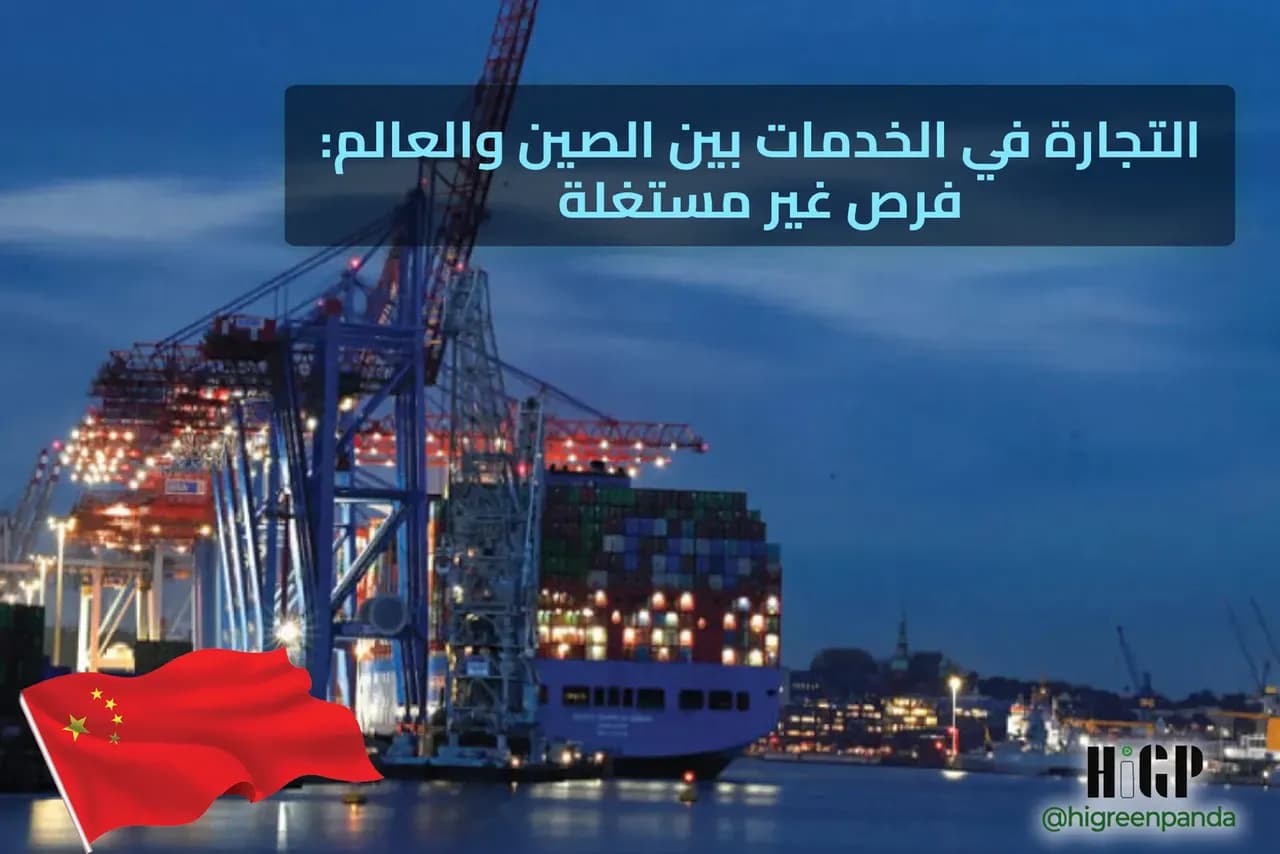
Most Gulf traders think about China in terms of containers: goods made there, shipped here. But the relationship between China and the world is changing, and a growing share of the value sits in services such as logistics, finance, travel, technology and consulting. This guide explains what research on services trade between China and the world shows, which openings are realistic for Gulf and Arab businesses, and how to measure how exposed your own company is to China.
How the balance between China and the world has shifted
An exposure index built by the McKinsey Global Institute (MGI) measures how connected economies are through trade, technology and capital. Its finding is simple: the world's relative exposure to China has increased, while China's exposure to the world has decreased.
- From 2000 to 2017, the world's exposure to China rose across all three dimensions: trade, technology and capital.
- The world's total exposure index to China rose from 0.4 in 2000 to 1.2 in 2017.
- China's exposure to the world peaked at 0.9 in 2007 and fell to 0.6 in 2017.
In practical terms, China now relies more on its own market and its own suppliers, while other countries rely more on China as a buyer, a supplier and an investor. For you, that means Chinese partners have more options than before, and your position in their supply chain matters more than it used to.
These figures come from MGI's 2019 research using 2017 data. The pandemic, trade tensions and new trade agreements have moved things since. Treat them as the direction of travel, and check current numbers from China's Ministry of Commerce, the World Trade Organization or your own chamber of commerce before you plan around them.
Why services are the next stage of China's global trade
Goods trade between China and the world is mature. Services trade is less developed, which is why MGI treats it as one of the areas with the most room to grow. Services include everything that crosses a border without being a physical product: freight and logistics, insurance, banking and payments, tourism, education, engineering and construction management, software and business consulting.
China's place in technology value chains
China is a global force in the digital economy and in artificial intelligence. In many types of technology it is already the largest consumer. In 2017 China accounted for 40% of global mobile phone sales, 64% of electric vehicle sales and 46% of semiconductor consumption. That scale creates demand for services around the products: software, maintenance, integration, training and after-sales support. Our analysis of China's digital transformation of traditional industries shows how this is changing manufacturing and trade.
A consumer market that keeps expanding
China's consumer market is confident, increasingly wealthy, sophisticated and ready to experiment, and it provides a strong link between China and the world. MGI projected that by 2030, 58% of Chinese households are likely to be in the upper income bands, above South Korea's then share of 55%. Chinese consumer markets are also highly integrated with the world: across ten major consumer categories, the average penetration of multinational companies was 40% in 2017, compared with only 26% in the United States.
Two trends present significant business opportunities:
- Chinese consumers demand more and better choices. As incomes rise, they want more options in food, fashion, health, travel and education, and many of those are services.
- More Chinese people are travelling abroad and spending more. Growing flows of tourists, students and business visitors create openings for companies in destination countries, including the Gulf.
Five areas that decide how much value is at stake
MGI's simulations suggest that more or less engagement between China and the world in five areas could shift economic value of between USD 22 trillion and USD 37 trillion by 2040. The range depends on whether engagement deepens or pulls back. Each area affects Gulf businesses differently.
- Growth as an import destination: China developing itself as a major buyer of foreign goods. This matters to Gulf exporters of petrochemicals, dates, seafood and processed food.
- Services liberalisation: opening China's services sector to foreign firms. Check China's current foreign investment negative list before planning a services business there.
- Financial market globalisation: modernising China's financial system and linking it to global markets, which affects how you pay suppliers and settle in CNY.
- Cooperation on global public goods: China contributing more to shared problems such as climate and public health, which drives demand for green technology and standards.
- Technology and innovation flows: increasing cross-border flows of technology, licences and know-how, which shape what your suppliers can build.
Services liberalisation is the area most worth watching if you want to sell services into China. Foreign investment is governed by a negative list: sectors not on the list are generally open to foreign firms on the same terms as local ones, while listed sectors are restricted or closed. Pilot free trade zones and the Hainan Free Trade Port often apply shorter lists. The lists are revised regularly, so check the current version published by the National Development and Reform Commission and the Ministry of Commerce before you plan a structure.
Trade agreements and infrastructure programmes are the channels through which much of this happens. See our guides to China's new free trade agreements and partnerships and China's Belt and Road Initiative for the Gulf-specific detail.
Where Gulf and Arab businesses can find openings
You do not need to be a large company to benefit from services trade. The realistic openings for most Gulf firms fall into four groups.
Serving Chinese travellers and investors
Hotels, tour operators, retailers and property firms in the Gulf can serve Chinese visitors better by accepting Chinese payment methods, offering Mandarin-language information and listing on platforms Chinese travellers already use. Check which payment providers your bank or acquirer supports before promising this to customers.
Trade-support services
Every container between China and the Gulf needs freight forwarding, inspection, customs brokerage, insurance and finance. Firms that combine these into one reliable service for smaller importers are in demand. The broader picture of bilateral trade between China and Arab countries shows which sectors are growing fastest.
Digital services and payments
Cross-border payments, e-commerce operations, translation and digital marketing are services that can be sold into China or bought from it. Settlement is changing too; our article on China and central bank digital currencies explains what the digital yuan could mean for trade payments.
Buying services from China, not only goods
Services trade runs both ways. Chinese firms now sell engineering and construction management, solar and grid installation, port and warehouse operation, telecoms equipment with maintenance contracts, and software for retail and logistics. For a Gulf buyer, the questions are the same as for goods: who is the contracting entity, which law governs the contract, who provides support locally, and how are payments staged against milestones. Ask for references from projects in the region and check that the provider has the licences your own country requires for that service.
How to assess your company's exposure to China
MGI's recommendations for companies translate into four steps you can work through with your team.
- Assess your short- and long-term exposure. List what share of your purchases, sales, financing and technology depends on China, and what happens if that share is disrupted for three months.
- Decide your investment position and place in the value chain. Choose whether you will only buy from China, sell into it, or commit capital there, and match your spending to that decision.
- Build operational excellence. Develop the ability to manage risk and uncertainty: second suppliers, clear contracts, inspection and realistic lead times.
- Adopt a survival mindset. Keep a healthy balance sheet and secure access to financing so that a tariff change or shipping shock does not force a bad decision.
Exposure checklist
- Share of your cost of goods sourced from China
- Number of products with only one Chinese supplier
- Currency of your purchase contracts and your sales
- Services you buy from Chinese firms, such as software, logistics or platforms
- Contract terms if a supplier cannot deliver
- Cash buffer in months of operating costs
For the political side of this risk, read our guide to assessing geopolitical risks in your trade with China.
Common mistakes when reading China-world trade data
- Treating 2017 figures as current. Use them for trends and check the latest data before investing.
- Assuming a large market means easy access. Many services sectors in China still restrict foreign ownership.
- Focusing only on goods and ignoring the services around them, which is often where the margin is.
- Committing capital before deciding your position in the value chain.
- Planning for growth without a plan for disruption.
What to do this week
Fill in the exposure checklist above for your business with real numbers. Pick one service you currently buy from a third party, such as freight, inspection or payments, and ask whether a Chinese provider or a Gulf provider with China experience could do it better. Then check the latest trade figures from China's Ministry of Commerce and your own country's statistics office. If you want a second view on where your business fits, HiGreenPanda offers business consulting on China strategy from its teams in Shenzhen and Shanghai.
本文解答的问题
What is services trade between China and the world?
It is the cross-border exchange of services rather than goods: freight and logistics, banking and payments, insurance, tourism, education, engineering, software and consulting. It is less developed than China's goods trade, which is why researchers see it as an area with room to grow.
Is the world more dependent on China than China is on the world?
According to the McKinsey Global Institute's exposure index, yes. The world's exposure to China rose from 0.4 in 2000 to 1.2 in 2017, while China's exposure to the world peaked at 0.9 in 2007 and fell to 0.6 in 2017.
What opportunities does China's services trade offer Gulf businesses?
The main openings are serving Chinese travellers and investors, providing trade-support services such as freight, inspection and customs brokerage, and offering digital services and payments. Each depends on understanding what Chinese customers expect and which regulations apply.
How much economic value depends on China's engagement with the world?
MGI's simulations put the value at stake at between USD 22 trillion and USD 37 trillion by 2040, depending on whether engagement deepens or pulls back across five areas, including services liberalisation and financial market globalisation.
How can a company reduce its risk from dependence on China?
Start by measuring exposure: the share of costs sourced from China, products with a single supplier, and currency risk. Then decide your position in the value chain, build second sources and clear contracts, and keep a healthy cash buffer and access to financing.
HiGreen Panda Marketing