Importing from China
Incoterms for Importing from China: EXW, FOB, CIF and DDP
The Incoterm on your quotation decides who pays for freight, insurance and customs, and when the risk becomes yours. This guide compares EXW, FOB, CIF and DDP for importers buying from China.
作者:萨米·哈吉里阅读约需 9 分钟
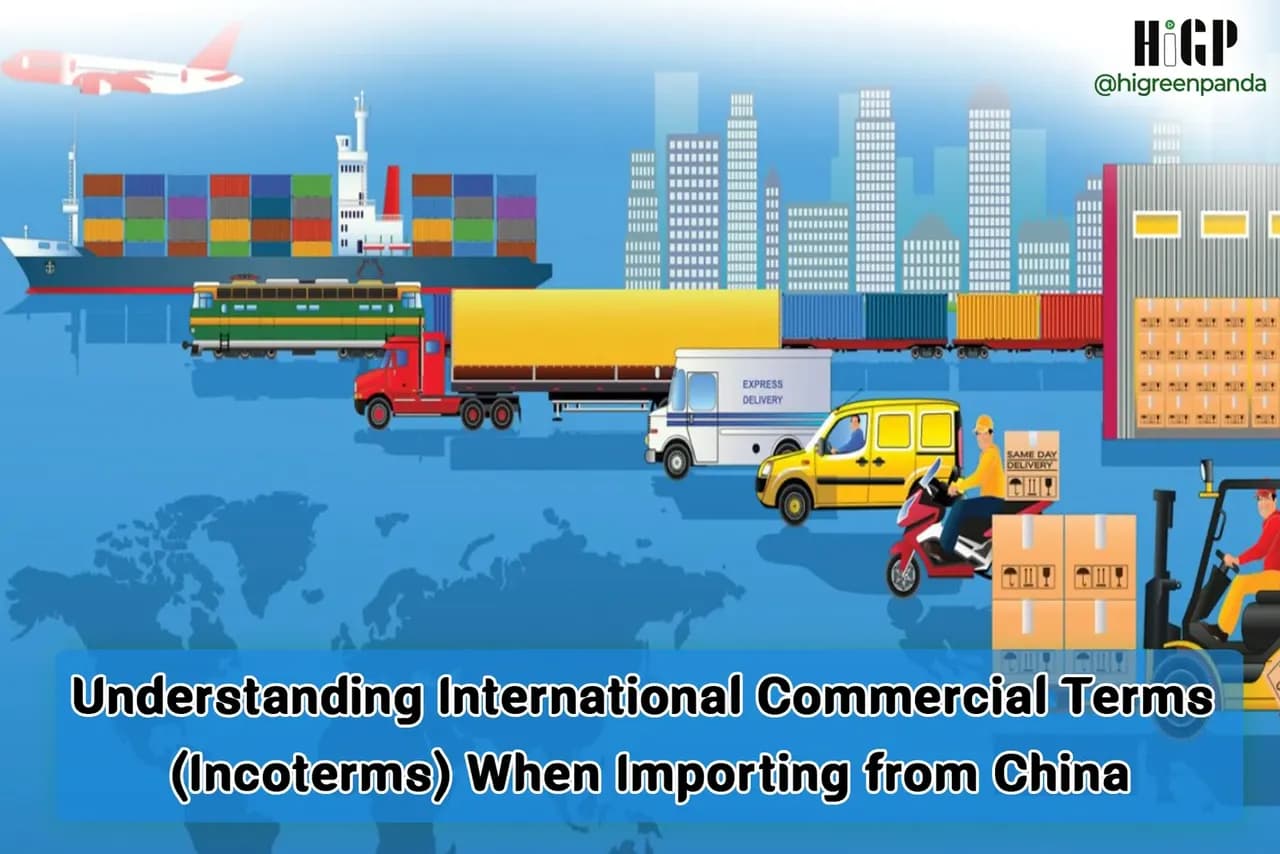
Two suppliers quote you for the same product: one at USD 4.20 FOB Ningbo, the other at USD 4.60 CIF Jebel Ali. Which is lower once the goods reach your warehouse? You cannot tell until you understand the three or four letters after the price. Incoterms for importing from China decide who pays for each leg of the journey, who arranges customs and at what moment a damaged or lost shipment becomes your problem. By the end of this guide you will be able to compare quotations like for like and choose the term that fits your experience and your cargo.
What Incoterms are and what they do not cover
Incoterms (International Commercial Terms) are a set of internationally recognised rules published by the International Chamber of Commerce (ICC). They give standard meanings to the trade terms used in international sales contracts. Each term defines three things:
- Who pays for each part of the shipment: transport, insurance, export and import customs, duties.
- When risk passes from seller to buyer.
- Where the goods are delivered: the delivery point named after the term.
The ICC reviews the rules periodically. Incoterms 2020 is the version in general use, with 11 terms, although older versions such as Incoterms 2010 still appear in some contracts. Always name the edition and the exact place, for example "FOB Shenzhen (Yantian) Incoterms 2020". Incoterms do not decide when ownership passes, how you pay or what happens if the goods are faulty. Those belong in your contract, which our guide to legal challenges in import and export covers.
The four Incoterms you will meet most often from China
EXW (Ex Works)
Responsibility: the minimum for the seller, who simply makes the goods available at its factory or warehouse. Risk and cost: everything passes to you at that moment. You are responsible for loading, inland transport in China, export customs clearance, international freight, import clearance and delivery at home. Pros and cons: it gives you maximum control and the lowest product price, but you need a forwarder with real capability in China. One practical problem: export clearance must be filed by a party registered with Chinese customs, and a foreign buyer usually is not. In practice the supplier's details often still appear on the export declaration, so agree in writing who will do what.
FOB (Free On Board)
Responsibility: the seller delivers the goods on board the vessel you nominate, at the agreed port of shipment. Risk and cost: risk and cost pass to you once the goods are loaded on board. The seller handles export clearance, transport to the port and loading; you pay for international freight, insurance, import clearance and inland delivery at home. Pros and cons: FOB is the most popular term for sea freight from China. It balances responsibilities and lets you choose the shipping line and forwarder, so you control freight cost and transit time.
CIF (Cost, Insurance and Freight)
Responsibility: the seller pays for the goods, freight to the destination port and marine insurance. Risk and cost: risk passes to you when the goods are loaded on board at the port of shipment, the same point as FOB, even though the seller pays freight and insurance to your port. You pay for unloading, import clearance and inland transport. Pros and cons: CIF suits buyers who want the seller to arrange shipping and insurance. But risk passes early, and the seller only has to buy minimum insurance cover, which may not be enough for your goods. Destination charges are another risk: a seller choosing the lowest freight rate may use a line or agent whose port and delivery-order fees at your end are high, and you pay those.
DDP (Delivered Duty Paid)
Responsibility: the maximum for the seller, who delivers to your premises in the destination country and pays all costs, including import duties and taxes. Risk and cost: these pass to you only when the goods are ready for unloading at your premises. Pros and cons: DDP is the most convenient term for the buyer, who carries almost no responsibility until arrival. But the total cost can be higher, and the seller may not get the best rates for freight and customs clearance in your country. Many DDP offers from China are really packaged by a freight consolidator. Ask whose name the goods will be imported under and what value will be declared; if the import is cleared under another company's licence or at an undervalued figure, you may struggle to prove ownership or resolve a customs problem.
Other terms worth knowing
FCA (Free Carrier) works like FOB but delivery happens when the goods are handed to your carrier, for example at the forwarder's warehouse or container terminal. The ICC recommends FCA rather than FOB for containerised cargo, because containers are usually handed over at a terminal days before loading. CFR is CIF without the insurance. DAP delivers to a named place at destination, with you paying import duties. FOB, CFR and CIF are for sea and inland waterway transport only; for air freight, use FCA, CPT, CIP or DAP.
Who pays for what: a quick comparison
- EXW: you pay from the factory door onwards, including Chinese export clearance. Risk passes at the factory.
- FOB: supplier pays until the goods are on board, including export clearance and origin port charges. You pay freight, insurance and everything at destination. Risk passes on loading.
- CIF: supplier pays freight and minimum insurance to your port. You pay destination port charges, duties and inland delivery. Risk still passes on loading in China.
- DDP: supplier pays everything to your door, including duties. Risk passes when the goods arrive at your premises.
To compare the two quotations in the opening, add freight and insurance to the FOB price, then add each option's destination charges. Then compare landed cost per unit. For other ways to bring that figure down, see strategies to reduce import costs from China.
A worked example
Take the two quotations from the opening for 10,000 units. The FOB Ningbo offer is USD 42,000 for the goods. Suppose your forwarder quotes USD 2,500 for sea freight to Jebel Ali and USD 150 for insurance, bringing you to USD 44,650 before destination charges. The CIF Jebel Ali offer is USD 46,000. If destination charges are the same under both, FOB is lower by USD 1,350. If the CIF seller's line charges USD 900 more at your port, the gap grows to USD 2,250. The figures here are only illustrations; ask your forwarder for real quotes on your route, because freight rates can move sharply within weeks.
How Incoterms link to your payment terms
A common arrangement with Chinese suppliers is a 30% deposit and 70% balance against a copy of the bill of lading. Under FOB and CIF this ties the balance to loading, which is also the moment risk passes to you, so schedule the pre-shipment inspection before the balance is due. Under EXW the goods are yours at the factory gate, so do not pay the balance until they have been inspected and collected.
How to choose the right Incoterm
- Assess your experience. If you are new to importing or have no forwarder, DDP or a delivered term can reduce risk while you learn, provided you check how the goods will be cleared.
- Decide how much control you want over cost. For full control of freight and insurance, choose EXW or FOB, or FCA for containers.
- Consider the type of goods. Fragile, high-value or temperature-sensitive cargo may need special handling and fuller insurance, which is easier to arrange yourself.
- Factor in the supplier relationship. Reliable, established suppliers are usually more flexible about which term they accept.
- Get a landed-cost quote for each option from your forwarder before you sign.
- Consult an expert. A logistics specialist or shipping company can confirm the best term for your cargo, route and destination port.
If you are still learning the full sequence from order to delivery, start with our step-by-step guide to importing from China.
Common Incoterm mistakes
- Writing only the term. "FOB China" is not enough. Name the port, the terminal where relevant and the edition.
- Assuming CIF means the seller carries the risk at sea. It does not; risk is yours from loading. Buy your own additional cover if the goods are valuable.
- Ignoring destination charges under CIF. Ask your forwarder for an estimate of local charges before accepting a CIF quote.
- Buying EXW without a forwarder in China. Someone must load, truck and clear the goods for export. If nobody is appointed, the container misses the vessel.
- Accepting DDP without checking the import route. Know whose name and what value go on your import declaration.
- Paying the balance before loading is confirmed under FOB. Inspect before shipment, since the goods are your risk once on board; see why quality inspection before shipment matters.
Incoterm disputes often sit inside wider supply problems. Our guide to risk management strategies when importing from China covers the rest.
What to do next
This week, take your current supplier quotations and check that each one names the Incoterm, the exact place and the edition. Ask your forwarder for a landed-cost estimate under FOB and under CIF or DDP for your next order, and put the chosen term, place and edition into your purchase contract. If you want help choosing the right term for a specific product and route, book a consultation with HiGreenPanda's import team in Shenzhen and Shanghai.
本文解答的问题
Which Incoterm is best for importing from China?
FOB is the most common choice for sea freight because it balances responsibilities and lets you choose the shipping line. New importers without a forwarder may prefer DDP for convenience, while experienced buyers seeking full control use EXW or FCA. The right choice depends on your experience, cargo and route.
What is the difference between FOB and CIF?
Under both, risk passes to the buyer when the goods are loaded on board in China. Under FOB you arrange and pay for the sea freight and insurance; under CIF the seller does, but only minimum insurance is required. CIF buyers often face higher destination charges set by the seller's chosen line.
Is DDP a good option when buying from China?
It is convenient, because the seller handles everything up to your door, including duties. However, it can cost more, and some DDP services clear goods under a third party's name or at undervalued figures. Check the import route before accepting it.
How many Incoterms are there?
Incoterms 2020 contains 11 terms. Seven can be used for any mode of transport (EXW, FCA, CPT, CIP, DAP, DPU and DDP), and four are for sea and inland waterway only (FAS, FOB, CFR and CIF).
Who pays customs duty under FOB?
Under FOB the seller pays for export clearance in China, and the buyer pays import duties and taxes in the destination country. The buyer also pays for international freight, insurance and delivery from the destination port.
HiGreen Panda Marketing