Importing from China
China Imports 2025: What the Figures Mean for Gulf Traders
China imported USD 1.45 trillion of goods in the first seven months of 2025. Here is who supplied it, what it bought, and how a Gulf trader can use those figures to sell to China or source from it.
作者:萨米·哈吉里阅读约需 7 分钟

Most Gulf traders look at China only as a place to buy from. But China is also the world's second-largest importer, and what it buys tells you where prices, supply and competition are heading. This guide breaks down China imports 2025 for the first seven months of the year, explains what the numbers mean for your business, and gives you practical steps whether you want to sell into China or simply source from it with better timing.
How much did China import in the first seven months of 2025?
From January to July 2025, China's goods imports reached 10.39 trillion yuan, about USD 1.45 trillion, down 1.6% year on year. On the surface that is a decline. Underneath, demand held up better than the headline suggests, supported by government policies aimed at industrial upgrading and at domestic consumption, including subsidies for trading in old cars and household appliances for new ones.
Why a lower import value does not always mean weaker demand
A large share of China's import bill is commodities such as crude oil, gas and grains. When world prices fall, the value of imports falls even if China ships in the same volume. So when you read a headline decline of 1.6%, ask two questions: did volumes fall, or only prices? And which product groups grew while the total shrank? The answers matter more to your plans than the headline.
Where China's imports come from
In the first seven months of 2025, China's imports by major partner were:
- Belt and Road countries: USD 772 billion, the largest supplier group.
- ASEAN: USD 220 billion, the second-largest partner.
- European Union: USD 149 billion.
- South Korea: USD 102 billion.
- Japan: USD 89 billion.
- United States: USD 86 billion.
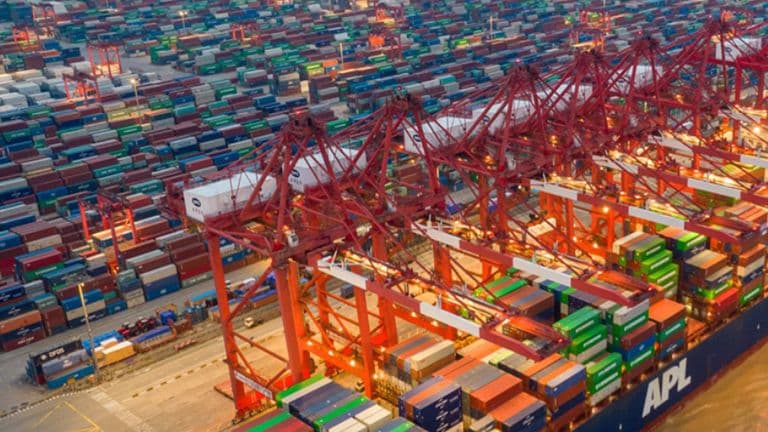
Every GCC state is a Belt and Road partner, and Gulf crude and gas make up a meaningful part of that USD 772 billion. The practical point for you is that trade routes between the Gulf and China are busy in both directions: ships and aircraft that bring energy east carry manufactured goods west. Our article on the Belt and Road Initiative and global supply chains explains how those routes affect freight options and transit times.
The rise of ASEAN matters as well. Many Chinese manufacturers now source parts from Vietnam, Malaysia and Thailand or assemble there. When a supplier quotes you goods partly made in ASEAN, check the certificate of origin, because origin affects the duty and any trade agreement benefits at home.
What China buys most
The largest import items in the same period were:
- Integrated circuits: USD 228 billion, the single largest import item.
- Crude oil: USD 171 billion.
- Automatic data processing equipment (computers and parts): USD 56 billion.
- Grains: USD 32 billion.
- Natural gas: USD 32 billion.
- Automobiles: USD 14 billion.
Chips and computers: what they mean for your electronics orders
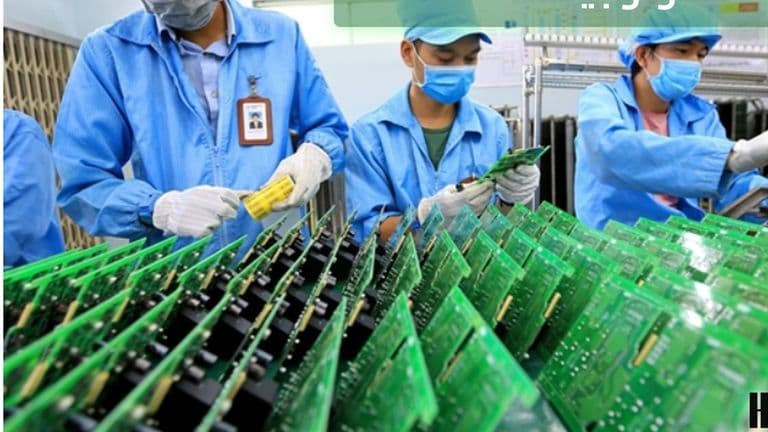
China spends more on imported chips than on imported crude oil. Its phone, laptop and appliance factories still depend on foreign components for many models. If you import electronics, a shortage or price rise in chips reaches your supplier's quotation within weeks. Ask suppliers which components are imported, and agree how long a price is valid, usually 15 to 30 days for electronics, before you commit.
Energy, grains and cars
Crude oil and gas are where Gulf exporters already have a strong position. Grain imports of USD 32 billion show that food security remains a priority in Beijing, which is why food import rules are strict. Car imports of USD 14 billion are small next to China's own production and exports, which tells you that Chinese brands now dominate their home market and are pushing hard into the Gulf.
Three strategic implications for foreign businesses
1. High-tech imports will continue
China is replacing imported technology with domestic products as fast as it can, but foreign suppliers of critical technologies and components will stay integrated in its supply chains for years. For a Gulf importer, that means Chinese electronics prices stay exposed to world component markets, not only to Chinese factory costs.
2. Consumer-oriented imports are growing
Domestic demand is becoming a more reliable driver of growth than exports. Chinese consumers buy imported food, cosmetics, health products and premium goods, often through cross-border e-commerce platforms. Gulf products with a clear origin story, such as dates, coffee, oud and perfumes, or halal food, can find buyers, but only with the right registration and labelling.
3. ASEAN and Belt and Road economies are gaining weight
Competitive advantage will depend on where you sit in regional value chains. Suppliers who combine Chinese factories with ASEAN assembly, or who ship through Belt and Road routes, will quote differently from those who do not. Knowing this lets you ask better questions and compare offers fairly.
How to sell your products into China
If the consumer trend interests you, there are two main routes: cross-border e-commerce, where consumers buy from abroad through platforms such as Tmall Global or JD Worldwide, and general trade, where goods are cleared by an importer and sold in shops. Cross-border retail imports currently have per-order and annual limits per consumer (CNY 5,000 and CNY 26,000 at the time of writing) and reduced taxes; check the current limits with the platform before you plan volumes. A typical path looks like this:
- Pick one product with a clear reason to exist in China. Origin, quality or halal status that Chinese brands cannot easily copy.
- Check the regulatory route. Overseas food producers must register with China's customs authority (GACC), and cosmetics need registration or filing with the drug regulator (NMPA). Allow 3 to 12 months depending on category.
- Test demand through cross-border e-commerce. This avoids a full Chinese label and importer set-up for the first months and shows whether consumers reorder.
- Protect your brand. Register your trademark in China before you list, because China is a first-to-file country.
- Decide on a legal presence. For general trade you need a Chinese importer, either a distributor or your own company. Our guide to setting up an import and export company in China covers the steps and costs.
- Build relationships with distributors. Personal trust counts in China; read about guanxi in Chinese business before your first meetings.
Checklist: using China import data in your own planning
- Read China's customs data monthly for your product's HS code, not only the headline total.
- Separate price changes from volume changes before drawing conclusions.
- Ask electronics suppliers which components are imported and how long quotations are valid.
- Check the certificate of origin on goods partly made in ASEAN.
- Compare freight quotes on routes where Belt and Road volumes create spare capacity.
- Review the compliance checklist for importing from China whenever you add a new product line.
- Note Chinese policy announcements on consumption subsidies; they shift which goods factories prioritise.
Common mistakes when reading China's trade figures
- Treating a headline decline as a collapse. A 1.6% fall driven by lower commodity prices says little about demand for consumer goods.
- Mixing yuan and dollar figures. Growth rates differ depending on the currency, because the exchange rate moves too.
- Assuming a big market means easy sales. Food and cosmetics registration takes months, and without it your goods stop at the border.
- Ignoring supply risk. Heavy dependence on imported chips means electronics prices can move quickly; build that into your pricing. Our guide to risk management when importing from China covers how.
- Skipping trademark registration. Launching in China before registering your brand invites someone else to register it first.
What to do this week
Look up China's import figures for the HS codes you buy or sell and note whether volumes or prices moved. If you source electronics, ask your top two suppliers how component prices are affecting their quotations for the next quarter. If you want to sell into China, choose one product and check whether it needs GACC or NMPA registration. When you are ready to set up a legal entity to trade in China, HiGreenPanda handles company formation in China from Shenzhen and Shanghai.
本文解答的问题
How much did China import in 2025?
In the first seven months of 2025, China's goods imports reached 10.39 trillion yuan, about USD 1.45 trillion. That was 1.6% lower than a year earlier, mainly because commodity prices were lower, while demand held up.
What does China import the most?
Integrated circuits are China's largest import item, at USD 228 billion in the first seven months of 2025. Crude oil followed at USD 171 billion, then computers and parts at USD 56 billion, grains and natural gas at USD 32 billion each, and cars at USD 14 billion.
Who are China's biggest import partners?
Belt and Road countries as a group supplied USD 772 billion in January to July 2025. ASEAN was the second-largest partner at USD 220 billion, followed by the European Union, South Korea, Japan and the United States.
Can a Gulf company sell products to Chinese consumers?
Yes. The simplest start is cross-border e-commerce through platforms such as Tmall Global or JD Worldwide, which have per-order and annual limits per consumer. For sales through shops you need a Chinese importer, product registration where required and Chinese labels.
Why do China's chip imports matter to an importer of electronics?
Many Chinese electronics still use imported components, so changes in world chip prices reach factory quotations quickly. Ask suppliers how long prices are valid and which parts are imported before you confirm an order.
HiGreen Panda Marketing