Investing in China
China Renewable Energy Investment as Fossil Fuel Demand Falls
China plans to invest over USD 300 billion in solar, wind and smart grids and aims for renewables to pass 50% of its energy mix by 2030. Here is what that means for Gulf buyers of panels, inverters and batteries.
作者:萨米·哈吉里阅读约需 8 分钟
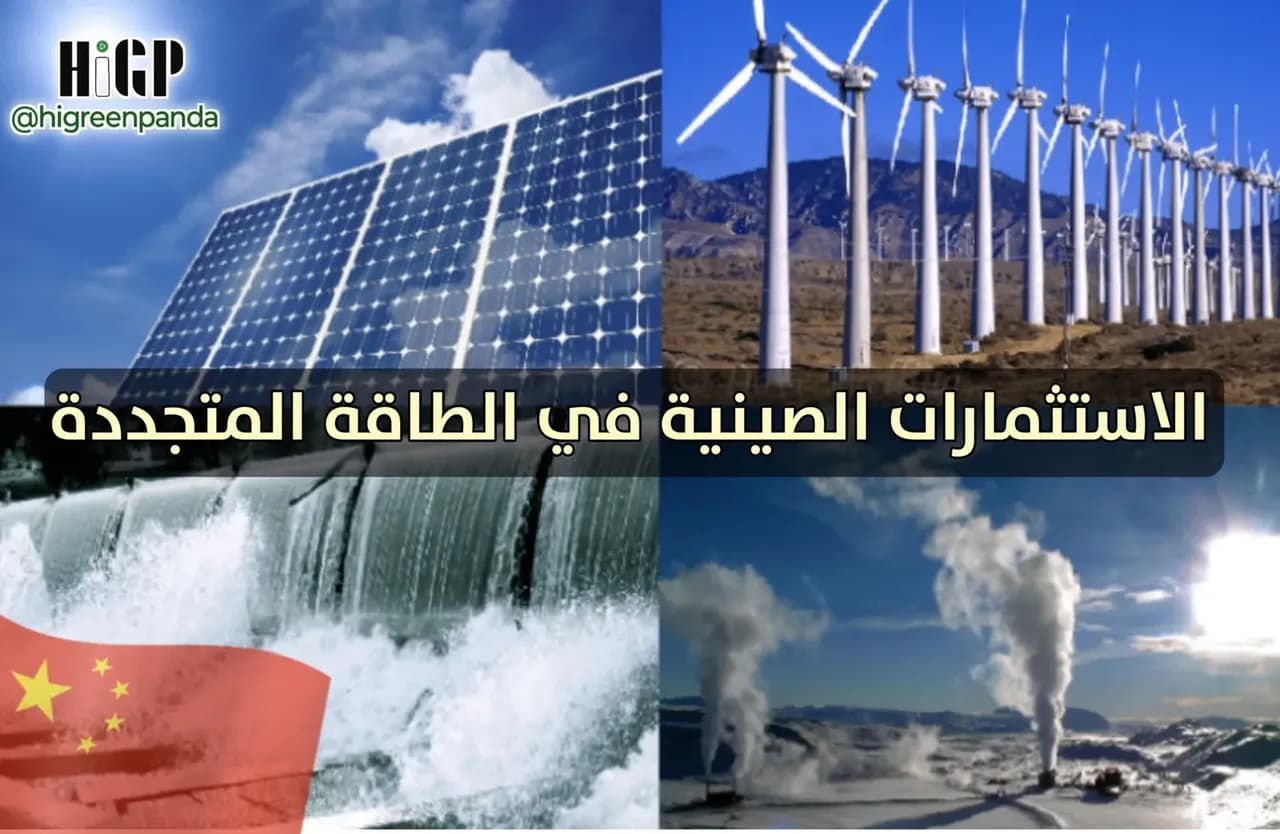
Solar panels, inverters and lithium batteries are now some of the fastest-moving products from China to the Gulf, Yemen and the wider Arab world. The reason is China renewable energy investment on a scale no other country matches, which keeps pushing prices down and quality up. By the end of this guide you will know what China is investing in, why it continues while fossil fuel demand shifts, where the supply risks sit, and how to source clean-energy products without getting caught by poor quality or missing certificates.
How much China is investing in renewable energy
Amid growing global challenges and falling demand for traditional energy in many markets, China keeps raising its spending on renewables as part of a long-term strategy. The government has announced plans to invest over USD 300 billion in renewable energy projects over five years. The money covers solar and wind plants and stronger smart-grid infrastructure. The stated aim is to lift the share of renewable energy in the national energy mix to over 50% by 2030.
Targets China has already met
China's official goal was 1200 GW of combined wind and solar capacity by 2030. It passed that figure in 2024, about six years early. Its wider climate commitments are to peak carbon emissions before 2030 and reach carbon neutrality by 2060. For a buyer, early delivery on targets signals that factory capacity was built ahead of demand, which is why module and battery prices fell so sharply. The same battery scale drove the rapid growth of the China EV market. Much of that capacity grew out of industrial plans such as Made in China 2025.
For the investor view of the same sector, see our guide to investment in China's green energy sector.
Why China keeps building while traditional energy demand falls
Reports indicate that many countries have started to cut their use of oil and gas as part of efforts against climate change. This shift reflects changing consumption patterns as countries move to cleaner sources. China reads this as a market signal: the products the world will buy in the next 20 years are panels, turbines, batteries and grid equipment, and it wants to supply them. Clean energy is one of the main trade opportunities in China for Arab investors.
The Gulf is part of that story. Saudi Arabia targets 50% of its electricity from renewables by 2030 under Vision 2030, and the UAE has a net-zero by 2050 strategy. In Yemen, where grid supply is unreliable, rooftop solar with battery storage has become a normal household purchase over the past decade. Chinese panels and inverters are widely used across all of these markets.
Innovation and falling costs in green technology
China is one of the leaders in developing green technologies and invests heavily in research and development. Chinese companies keep improving solar panel efficiency and wind turbine technology, which lowers production costs and raises their competitiveness in world markets. The government encourages this with financial incentives for companies that adopt renewable energy solutions. The same push is cutting water and energy use in the China textile industry.
What the numbers look like for buyers
- Solar modules: Chinese factories hold over 80% of global manufacturing capacity across the main production stages, according to the International Energy Agency.
- Module prices: around USD 0.10 per watt FOB in 2024 and 2025, depending on technology (PERC, TOPCon, HJT), wattage and order size.
- Lithium carbonate: prices fell by more than 80% between late 2022 and 2024, which lowered the cost of LFP batteries.
- Efficiency: mainstream TOPCon modules now reach roughly 22% to 23% module efficiency; check the datasheet, not the sales sheet.
Falling prices are good for you, but they also create a price war. Some factories are selling below cost to keep lines running. That raises the risk of downgraded cells, thinner frames or warranties that disappear when the factory closes.
The challenges in China's energy transition
Despite major progress, China faces several obstacles on the way to a full transition. These challenges affect the products you buy and how reliably they arrive.
Grids and storage
Electricity grids must be upgraded to carry more renewable power, and energy storage is needed to keep supply stable. This is why China is scaling up battery storage and grid equipment. For importers it means a growing range of LFP storage batteries, hybrid inverters and grid-tie equipment, with new models every 6 to 12 months.
Raw materials
Renewable technologies depend on raw materials such as lithium and cobalt, which can create new supply-chain problems. Prices for these materials swing widely, and export controls on some critical minerals and processing technologies have tightened since 2023. If your contract has a long delivery window, agree how raw material price changes are handled before you pay a deposit. Our Q&A on China's mining industry explains how those price swings and export rules affect buyers.
How to source solar, wind and storage products from China
Follow these steps for panels, inverters, batteries and EV chargers. The same logic applies to smaller wind turbines and controllers. For the vehicles themselves, see our guide to China's electric vehicle industry.
- Define your specification: wattage, cell technology, dimensions, voltage, climate conditions (heat above 45°C and dust are normal in the Gulf) and warranty terms.
- Shortlist at least 3 manufacturers, not trading companies, and check their business licence and export history.
- Request certificates: IEC 61215 and IEC 61730 for modules, IEC 62109 for inverters, IEC 62619 for storage batteries, and UN38.3 plus an MSDS for any lithium battery shipment.
- Check your own market's rules, for example SASO conformity through the SABER platform for Saudi Arabia, and the relevant product registration in the UAE.
- Order samples and test them locally, or through a third-party laboratory, before placing a volume order.
- Negotiate terms: 30% deposit and 70% before shipment is common; ask for a written performance warranty of 25 to 30 years for modules and product warranty of 10 to 12 years.
- Book a pre-shipment inspection with flash testing and EL (electroluminescence) imaging for modules.
- Ship lithium batteries as Class 9 dangerous goods with a forwarder who handles DG cargo; allow 3 to 7 extra days for DG approvals.
Planning container loads and lead times
A 40ft high-cube container typically holds roughly 600 to 750 full-size solar modules, depending on module dimensions and how they are palletised. Ask the factory for its exact loading plan before you confirm quantities, because an extra pallet that does not fit forces a second shipment. Production lead times for modules usually run 15 to 30 days after deposit, longer before Chinese New Year and in the months before major Gulf tenders. Sea freight from Shenzhen or Ningbo to Jebel Ali or Dammam is typically 18 to 30 days port to port; add time for Red Sea ports when routes are disrupted. Our guide to investment in China's logistics sector explains the ports and carriers behind these routes. For urgent spare parts, see our guide to China's aviation industry and air cargo.
Our guide on choosing environmentally friendly suppliers in China covers the factory audit side in more detail.
China's role in the global energy market
China aims to reshape the world energy landscape by strengthening its position as the leading renewable energy power. With international pressure to cut carbon emissions rising, other countries look to China for affordable and scalable solutions. Experts believe China's success here could shape the energy strategies of other countries and help meet global climate goals. On current evidence, China is pressing ahead with its transition, reflecting its commitment to sustainable development and to tackling environmental challenges.
Chinese companies are also building overseas. Solar and battery plants are being set up in the Middle East, South-East Asia and North Africa, partly to avoid tariffs in the US and EU. If you are considering a joint venture rather than pure trade, read about foreign direct investment in China and the rules on both sides.
Common mistakes when importing renewable energy products
- Buying on price per watt alone without checking cell grade, degradation rate and frame thickness.
- Accepting certificates without checking them on the issuing body's website, such as TUV or Intertek databases.
- Shipping lithium batteries as general cargo; this can lead to fines, seizure or refusal at the port.
- Ignoring heat derating. A panel rated at 25°C loses output in Gulf summers; compare temperature coefficients.
- Relying on a warranty from a factory that may not exist in 5 years. Check years in business and whether a local distributor backs the warranty.
- Skipping market registration such as SASO, which can leave goods held at customs for weeks.
What to do this week
Write a one-page specification for your main product, including climate conditions and the certificates your market requires. Send it to three manufacturers and ask for datasheets, certificate copies and a sample price. Check each certificate number on the issuing body's database before you reply. HiGreenPanda can arrange pre-shipment quality inspection at the factory, including flash and EL tests for solar modules.
本文解答的问题
How much is China investing in renewable energy?
The Chinese government has announced plans to invest over USD 300 billion in renewable energy projects over five years, covering solar, wind and smart grids. The aim is for renewables to exceed 50% of the national energy mix by 2030.
Why are Chinese solar panels so low in price?
China built manufacturing capacity ahead of demand, holds over 80% of global solar manufacturing capacity and invests heavily in R&D. Falling lithium and polysilicon costs and fierce competition between factories pushed module prices to around USD 0.10 per watt in 2024 and 2025.
What certificates do I need to import solar panels from China?
Ask for IEC 61215 and IEC 61730 for modules and IEC 62109 for inverters. Your own market may add rules, for example SASO conformity through SABER for Saudi Arabia. Verify every certificate number with the issuing body.
What are the main challenges in China's renewable energy transition?
China must upgrade grids to carry more renewable power and add storage to keep supply stable. It also depends on raw materials such as lithium and cobalt, whose prices and trade rules can change quickly.
Can I ship lithium batteries from China by sea?
Yes, as Class 9 dangerous goods. You need a UN38.3 test report, an MSDS and a forwarder licensed for dangerous goods. Allow a few extra days for approvals and expect higher freight than general cargo.
HiGreen Panda Marketing