Economy and the Belt and Road
Digital Transformation in China: What It Means for Importers
China's factories, shops and payment systems are going digital fast. Here is which industries lead, which technologies drive it, and how a Gulf importer can use it to find better suppliers.
作者:萨米·哈吉里阅读约需 7 分钟
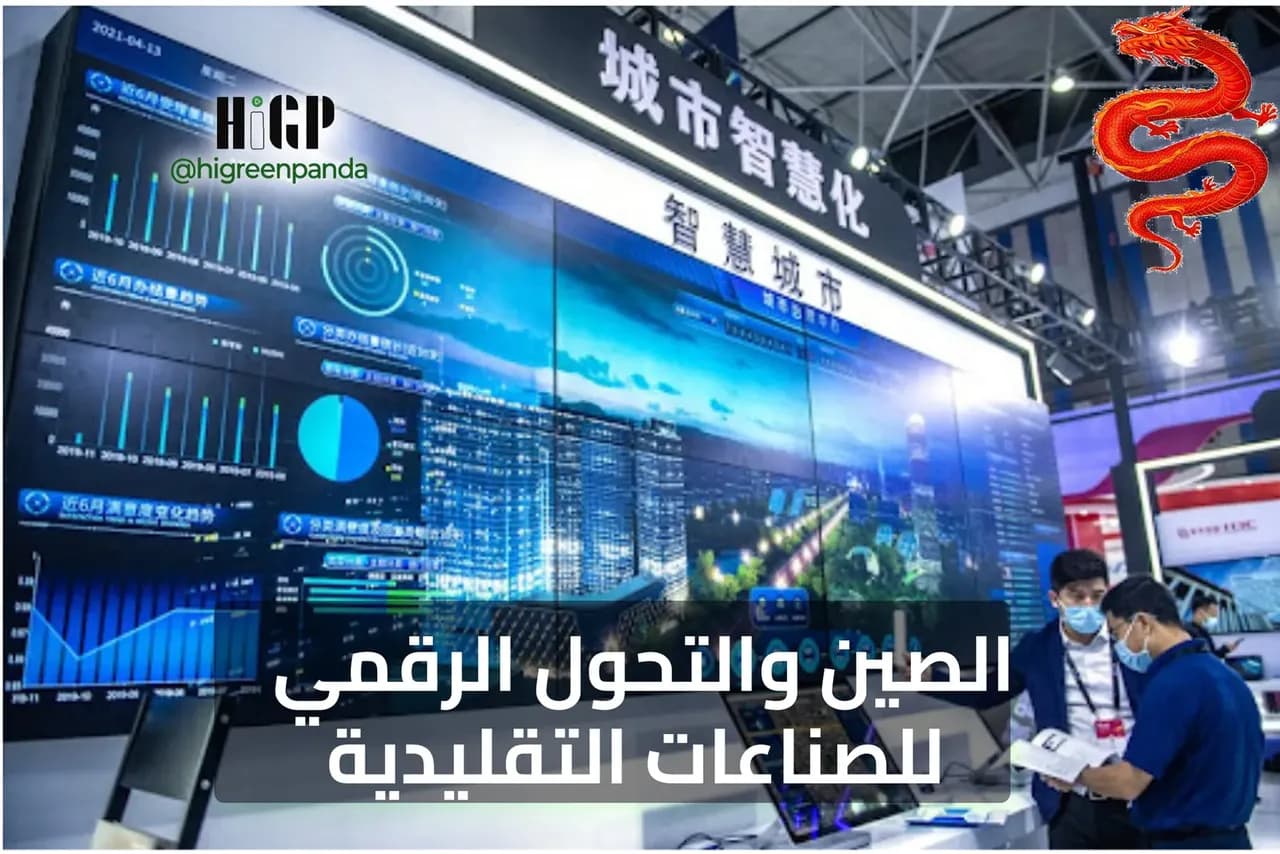
The factory you buy from today may run its production line on sensors and software, take payment by QR code and sell to Chinese consumers through live-stream shopping. If you still deal with it only by email and bank transfer, you miss information that could protect your orders and improve your prices. This guide explains digital transformation in China across traditional industries, what drives it, where it stalls, and how you as an importer can use it when choosing and managing suppliers.
The digital landscape in China today
Consumers who adopted digital tools first
Chinese consumers have taken up digital technology quickly, and companies have had to follow. According to Statista, China had more than 1.092 billion internet users as of December 2023. Most of them shop, pay, book doctors and order food on their phones. That pressure from consumers is why even small manufacturers now keep online shops, accept mobile payments and answer customers on WeChat.
Digital-native companies that changed the rules
Companies such as Alibaba, Tencent and Xiaomi disrupted traditional industries with new business models and a strong focus on the customer. Alibaba moved wholesale trade online, Tencent turned a messaging app into a payment and business platform, and Xiaomi showed that a hardware maker could sell directly online at scale. Traditional retailers, banks and manufacturers have been adapting ever since.
Government policy pushing the change
The Made in China 2025 plan, launched in 2015, set out to develop sectors including artificial intelligence, 5G, aviation, semiconductors, electric vehicles and biotechnology. Rising wages add a second push: as labour costs climb, factories automate to stay competitive. Our article on China's changing workforce and manufacturing wages explains how this affects the prices you are quoted.
Which industries lead the digital shift?
- E-commerce: led by Alibaba and JD.com, China's online retail market has grown on the back of mass use of digital platforms. For you, it means Chinese suppliers already know how to photograph, describe and package products for online sale.
- Financial technology: Ant Financial (now Ant Group, behind Alipay) and Tencent's WeChat Pay changed how payments and financial services work. Mobile payment is now the default for both consumers and many businesses.
- Manufacturing: under Made in China 2025, factories are adopting smart manufacturing, from automated lines to software that tracks every batch. China now installs more industrial robots each year than any other country.
- Healthcare: online consultations, digital records and data-driven services are spreading, driven by the need to improve access, efficiency and personalised care.
E-commerce also gives you an early view of demand. Many consumer products trend on Taobao, JD and Douyin months before they reach shops in the Gulf. Watching bestseller lists there shows you what factories are tooling up for, and which products will soon be offered to export buyers at falling prices.
These shifts are one reason China remains central to world supply chains, a theme covered in China as a driving force for the global economy.
What drives digital transformation, and which technologies
The four main drivers
- Changing consumer behaviour and demand for personalised experiences.
- New market players entering with digital-first models.
- Lower costs and decisions based on data rather than habit.
- Better operational efficiency.
Artificial intelligence and machine learning
AI and machine learning allow smart automation, predictive analytics and personalised experiences. In a factory, that can mean camera-based defect detection on the line or software that predicts when a machine needs maintenance, which reduces the risk of a late shipment.
Cloud computing
Cloud services put powerful computing within reach of companies of every size, so a 200-person factory can run the same planning and stock software as a large group. It also makes it easier for a supplier to share order status with you in real time.
Internet of Things
Connecting devices and sensors opens new ways to collect data, monitor in real time and improve processes. Temperature loggers in cold-chain containers and machine sensors that record output per shift are two examples you may meet as a buyer.
How to use this when you choose a supplier
A supplier's digital maturity tells you a lot about how reliably it will deliver. It is not a guarantee of quality, but factories that track production digitally usually find and fix problems earlier. Use these steps when assessing a new supplier:
- Ask how orders are tracked. Does the factory use production planning or ERP software, or spreadsheets and paper? Ask to see a screen showing a current order.
- Ask for a live video tour. A factory that is comfortable walking you through the line on a WeChat video call in real time has less to hide than one that sends only edited videos.
- Ask for quality data, not only certificates. Request defect rates per batch from the last 3 to 6 months and how they are recorded.
- Check traceability. Can the supplier tell you which batch of raw material went into your order? This matters for food contact, cosmetics and electrical goods.
- Test response speed. Send a technical question and note how long a clear answer takes. More than 48 hours for a simple question is a warning sign.
- Confirm with an independent check. Digital records can be selective. Book a third-party quality inspection before the balance payment on your first order.
What a digital factory changes in your quotation
Automated, well-tracked factories tend to quote more consistent lead times, often 25 to 45 days for standard consumer goods after sample approval, depending on order size and season, and they hold tighter tolerances from batch to batch. In return they usually ask for higher minimum order quantities, because changing over an automated line costs them time. Smaller workshops accept small or mixed orders but vary more between batches. Decide what matters more for each product, flexibility for test orders or consistency for your best sellers, and choose the supplier type to match.
Checklist: tools a Gulf importer should set up
- A WeChat account for daily contact with suppliers, with chat history backed up.
- Access to 1688.com as well as Alibaba.com, to compare domestic and export prices.
- A business Alipay or WeChat Pay account if you pay Chinese service providers or buy on domestic platforms.
- A shared folder where suppliers upload photos, test reports and packing lists for every order.
- A clear understanding of how cross-border payments work, including the digital yuan; see China and central bank digital currencies.
- A written rule that any change of bank details is confirmed by phone before you pay.
Challenges and common mistakes
Where Chinese companies struggle
Digital change in China is uneven. Companies face the same obstacles as anywhere else:
- Integrating new software with old systems.
- Cultural resistance to change inside the company.
- Data privacy and compliance, now tightly regulated under China's data and personal information laws.
- Upgrading and retraining staff skills.
- Departments working in silos with separate systems.
- Industry-specific regulations that slow adoption.
Mistakes importers make
- Taking a slick website as proof of a modern factory. Many trading companies have better websites than the factories they buy from. Verify the business licence and visit or inspect.
- Asking for data the supplier cannot legally share. Customer lists and some personal data fall under Chinese privacy rules. Ask for your own order data, not other buyers'.
- Ignoring domestic platforms. If a product sells on Chinese platforms at half your quoted export price, you have room to negotiate.
- Assuming automation means lower prices. Automated factories often have higher minimum order quantities and less flexibility on small custom runs.
What to do this week
Pick your two most important suppliers and ask each for a live video walk-through of the production line and a record of defect rates for your last three orders. Set up WeChat and a shared order folder if you have not already. Then compare one of your best-selling products on 1688.com with the price you pay. For a longer view of where Chinese industry is heading, read the roadmap for China's move to a knowledge economy. If you want suppliers shortlisted and checked for you, HiGreenPanda offers product sourcing from Shenzhen and Shanghai.
本文解答的问题
What is digital transformation in China?
It is the shift of Chinese businesses, from factories to banks and hospitals, to digital tools such as e-commerce, mobile payments, cloud software, AI and connected sensors. It is driven by consumer demand, new competitors, cost pressure and government plans such as Made in China 2025.
Which industries in China are most digitalised?
E-commerce, led by Alibaba and JD.com, and financial technology, led by Alipay and WeChat Pay, are the most advanced. Manufacturing is moving quickly towards smart factories, and healthcare is adopting online consultations and digital records.
What is Made in China 2025?
Made in China 2025 is a government plan launched in 2015 to upgrade Chinese industry. It targets sectors including artificial intelligence, 5G, aviation, semiconductors, electric vehicles and biotechnology, and promotes smart manufacturing in traditional factories.
How can I check whether a Chinese supplier is digitally advanced?
Ask how orders are tracked, request a live video tour of the line and ask for defect data per batch. Check whether it can trace raw materials to your order. Confirm what you are told with an independent inspection.
What are the main challenges of digital transformation in China?
Companies struggle with integrating old systems, cultural resistance, data privacy and compliance rules, staff retraining, departments working in silos and industry-specific regulations. Progress is therefore uneven between large groups and smaller factories.
HiGreen Panda Marketing