Industries and sectors
China's Construction Industry: Trends and Sourcing Opportunities
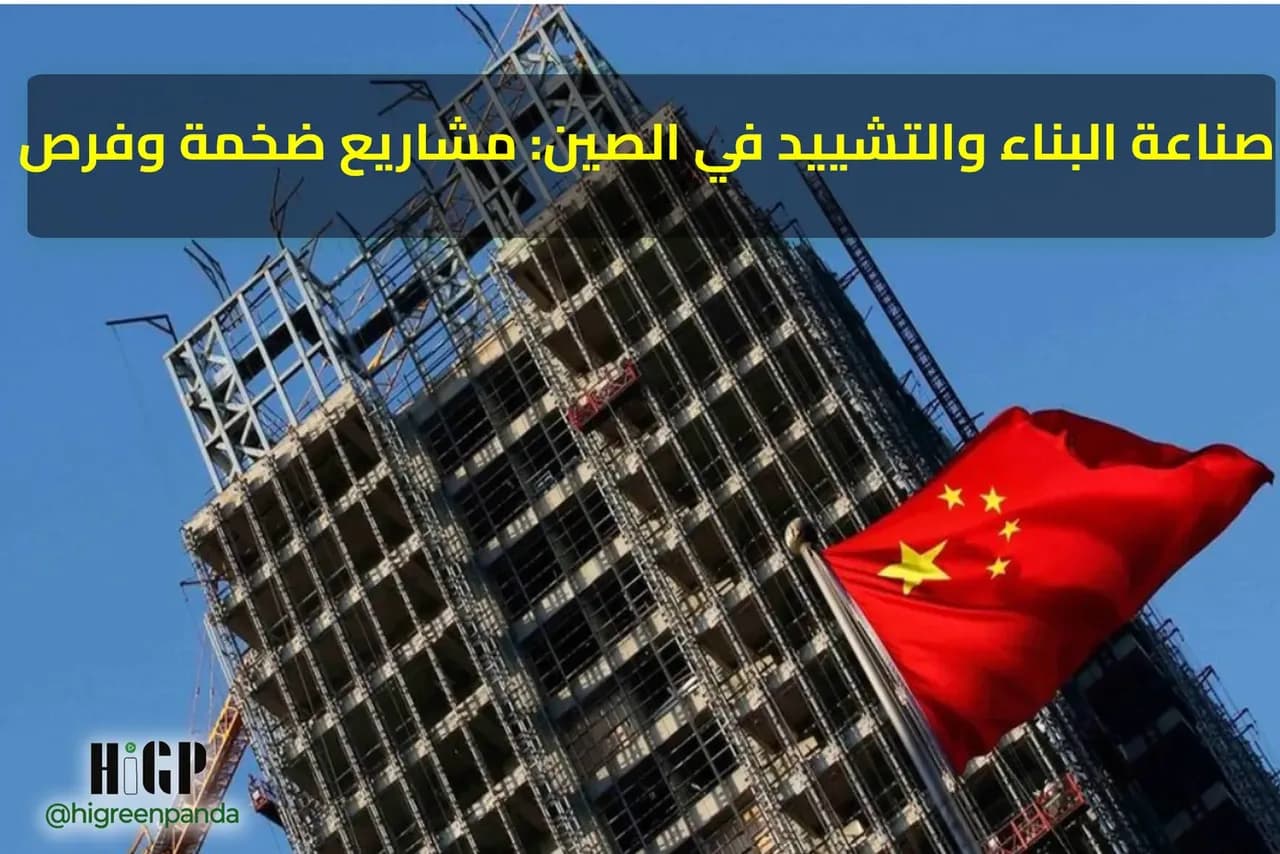
China's construction industry is growing at about 3.9% a year to 2028, driven by infrastructure, urbanisation and green building. Here is what that means for a Gulf buyer sourcing materials and machinery.
作者:萨米·哈吉里阅读约需 8 分钟
You are pricing a project in Riyadh, Dubai or Aden, and the Chinese quote for tiles, steel or an excavator is well below the local one. Before you commit, you need to know how China's construction industry works, where it is heading, and where buyers lose money. By the end of this guide you will know which trends matter to you, which products are worth sourcing, and the steps to order without surprises.
How big is China's construction industry and where is it heading?
Construction has long been a cornerstone of China's economic development. It has driven infrastructure growth and urbanisation on a scale no other country has matched: motorways, high-speed rail, ports, airports and entire new city districts. That scale built a supply chain for cement, steel, glass, ceramics, cables, pumps and heavy machinery that now serves buyers worldwide.
Growth is expected to stay steady. Reports indicate an average annual growth rate of 3.9% between 2025 and 2028, supported by government investment in infrastructure and a focus on sustainable development. That is slower than the boom years, and the difference matters to you. The domestic housing market has cooled since 2021, so many factories built for that boom now have spare capacity and actively look for export orders. For a buyer, this usually means shorter queues and more room to negotiate on price and payment terms.
Urbanisation and infrastructure upgrades
Urbanisation remains a fundamental driver of construction activity. Cities such as Beijing and Shanghai are going through extensive infrastructure upgrades: metro extensions, drainage, district heating and the retrofitting of older buildings. China now prioritises infrastructure projects that deliver clear economic benefits, rather than building for the sake of volume. Suppliers who serve these projects are used to tender documents, test reports and third-party inspection, which makes them easier to work with on a Gulf project that has a consultant and a specification.
Trends that change what you can buy
Green building initiatives
Sustainability is reshaping the Chinese construction landscape. Government policy pushes green buildings and energy-efficient infrastructure, so factories now offer insulated panels, low-emissivity glass, solar-ready roofing, LED lighting and water-saving sanitary ware as standard lines. This lines up with Gulf requirements such as Estidama in Abu Dhabi, the Dubai Green Building Regulations and the energy-efficiency rules that Saudi Arabia applies to air conditioners and lighting. Ask for the test report behind every energy claim, and read how to choose environmentally friendly suppliers before you shortlist.
Digital transformation
Digital tools are spreading fast through the sector. Artificial intelligence and predictive analytics help Chinese contractors plan work, control costs and forecast demand, and many producers now run automated lines for steel structures, precast concrete and windows. The practical gain for you is consistency: a factory that cuts steel by CNC machine from your drawings makes fewer errors than one that cuts by hand. The wider shift is covered in how China leads the smart manufacturing revolution.
What Gulf buyers source from China for construction
Most of what you need for a building project can be sourced from China. The question is whether the saving survives freight, duty and compliance. These categories usually do, provided the order is large enough to fill containers.
- Ceramic and porcelain tiles: mostly from Foshan in Guangdong. Heavy, so a 20ft container fills by weight long before it fills by volume.
- Sanitary ware and taps: Chaozhou and Kaiping for ceramics, Wenzhou and Nan'an for brass fittings.
- Aluminium profiles, windows and curtain wall: Foshan and Guangzhou. Check alloy grade and coating thickness in writing.
- Steel structures and prefabricated buildings: warehouses, site offices and labour camps, cut and drilled to drawing and shipped flat.
- Cables, switches and LED lighting: Zhejiang and Guangdong. These are regulated products in most Gulf states.
- Heavy machinery: excavators, loaders, cranes and concrete pumps from large manufacturers, new or used, often shipped RoRo or on flat racks.
Match each product to a region first, then to a factory. A trading company in Shanghai can sell you tiles, but the factory in Foshan will quote lower and answer technical questions faster.
Challenges you will meet
Regulations on both sides
Compliance with China's complex regulatory environment remains a challenge for foreign firms that want to build or invest inside China, where licences and local partners are required. For an importer the bigger issue sits at home. Saudi Arabia requires a certificate of conformity through SABER for most regulated building and electrical products. The UAE applies conformity schemes for electrical goods and some construction products. Before you order, confirm the standard, the certificate and who pays for testing, and check the current list with your customs broker or the national standards body.
Labour shortage and rising wages
China's labour market faces increasing constraints. Fewer young workers join building sites and factories, and wages have risen. Companies respond with automation and AI-powered tools. For you, this means Chinese prices rise gradually rather than fall, and factories with automated lines hold quality better than those that rely on casual labour. The cost effect is explained in the impact of China's changing workforce on wages.
How to source construction materials from China step by step
- Freeze the specification. Take the consultant's approved drawings and data sheets and turn them into a one-page spec per item: size, grade, finish, standard and tolerance.
- Confirm the import rules at home. Ask your broker which items need a conformity certificate, what the duty rate is (5% is common in the GCC, with exceptions) and how long clearance takes.
- Shortlist three to five factories in the right region. Ask each for a business licence, export history to the Gulf and test reports from a recognised laboratory.
- Order samples and test them against the spec. For tiles check size, flatness and water absorption; for steel ask for mill certificates matched to heat numbers.
- Negotiate price, lead time and payment. A 30% deposit and 70% against a copy of the bill of lading is common. Production usually takes 15 to 45 days depending on product and season.
- Book an independent inspection before the balance is paid. Count cartons, open a sample, and compare against the approved sample.
- Plan freight by weight, not just volume. Sea transit from southern China to Jebel Ali or Dammam usually takes 18 to 30 days port to port.
A pre-shipment quality inspection typically costs a few hundred USD per visit. On a container of tiles or cables worth tens of thousands, it costs far less than a rejected delivery on site.
Common mistakes when buying building materials from China
- Buying from photographs and price alone, without a sample tested against the project specification.
- Accepting a factory's own test report when the consultant or authority requires an accredited third-party laboratory.
- Forgetting that tiles, steel and stone max out container weight. Road limits at both ends can cap a 20ft container well below its rated payload.
- Mixing tile production batches. Shades vary between batches, so require one batch per area and the batch number on every carton.
- Ignoring the conformity certificate until the goods arrive, then paying demurrage while testing is done.
- Paying 100% up front to a supplier you have never visited or had inspected.
Opportunities beyond importing
Chinese contractors and machinery makers are active across the Gulf, and many look for local partners, distributors and subcontractors. If you already supply sites at home, a distribution agreement with a Chinese brand of pumps, lifts or machinery can be worth more than one-off imports. If you want to go further and hold stock, run a buying office or invoice from China, a Chinese company becomes useful. Weigh this against contract manufacturing in China, which lets you put your own brand on products without owning a factory.
What to do next
This week, pick the one item on your project with the biggest price gap, such as tiles, windows or cabling. Write its one-page specification, call your customs broker to confirm the certificate and duty, and request quotes and samples from three factories in the right region. HiGreenPanda's team in Shenzhen and Shanghai can handle the factory search and sample checks on the ground if you cannot travel. Once samples pass, fix payment terms and book the inspection date before production starts, not after.
本文解答的问题
How fast is China's construction industry growing?
Reports indicate average annual growth of about 3.9% between 2025 and 2028. Growth is driven by government infrastructure spending, urbanisation and sustainable building. It is slower than the boom years, which leaves many material factories keen for export orders.
Which building materials are worth importing from China to the Gulf?
Tiles, sanitary ware, aluminium windows, steel structures, cables, LED lighting and heavy machinery usually save money once freight and duty are included. The saving depends on filling containers and passing conformity testing at home, so price the full landed cost before you order.
Do Chinese building materials need certificates in Saudi Arabia or the UAE?
Many do. Saudi Arabia requires a certificate of conformity through SABER for most regulated products, and the UAE applies conformity schemes to electrical goods and some construction products. Confirm the current rules with your customs broker or the national standards body before production starts.
How long does it take to ship construction materials from China to the Gulf?
Production usually takes 15 to 45 days depending on the product and season. Sea transit from southern China to Jebel Ali or Dammam is typically 18 to 30 days port to port, plus clearance time at destination.
How do I avoid quality problems with Chinese tiles or steel?
Approve a physical sample against your specification, require one production batch per area for tiles and mill certificates for steel, and book an independent inspection before paying the balance. Never pay the full amount up front to an unverified supplier.
HiGreen Panda Marketing