Investing in China
Investment in China's Green Energy Sector: Solar, Wind and EVs
China spent USD 625 billion on clean energy in 2024 and makes most of the world's solar panels and wind turbines. Here is where the openings are for Gulf investors and importers, and how to act on them.
作者:萨米·哈吉里阅读约需 8 分钟
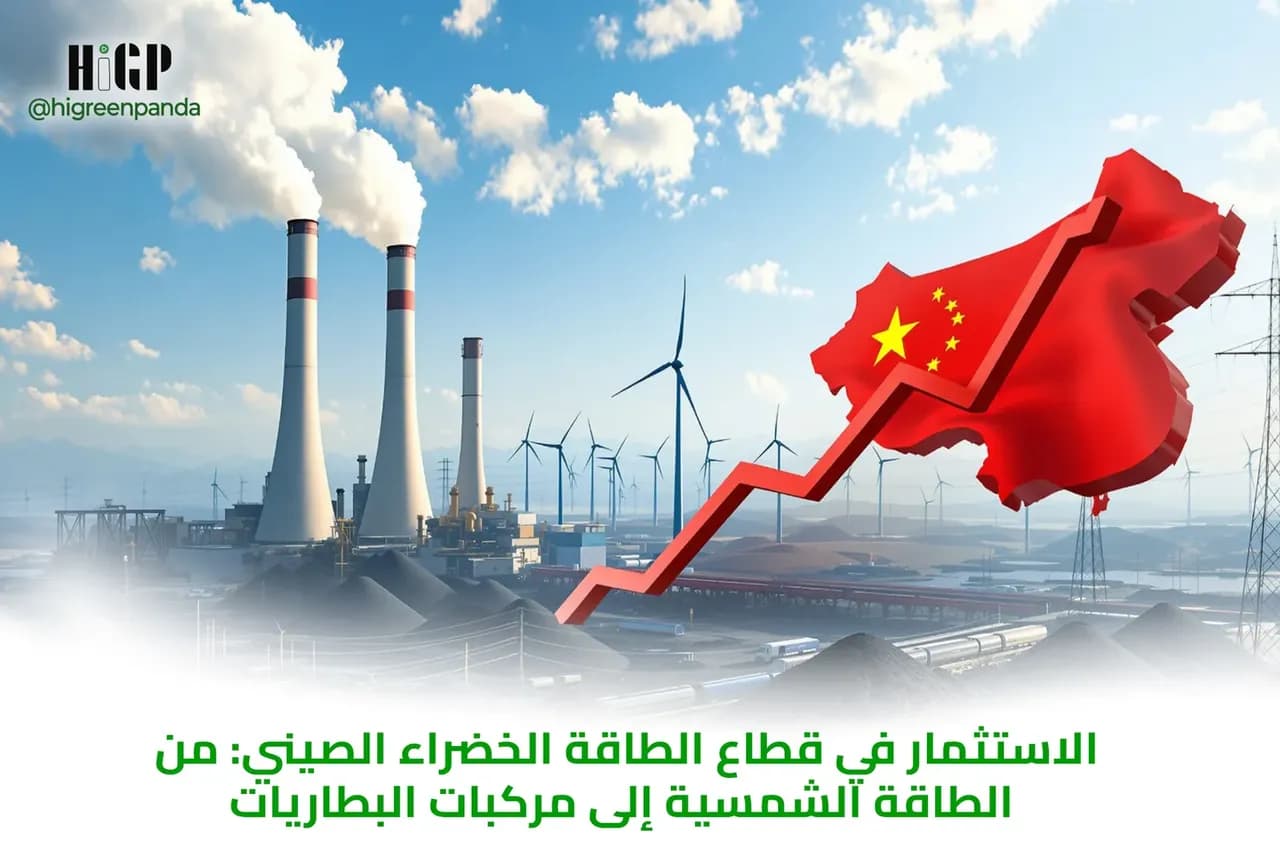
Clean energy is moving faster in China than anywhere else, and it is changing prices for solar panels, batteries and electric vehicles worldwide. If you invest, import or build projects in the Gulf, you need to know where Chinese capacity is heading and how to deal with it safely. This guide sets out the key figures on investment in China's green energy sector, the sub-sectors with the most room, the main ways to take part, and the checks to make before you buy or invest.
How fast China's clean energy sector is growing
China is rapidly deploying renewable power, grids and storage, and electrifying transport, buildings and industry. Together these trends are bringing the country closer to the point where its fossil fuel use for energy peaks.
Wind and solar generation
- Electricity from wind and solar rose by 25% in 2024 compared with 2023.
- In the first half of 2025 it was 27% higher than in the first half of 2024.
- In the 12 months to June 2025, wind and solar generated 2,073 TWh, more than all other clean sources combined (1,936 TWh).
Investment and infrastructure
- China is the world's largest investor in clean energy. It spent about USD 625 billion in 2024, around 31% of a global total of about USD 2,033 billion.
- Installed battery storage capacity tripled in the three years to 2024.
- Grid investment reached a record CNY 608 billion (about USD 85 billion) in 2024, 25% more than the CNY 486 billion (about USD 68 billion) spent in 2019.
For background on why China keeps building renewables while global demand for oil and coal shifts, read China invests in renewable energy despite declining global demand.
Electrification and the economic weight of clean energy
Where electricity is replacing other fuels
- Buildings: electricity is by far the largest energy source, supplying 39% of final energy demand.
- Industry: electricity overtook coal in 2023 to become the largest energy source, at 31% of final energy demand.
- Transport: oil-based fuels still dominate, but the fast-growing electric vehicle fleet is steadily gaining ground.
Contribution to the economy
In 2024, investment and production in clean energy contributed about CNY 13.6 trillion (USD 1.9 trillion) to China's economy. That is roughly one-tenth of China's GDP, or about the size of Australia's entire economy. The sector has been growing around three times faster than the Chinese economy as a whole.
China also leads on innovation. Chinese applicants now account for about 75% of global patent applications in clean energy technologies, up from about 5% in 2000. For a buyer, that means the newest cell, battery and inverter technology is often available from Chinese suppliers first.
Where the opportunities are
Chinese factories make about 80% of the world's solar panels and about 60% of its wind turbines. Chinese policy and investment have driven much of the global fall in clean energy costs. By one widely cited measure, 91% of new renewable power projects commissioned worldwide in 2024 produced electricity at lower cost than the lowest-cost fossil fuel alternative.
Solar
Costs keep falling, efficiency keeps rising, and government support for expansion remains strong. The most promising sub-sectors are panel manufacturing, solar tracking systems, integrated storage, and residential solar solutions. For Gulf projects, where irradiance is high and summer heat is severe, ask for temperature-coefficient data and results from damp-heat and sand or dust testing.
Wind
China is investing heavily in offshore wind and is developing floating wind technology. Chinese turbine makers increasingly bid for projects abroad, and component supply (blades, bearings, towers, cables) is a large market in its own right.
Batteries and storage
Battery deployment tripled in three years, and China added more storage in 2024 than the United States and the European Union combined. Lithium iron phosphate (LFP) batteries now dominate stationary storage because they are safer and last longer, which suits hot climates.
Electric vehicles
The EV fleet is expanding fast, with parallel investment in charging networks and in integrated driver-assistance and autonomous driving technology. Chinese EV brands are now entering Gulf markets, which opens room for dealers, charging operators and parts importers.
Ways to invest or partner
Direct investment
You can buy shares in listed clean energy companies, invest through funds focused on renewables, or take a stake in large projects. Most clean energy manufacturing is open to foreign investors, but check the current Negative List and any approval rules for power generation and grid projects; our guide to foreign direct investment in China explains the structures.
Technical partnerships
Joint projects, technology and expertise transfer, and joint research and development agreements let you work with Chinese firms without owning a Chinese company. Protect your own know-how with Chinese-law contracts before you share it.
Supply chain
You can invest in component makers, build long-term supply partnerships, or set up local production or assembly in your own market using Chinese components. When you pick suppliers, look at their environmental record as well as price; our guide to choosing environmentally responsible Chinese suppliers shows what to check.
How to import solar panels and batteries from China
Most Gulf readers will meet this sector as buyers. These are the steps that prevent the costly problems.
- Define the specification: panel wattage and technology, battery chemistry (LFP for most storage) and capacity, inverter type and grid rules in your country.
- Shortlist manufacturers, not trading companies, and ask for their factory audit reports and export history to the Middle East.
- Request certificates: IEC 61215 and IEC 61730 for PV modules, IEC 62619 for industrial lithium batteries, and UN 38.3 transport test reports for any lithium battery. Check them against the issuing body's database.
- Confirm your country's own conformity rules, such as SASO certification in Saudi Arabia, and write them into the contract.
- Agree warranty terms in writing: product warranty years, performance warranty years and minimum output, and who handles claims in the Gulf.
- Book an inspection with electroluminescence (EL) testing for panels before you pay the balance. Our quality inspection service covers this.
- Plan freight. Lithium batteries ship as Class 9 dangerous goods, need proper packaging and declarations, and not every carrier accepts them. Use a forwarder experienced in shipping from China with dangerous goods.
Before you place the order, run through this checklist:
- Certificates verified with the issuing laboratory
- Datasheet matches the model on the certificate
- Warranty signed by the manufacturer, not only the trader
- Home-country certification or registration in hand
- Inspection booked and payment tied to its result
- Dangerous goods paperwork agreed with the forwarder
Common mistakes in clean energy investment and sourcing
- Choosing panels or batteries on price per watt alone, without checking degradation, warranty and the supplier's ability to honour it.
- Accepting certificates as PDFs without checking them with the lab that issued them.
- Shipping lithium batteries as general cargo, which risks fines, rejection or worse.
- Ignoring heat. Products tested only for temperate climates may underperform in Gulf summers.
- Investing in a Chinese company without understanding local subsidy changes, which can move prices across the sector quickly.
Outlook for the sector
China's fossil fuel use for energy appears close to its peak. Between 2012 and 2022, China accounted for about two-thirds of the growth in global fossil fuel demand. If Chinese demand falls while other countries adopt clean electric technology faster, global fossil fuel demand could begin to decline too. For Gulf economies that export hydrocarbons and are building their own solar and storage capacity, that makes China both a key customer and a key supplier to understand.
The sector offers large long-term potential, but returns depend on picking the right segment and partner. Overcapacity in parts of the solar and battery chains has squeezed margins for many manufacturers, which is good for buyers and a reason for investors to be selective. Our guide to trade opportunities in China compares clean energy with other sectors.
What to do this week
- Decide whether you are an investor, a partner or a buyer, and which sub-sector: solar, wind, storage or EVs.
- If buying, write a one-page specification and list the certificates your market requires.
- Request quotes, datasheets and certificates from three manufacturers and verify the certificates.
- Ask a freight forwarder for a quote that includes dangerous goods handling if batteries are involved.
本文解答的问题
How much does China invest in clean energy?
China spent about USD 625 billion on clean energy in 2024, around 31% of a global total of about USD 2,033 billion. Grid investment alone reached a record CNY 608 billion that year. Clean energy investment and production contributed about CNY 13.6 trillion to the economy, roughly one-tenth of GDP.
What share of the world's solar panels does China make?
Chinese factories make about 80% of the world's solar panels and about 60% of its wind turbines. That scale is a major reason global costs for solar and wind power have fallen so far.
Can foreigners invest in China's renewable energy sector?
Yes. You can buy shares in listed companies, invest through renewable-focused funds, join projects, or form technical and supply partnerships. Most clean energy manufacturing is open to foreign investment, but check the current Negative List and approval rules for power and grid projects.
What certificates should Chinese solar panels and batteries have?
Solar panels should have IEC 61215 and IEC 61730 certification. Industrial lithium batteries should meet IEC 62619, and any lithium battery needs a UN 38.3 test report for transport. Also check your own country's rules, such as SASO in Saudi Arabia, and verify every certificate with the lab that issued it.
How are lithium batteries shipped from China to the Gulf?
They travel as Class 9 dangerous goods, which need proper packaging, labels and declarations. Not every carrier or vessel accepts them, so use a forwarder with dangerous goods experience and agree the paperwork before the goods leave the factory.
HiGreen Panda Marketing