Industries and sectors
AI in Chinese Manufacturing: How It Improves Efficiency
Artificial intelligence now schedules orders, inspects products and predicts machine failures in thousands of Chinese factories. Here is what it changes for your lead times, quality and supplier choice.
作者:萨米·哈吉里阅读约需 9 分钟
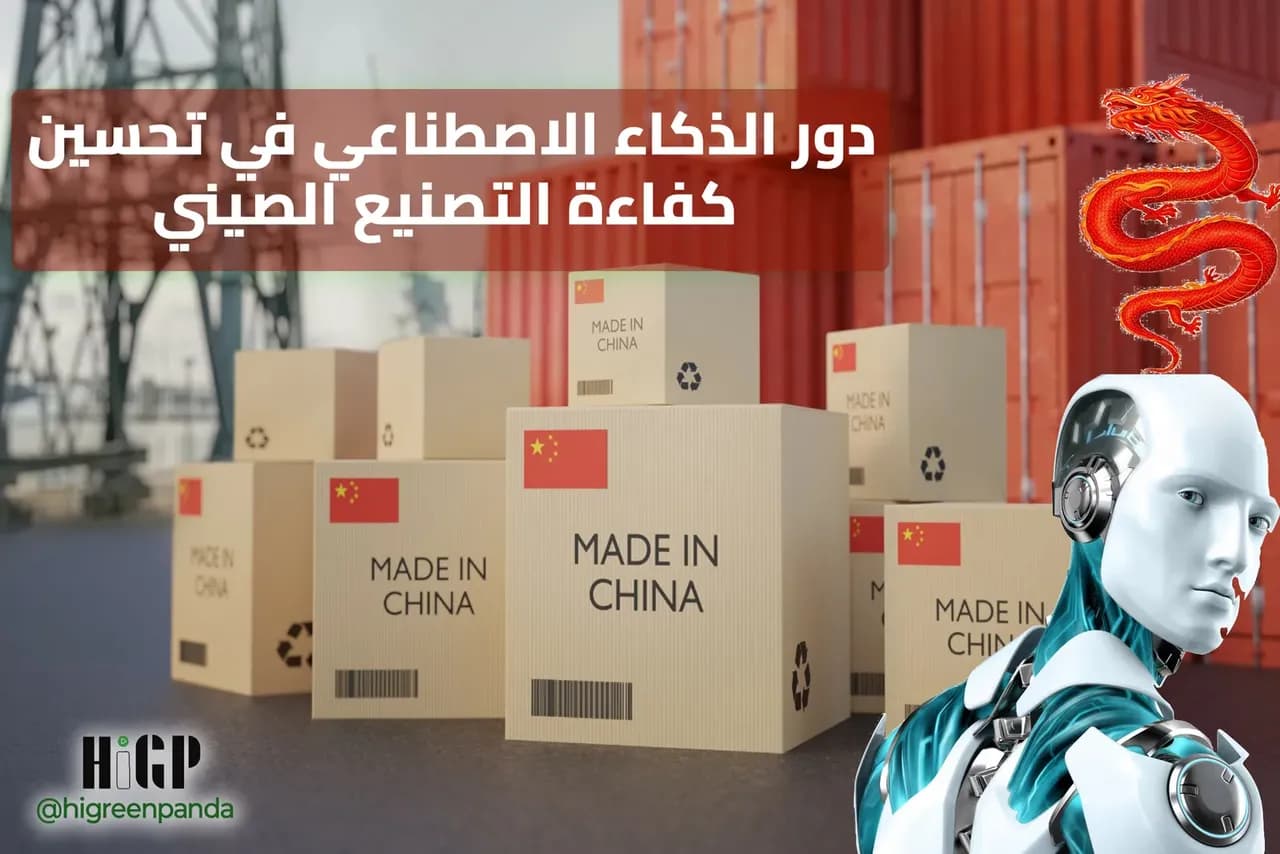
Your supplier tells you the factory now uses artificial intelligence, and the quotation is a little higher than last year. You want to know whether that means better goods and faster delivery, or just a new sales line. AI in Chinese manufacturing has moved from pilot projects to daily use in scheduling, inspection and maintenance. By the end of this guide you will know where it delivers real gains, what the figures show, and how to test a supplier's claims before you place an order.
How widely Chinese factories use AI
The picture of production lines crowded with workers is fading in China's more advanced plants. They increasingly run on automated equipment, sensors and software that learns from production data. The national effort has produced:
- 421 national-level model smart factories, used as reference sites for other manufacturers.
- More than 10,000 digital workshops and smart factories recognised at provincial level.
- An "AI +" initiative to push artificial intelligence into manufacturing and other sectors as part of digital transformation.
Behind the factories is a large technology base. China's core AI industry reached 578.7 billion yuan, about USD 80 billion, in 2023, supported by an ecosystem of 4,482 companies. That base supplies the software, cameras, chips and robots that factories install. For how this fits the national grading of smart factories, see how China leads the smart manufacturing revolution.
Keep the scale in perspective. China has hundreds of thousands of manufacturers, and many small and mid-sized workshops still depend on manual work and simple machines. A supplier in the same city as a model factory may run very differently. The gains described below apply to factories that have actually invested, not to Chinese industry as a whole.
Sectors where AI is most established
Adoption is furthest along in electronics, home appliances, vehicles and auto parts, batteries, steel and chemicals, and large textile groups. These are sectors with high volumes and expensive equipment, where a small gain in yield pays for the software quickly. Furniture, simple hardware, toys and many consumer goods still come mostly from smaller, more manual workshops. If you import across several categories, expect the level of automation to vary from one supplier to the next. Our overview of opportunities in China's manufacturing sector maps the main industries.
A worked example: Lenovo's factory in Hefei
The clearest public example is Lenovo's PC factory in Hefei, Anhui province. It handles more than 8,000 orders a day, most of them small custom orders with different specifications. Planning that mix by hand took hours and left orders waiting. Engineers developed a scheduling algorithm that works out the production plan automatically. The reported results were:
- Production scheduling time cut from 6 hours to 1.5 minutes.
- Production efficiency up by 16%.
- PC output up by 23%.
- Order backlog down by 20%.
Why this matters to an importer
The Hefei case shows that AI helps most where orders are many, small and varied. That describes a large share of Gulf import business: mixed containers, private-label runs and repeat orders with small changes. A factory that can reschedule in minutes rather than hours can fit your order in sooner and give you a more accurate delivery date. Ask suppliers how they plan production and how quickly they can confirm a date for a new order.
There is a second lesson. The algorithm worked because the factory already had clean, digital order data. A supplier that still takes orders by chat message and tracks them on paper cannot simply add AI. When you judge a factory, look at how it handles your order paperwork: a clear order confirmation, a production schedule and regular updates are signs that the systems underneath are in order.
Where AI improves efficiency on the factory floor
Most gains come from three uses. Each has a practical effect on what you receive.
Inspection during production
In textile plants, small robots mounted on the machines inspect fabric while it is being made, so faults are caught at once rather than after a whole roll is finished. AI visual inspection with cameras is spreading across electronics, metal parts and packaging, with reported inspection efficiency reaching around 95%. For you, that means fewer defective units reach the carton, though it does not replace your own inspection.
Predictive maintenance
Sensors track vibration, temperature and power use, and software warns engineers before a machine fails. Fewer breakdowns mean fewer unplanned stops, fewer late orders and more stable quality, because worn tools are replaced before they start producing faulty parts.
Planning and scheduling
As in Hefei, algorithms balance machine capacity, materials and deadlines. Well-run plants use this to quote realistic lead times and to recover faster when a material delivery is late.
What AI does not fix
AI makes good factories more efficient. It does not turn a weak supplier into a reliable one. A system trained on the wrong standard will reject the wrong things with great consistency. Specifications, materials, packaging and labelling still depend on the agreement between you and the factory, and on your checks.
- It does not choose the raw materials. Lower-grade fabric or thinner steel can pass an automated check if the check was not set up for them.
- It does not guarantee compliance with your country's standards or labelling rules.
- It does not remove the need for a signed contract, clear specifications and approved samples.
- It does not stop a factory from subcontracting your order to a less advanced workshop.
Our guide to contract manufacturing in China covers how to lock these points into your agreement.
How to judge a supplier's AI claims
Use these steps when a supplier says its factory uses AI or smart manufacturing.
- Ask what the system actually does: scheduling, visual inspection, maintenance or something else. Vague answers such as "our factory is intelligent" are a warning sign.
- Ask for a live video call from the production floor showing the inspection station or control screen while your product type is running.
- Ask for the defect rate and on-time delivery rate for the last 6 to 12 months, and how each is measured.
- Ask whether the factory is recognised as a model or smart factory at national or provincial level, and check the company name against the business licence.
- Confirm in the contract that your order will be produced at the named factory address and not subcontracted without your written consent.
- Book an independent pre-shipment inspection and compare its results with the factory's own data.
Questions to ask on the video call
- Which stations on this line are automated, and which still rely on workers?
- What does the inspection system check, and what happens to a unit it rejects?
- How is the reject rate recorded, and can you share last month's figure?
- How often are the machines serviced, and does a system warn you before a failure?
- How long does it take to switch the line from one product variant to another?
If you are thinking about longer-term involvement in this sector beyond buying goods, read about investment opportunities in China's technology sector.
Costs, prices and what to expect
AI and automation cost money to install, and factories recover that cost through volume. You may see three effects. Unit prices on large, repeat orders can become steadier because labour cost matters less. Minimum order quantities (MOQ) may rise at highly automated plants that prefer long runs. And lead times on standard products often become shorter and more predictable. Rising wages are a large part of why factories invest; how China's changing workforce affects manufacturing costs explains the trend. When you compare quotes, compare the full picture: price, MOQ, lead time, defect rate and how quickly the supplier responds when something goes wrong.
Reading a quotation from an automated factory
Ask the supplier to split tooling or mould costs from the unit price, and to state the MOQ per colour or variant, not only per order. Check whether the quoted lead time starts from deposit or from sample approval. If an automated factory quotes a much shorter lead time than others, ask for its recent on-time delivery rate before you plan a launch around it.
Common mistakes importers make
- Paying a premium for "AI" without asking what the system does or seeing it work.
- Dropping pre-shipment inspection because the factory has automated checks.
- Assuming the Lenovo results apply to every factory. They come from one large, well-funded plant.
- Choosing a highly automated plant for a very small first order, then facing a high MOQ or a long wait for a production slot.
- Not writing the factory address into the contract, leaving room for the order to be moved to a subcontractor.
What to do this week
Pick one current supplier and one you are considering. Send both the questions from the step list above and ask for a short live video from the line. Compare their answers with the quality and delivery record of your last orders. Write the factory address and a no-subcontracting clause into your next purchase contract, and book an inspection before shipment. If you want an independent team to check goods at the factory before they leave China, HiGreenPanda provides quality inspection in Shenzhen, Shanghai and surrounding manufacturing regions.
本文解答的问题
How is AI used in Chinese manufacturing?
The main uses are production scheduling, visual quality inspection and predictive maintenance. In textile plants, small robots on the machines inspect fabric during production. These tools reduce defects, breakdowns and delays in factories that have invested in them.
How big is China's AI industry?
China's core AI industry reached 578.7 billion yuan, about USD 80 billion, in 2023. It was supported by an ecosystem of 4,482 companies that supply software, hardware and services to manufacturers and other sectors.
What did AI change at Lenovo's Hefei factory?
The Hefei plant handles more than 8,000 mostly small custom orders a day. An in-house scheduling algorithm cut planning time from 6 hours to 1.5 minutes, raised production efficiency by 16%, increased PC output by 23% and reduced the order backlog by 20%.
Does AI mean better quality from Chinese suppliers?
It can, because automated inspection catches defects earlier and predictive maintenance keeps machines stable. It does not control raw materials or your specifications, so you still need clear contracts, approved samples and a pre-shipment inspection.
How many smart factories are there in China?
China has 421 national-level model smart factories and more than 10,000 digital workshops and smart factories recognised at provincial level. Under the national grading system there are also more than 30,000 basic-level smart factories.
HiGreen Panda Marketing