Shipping and logistics
Smart Ports in China: What Automation Means for Your Shipments
China's automated, connected and greener ports move cargo faster than ever. Here is how smart ports in China work, what they change for a Gulf importer's lead times and costs, and what still depends on you.
作者:萨米·哈吉里阅读约需 9 分钟
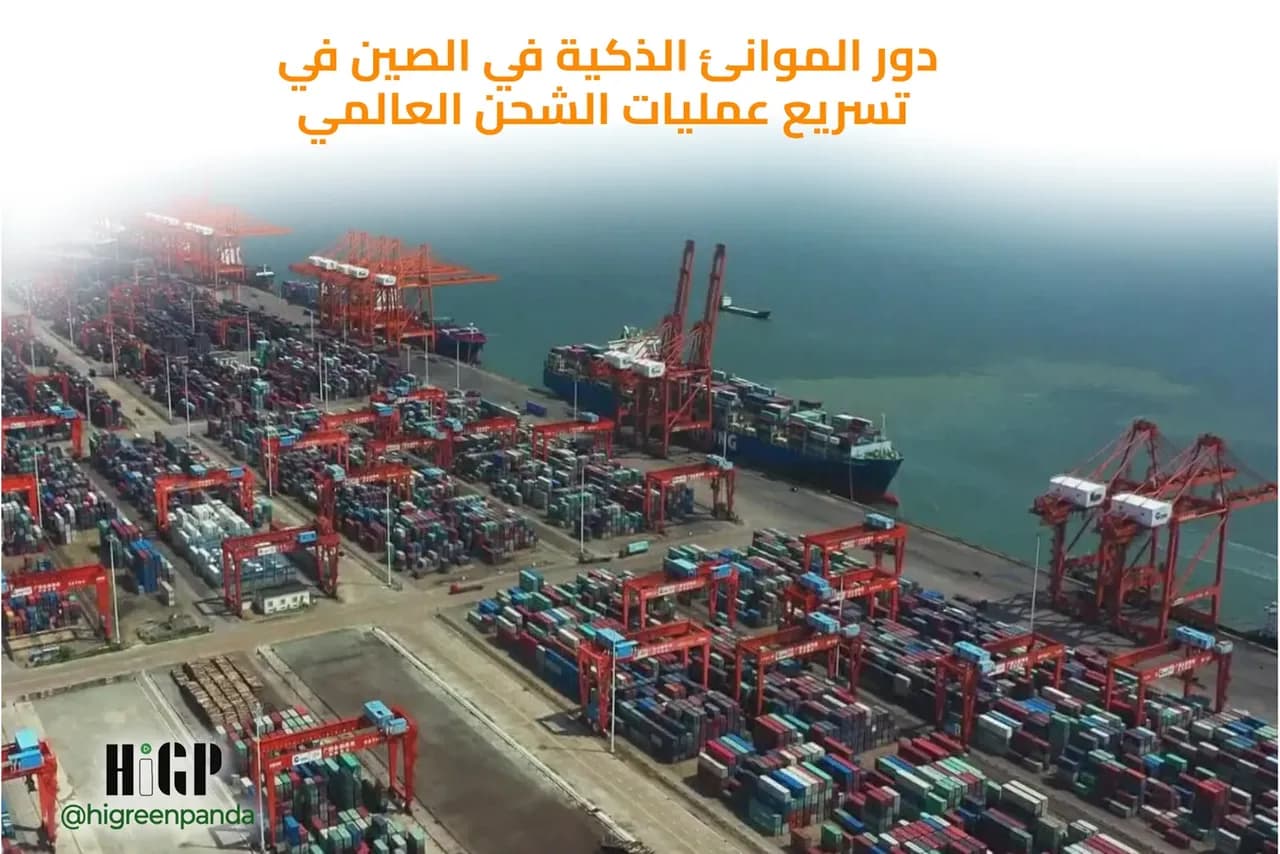
Your container can sit at a Chinese port for days because of a late document, or leave within hours of arriving at the gate. Which one happens depends partly on the port and partly on how well you prepare. Smart ports in China have automated much of the handling, but they reward importers who understand how they work. By the end of this guide you will know what these ports do differently, how that affects your lead times, and what you still need to get right yourself.
How big are China's ports?
In 2024, Chinese ports handled about 17.6 billion tonnes of cargo and around 330 million twenty-foot equivalent units (TEU) of containers. Those figures make China the world's leading port nation, first in both total cargo and container throughput. Several of the world's busiest container ports, including Shanghai, Ningbo-Zhoushan, Shenzhen, Qingdao and Guangzhou, are Chinese.
For you, scale means choice. Most major Chinese ports run frequent direct or transhipment services to Jebel Ali, Dammam, Jeddah, Sohar and other Gulf ports, so you can usually book space within a week outside peak season. Scale also means congestion when demand spikes, which is exactly the problem automation is meant to solve. For a port-by-port overview, read our guide to the role of Chinese ports in global trade.
What makes a port smart
A smart port uses automation, sensors, networks and data to move containers with fewer delays and fewer errors. China now has the world's largest concentration of fully automated container terminals.
Automated terminals
On an automated terminal, remote-controlled or automatic cranes lift containers off ships, driverless vehicles carry them across the yard, and software decides where each box is stacked. Terminals such as Shanghai's Yangshan deep-water port and automated terminals at Qingdao and Ningbo-Zhoushan are well-known examples. They can work around the clock with consistent speed, which shortens the time a ship spends at berth.
Integrated digital systems at Ningbo-Zhoushan
Ningbo-Zhoushan, one of the busiest ports in the world, shows how far digitalisation has gone. Its systems combine environmental sensing, advanced networks and 3D modelling of the terminal so that cranes, vehicles and yard operations work as one coordinated environment rather than separate tasks.
People still supervise
Automation handles most of the heavy lifting, from quay cranes to vehicle dispatch, but not every process is unmanned. Staff supervise remotely, step in when something unexpected happens and handle tasks where machines and people work together. That mix gives the port flexibility when weather, equipment faults or unusual cargo disrupt the plan.
Connected transport: getting goods from inland factories to the ship
A fast terminal helps little if your goods take a week to reach it. Chinese ports are built into the national transport network through multimodal links:
- Water-to-water: inland river barges, for example on the Yangtze and Pearl River systems, feed containers to seaports.
- Water-to-rail: sea-rail services connect ports with inland cities, so a container can be loaded at an inland railhead and travel by train to the port.
- Water-to-road: trucking links ports with factories, which remains the most common route for suppliers in coastal provinces.
Digital scheduling and dispatch platforms coordinate the handover between these modes, which improves turnover for very large cargo volumes. If your supplier is far inland, ask your forwarder whether a sea-rail or river route to the port is available and how its time and cost compare with trucking. Our article on the role of logistics and supply chain management explains how these inland legs fit into your overall plan.
Green ports and why they matter to buyers
The rapid growth of Chinese ports has come with green port programmes built into infrastructure planning. These focus on:
- Clean energy for port operations, such as electrified cranes and shore power so ships at berth can switch off their engines.
- Upgraded pollution prevention technology for dust, wastewater and emissions.
- Circular economy practices that reduce and reuse waste.
The aim is to cut carbon emissions and protect coastal ecosystems while ports keep growing. For most Gulf importers this does not change freight rates directly, but if your customers, a government tender or a European partner ask about the carbon footprint of your supply chain, ask your carrier or forwarder what emissions data they can provide for the route.
What smart ports change for your shipments, and what they do not
What improves
- Shorter ship turnaround at the port, which helps schedules hold.
- Better visibility: container status, gate-in and loading events are often visible online through the carrier or port system.
- More consistent handling, with fewer misplaced containers in the yard.
- Faster connections between inland transport and the ship.
What still depends on you
Automation does not fix incomplete paperwork, wrong HS codes or goods that are not ready. Carriers must file cargo information with customs before loading, and ports set document and container cut-off times, commonly 1 to 3 days before sailing. Miss them and your container is rolled to the next vessel, which can mean a delay of several days to a week. Nor does a fast Chinese port speed up clearance at your destination; transhipment through hub ports and congestion at home can still add days, especially for shipments to Yemen.
How to use China's smart ports to ship faster
- Pick the port closest to your supplier with a direct service to your destination. Shenzhen and Guangzhou usually suit Guangdong factories, Ningbo-Zhoushan and Shanghai suit Zhejiang and Jiangsu. A direct sailing often saves more time than a faster terminal.
- Ask your forwarder for the cut-off dates in writing. Plan production so goods are packed, inspected and delivered to the port before them.
- Book inspection early. Schedule the pre-shipment quality inspection at the factory several days before the container is due to be loaded, so there is time to fix problems.
- Send documents to the forwarder before the goods leave the factory. Commercial invoice, packing list and the booking details should match exactly.
- Get the container and bill of lading numbers. Use them to follow the container through gate-in, loading, departure and any transhipment.
- Prepare clearance at home in parallel. Send documents to your customs broker as soon as the ship sails so clearance can start before arrival.
Questions to ask your forwarder about the port
You rarely deal with the port directly. Your forwarder or the carrier does. That makes the questions you ask them the main way to benefit from a well-run port. Before you confirm a booking, get clear answers to these:
- Which port and which terminal will the container load at, and is the sailing direct or via a transhipment hub?
- What are the document cut-off and container gate-in cut-off dates for this vessel?
- What is the typical port-to-port transit time to my destination on this service, and how reliable has it been in recent weeks?
- How will I receive tracking updates, and will I get the container and bill of lading numbers on the day of loading?
- How many free days of storage apply at the Chinese port and at the destination port before charges start?
- If my goods are delayed at the factory, what happens to the booking and what does it cost to move to the next vessel?
- For LCL cargo, which consolidation warehouse will receive my goods, and what is its receiving cut-off?
Write the answers down and compare them across two or three forwarders on the same route. A quote that looks lower but uses a slower transhipment service, or gives fewer free days, can cost you more in the end. Free days matter at the destination too: if clearance takes longer than expected, storage and demurrage charges can quickly exceed any saving on the freight rate.
Peak seasons at Chinese ports
Even the most automated terminal cannot create vessel space. Demand usually rises in the weeks before Chinese New Year, as factories rush to ship before closing, and again in the months before the Western year-end holiday season. During these periods rates tend to rise and containers are more often rolled. If your order is flexible, shipping a few weeks earlier or later can save both time and money. Our comprehensive guide to logistics and shipping from China covers seasonal planning in more detail.
Common mistakes when shipping through Chinese ports
- Assuming an automated port means your container will ship on time regardless of paperwork.
- Choosing a port because its name is familiar rather than because it has a direct service to your destination.
- Ignoring inland transport time from the factory, especially for suppliers in central and western China.
- Booking space during the weeks before Chinese New Year without checking capacity and rate increases.
- Not asking for tracking numbers and relying on the supplier's word that goods have shipped.
Choosing the right forwarder avoids most of these. Our guide on how to choose a reliable shipping agent in China lists what to check.
Where smart ports fit in the wider trade picture
China's port investment is linked to its wider trade corridors, including overseas port and rail projects under the Belt and Road Initiative. For Gulf importers this has added shipping links and more routing options between China and the Middle East. Our article on the impact of the Belt and Road Initiative on global supply chains looks at what these routes mean for importers.
What to do next
This week, find out which port your current supplier uses and whether it has a direct service to your destination port. Ask your forwarder for the next two sailing dates, the document and container cut-offs, and the typical transit time, then compare them with your delivery commitments at home. If you want one team to plan the route, book the space and track your container from the factory gate, HiGreenPanda can arrange this through its shipping and freight service.
本文解答的问题
What is a smart port in China?
A smart port uses automation, sensors, data networks and software to handle ships and containers with fewer delays. In China this includes fully automated terminals with remote-controlled cranes and driverless yard vehicles, linked to digital scheduling systems for rail, road and river transport.
Which Chinese ports have automated terminals?
China has the world's largest concentration of automated container terminals. Well-known examples include Shanghai's Yangshan deep-water port and automated terminals at Qingdao and Ningbo-Zhoushan. Ask your forwarder which terminal your sailing uses.
Do smart ports make shipping from China faster?
They shorten the time ships and containers spend at the port and make schedules more reliable. They do not speed up your supplier's production, fix incorrect documents or shorten customs clearance at your destination, so total transit time still depends on your preparation and route.
How much cargo do Chinese ports handle?
In 2024, Chinese ports handled about 17.6 billion tonnes of cargo and around 330 million TEU of containers. That makes China first in the world for both total cargo and container throughput.
What are green ports in China?
Green ports are programmes to cut emissions and pollution while ports grow. They include clean energy for port equipment, shore power for ships at berth, better pollution controls and circular economy practices that reduce waste.
HiGreen Panda Marketing