Industries and sectors
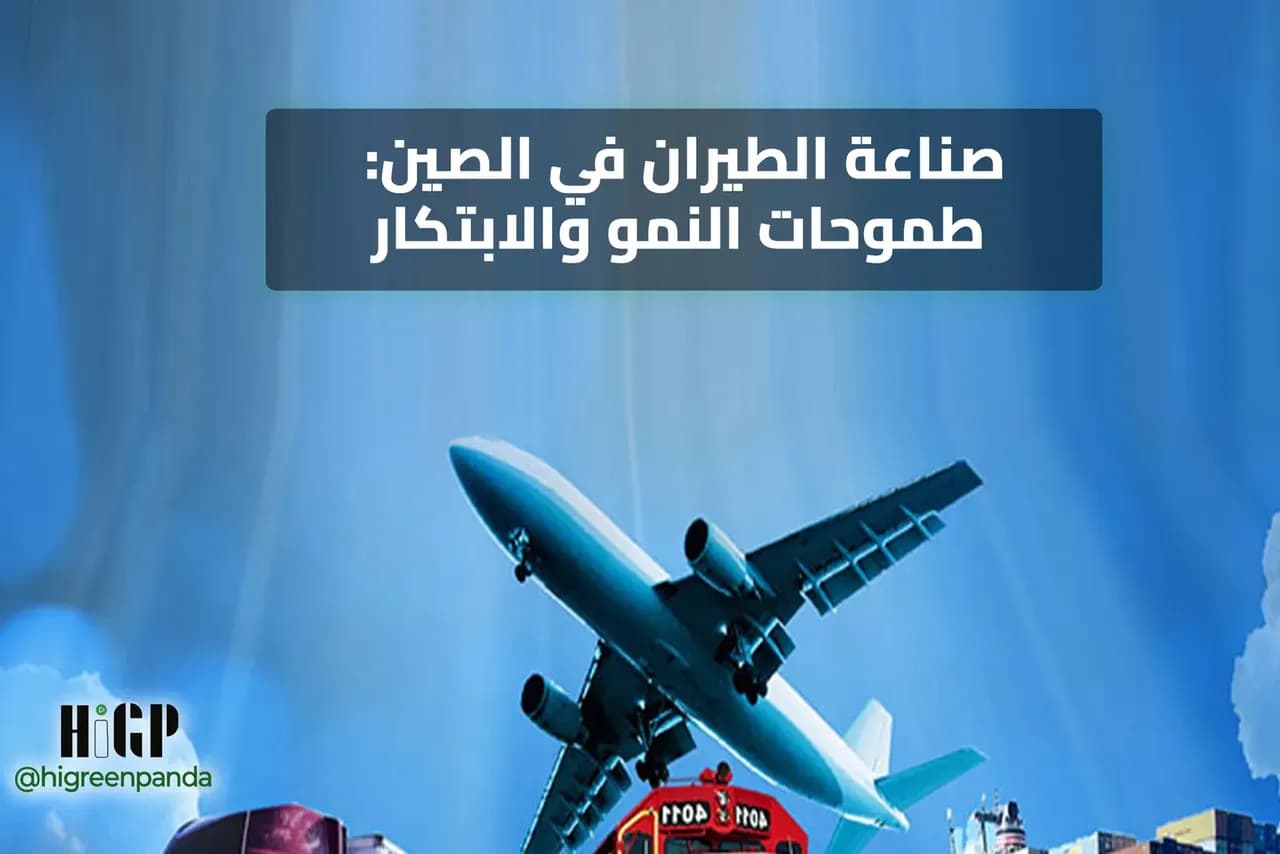
China Aviation Industry: Growth Ambitions, COMAC and Air Cargo
China has the world's largest domestic aviation market by seat capacity, 262 airports and a home-built jet in the C919. Here is what that growth means for your air cargo, business travel and aviation-related sourcing.
作者:萨米·哈吉里阅读约需 8 分钟
If you fly to China for trade fairs or send urgent samples and high-value goods by air, the China aviation industry affects your costs and timelines directly. It is also a sourcing market in its own right, from ground equipment to airport construction materials. This guide explains how big the sector is, where COMAC and the C919 stand, what still holds China back, and how to use its growing air cargo network to your advantage.
How big is China's aviation market
China's aviation ambitions are growing fast. A recent example is its push to persuade Vietnam to allow Chinese-built aircraft to operate there. At home, China overtook the United States in 2020 to become the largest domestic aviation market in the world by seat capacity.
Fleet, airports and capacity
- 4,335 transport aircraft in operation.
- 262 civil airports across the country.
- Total transport capacity of about 1.6 billion passengers a year.
- A government plan to raise the number of airports to 400 by 2035.
More airports mean more second and third-tier cities with direct flights. For you, that means factories in inland provinces such as Sichuan, Henan and Hubei are easier to visit in a day, and air cargo can leave from more locations than the traditional hubs of Shanghai, Guangzhou, Shenzhen and Beijing. Airport building is also a large construction market; our guide to China's construction industry covers the suppliers behind these projects.
COMAC and the C919
At the centre of China's aviation plans is COMAC, the Commercial Aircraft Corporation of China. It is a state-backed company with one clear task: to break the Boeing and Airbus duopoly in commercial jets.
The C919 narrow-body jet
The C919 is COMAC's flagship project. It is a narrow-body aircraft in the same class as the Airbus A320 and Boeing 737, seating roughly 158 to 192 passengers depending on layout. After years of development, it entered commercial service in 2023, with China Eastern Airlines flying the first passenger route in May of that year. Other large Chinese airlines have since ordered it.
The regional jet
COMAC's smaller ARJ21 regional jet, renamed the C909 in 2024, has flown with Chinese airlines for several years and with Indonesia's TransNusa since 2022. It is the model China has used first to test acceptance in neighbouring markets such as South-East Asia.
The challenges China's aviation sector still faces
Dependence on foreign technology
Despite real progress, the sector still depends on foreign technology, especially for engines and avionics. The C919 flies with CFM LEAP-1C engines from a US-French joint venture. China is developing its own engine, the CJ-1000A, but until it is certified, export controls and trade tensions remain a supply risk for COMAC.
International certification
International certification is a major obstacle. The C919 has done well at home, but its appeal to foreign airlines is limited by concerns over maintenance, reliability and regulatory approval. Without validation from regulators such as the European Union Aviation Safety Agency, most international airlines cannot operate it. Check EASA's published updates for the current status.
Air cargo and regional expansion
China's ambitions go beyond passengers to air cargo, where its lead in e-commerce gives it a natural advantage. Cross-border platforms ship millions of parcels by air every day, and dedicated cargo hubs such as Ezhou Huahu Airport in Hubei, opened in 2022, were built to serve them.
China's regional strategy and future outlook
Airports along the Belt and Road
The Belt and Road Initiative extends China's reach in aviation, with airport investments in Cambodia, Pakistan and the Maldives. These projects improve regional connectivity and bring partner countries closer to Chinese trade networks. For Gulf businesses, the same pattern shows in the steady growth of direct flights between Chinese cities and Dubai, Doha, Riyadh, Jeddah and Muscat, which carry both passengers and belly-hold cargo.
Future outlook
If COMAC gains international regulatory approval and grows its presence abroad, it could reshape the aviation industry in the way China transformed maritime trade. Until then, China's aviation sector is in a critical take-off phase, trying to reach cruising altitude in an industry dominated by giants. For your business, the near-term benefits are practical: more direct routes, more cargo capacity and more suppliers for aviation-related goods.
Watch three signals over the next few years: whether EASA or another major foreign regulator validates the C919, whether the CJ-1000A engine enters service, and whether a foreign airline outside China's immediate neighbourhood places a firm order. Any one of these would mark a real step from domestic success to international competition.
How to use China's air cargo network for your imports
Most of your goods should still go by sea. Air freight makes sense for samples, urgent restocks, high-value goods such as electronics and some fashion items, and anything where 20 to 30 days at sea would cost you a sale.
Air freight or express courier
Express couriers usually deliver door to door in 3 to 7 days and suit parcels up to around 100 kg. Airport-to-airport air freight suits larger shipments, usually from about 100 kg, and takes 3 to 10 days including customs clearance. Rates change with season, fuel prices and volume; they rise sharply before Chinese New Year, in the run-up to Black Friday and during major e-commerce sales such as 11.11. Ask for quotes by weight band (100 kg, 300 kg, 500 kg, 1000 kg) to see where the price per kilogram drops.
- Calculate volumetric weight: length x width x height in cm divided by 6000 for air freight, or by 5000 for most express couriers.
- Compare it with actual weight; you pay for whichever is higher, the chargeable weight.
- Get at least 3 quotes, each stating airport of departure, transit points, transit time and all surcharges.
- Confirm whether your goods contain lithium batteries, magnets, liquids or powders, which need special documents or are restricted by air.
- Prepare the commercial invoice, packing list and any certificates your destination requires.
- Book pick-up from the factory and ask for photos of the packed cartons before handover.
- Track the air waybill and arrange your customs broker at destination before the flight lands.
Our shipping and freight service handles air and sea bookings from Shenzhen and Shanghai, and HiGreenPanda can compare routes for you before you commit.
Sourcing opportunities linked to aviation
Airport growth in China and in the Gulf creates demand for products Chinese factories already make at scale: ground support equipment, baggage handling parts, airport lighting, seating, signage, security screening consumables and construction materials. China's investment in automation also shows in this sector; read about robots and AI in Chinese smart manufacturing to see where factory quality is improving fastest.
Certified aircraft parts are a different matter. Any part fitted to an aircraft needs an authorised release certificate, such as FAA Form 8130-3 or EASA Form 1, and must come from an approved organisation. Do not buy flight parts from general trading companies. For non-flight items, the usual contract manufacturing checks apply.
- Confirm whether your product is a flight part needing certification or a ground item.
- Ask for the factory's ISO 9001 certificate and, for aviation suppliers, AS9100.
- Check whether the buyer (an airport or airline) has an approved vendor list you must join first.
- Request references from other airport or airline customers.
- Plan a pre-shipment inspection against the tender specification.
Common mistakes
- Sending goods by air when sea freight plus better planning would have been enough.
- Ignoring volumetric weight and being surprised by the invoice for light, bulky cartons.
- Shipping lithium batteries by air without the right documents; they can be refused or held.
- Assuming the C919 can be bought or leased by Gulf airlines now; international certification is not complete.
- Buying aircraft parts without release certificates.
What to do this week
Review your last 6 months of air shipments and calculate how much you paid in volumetric weight versus actual weight. Ask two forwarders for weight-band quotes from Shenzhen or Guangzhou to your nearest airport. If you plan to visit suppliers, check which inland Chinese cities now have direct or one-stop flights from your country to save a day of travel. For more on the wider industrial picture, see our guide to opportunities in China's manufacturing sector.
本文解答的问题
How big is China's aviation industry?
China has 4,335 transport aircraft, 262 airports and capacity for about 1.6 billion passengers a year. It became the world's largest domestic aviation market by seat capacity in 2020, and plans to have 400 airports by 2035.
What is the COMAC C919?
The C919 is a narrow-body passenger jet built by the state-backed Commercial Aircraft Corporation of China. It competes with the Airbus A320 and Boeing 737 and entered commercial service with China Eastern Airlines in 2023.
Can foreign airlines fly the C919?
Not widely yet. The C919 still needs validation from major foreign regulators such as EASA, and airlines have concerns over maintenance and reliability. Check EASA's updates for the current certification status.
How long does air freight from China to the Gulf take?
Express couriers usually take 3 to 7 days door to door. Airport-to-airport air freight usually takes 3 to 10 days including customs clearance. Peak seasons such as Chinese New Year and year-end sales add delays and cost.
How is air freight charged from China?
You pay for the chargeable weight, which is the higher of actual weight and volumetric weight. Volumetric weight is length x width x height in cm divided by 6000 for air freight, or 5000 for most express couriers.
HiGreen Panda Marketing