Industries and sectors
China's Electric Vehicle Industry: A Decade to Global Leadership
In ten years China went from a follower to the leader of the electric vehicle industry. This guide explains how it happened and what it means for a Gulf buyer importing EVs, parts or chargers.
作者:萨米·哈吉里阅读约需 8 分钟
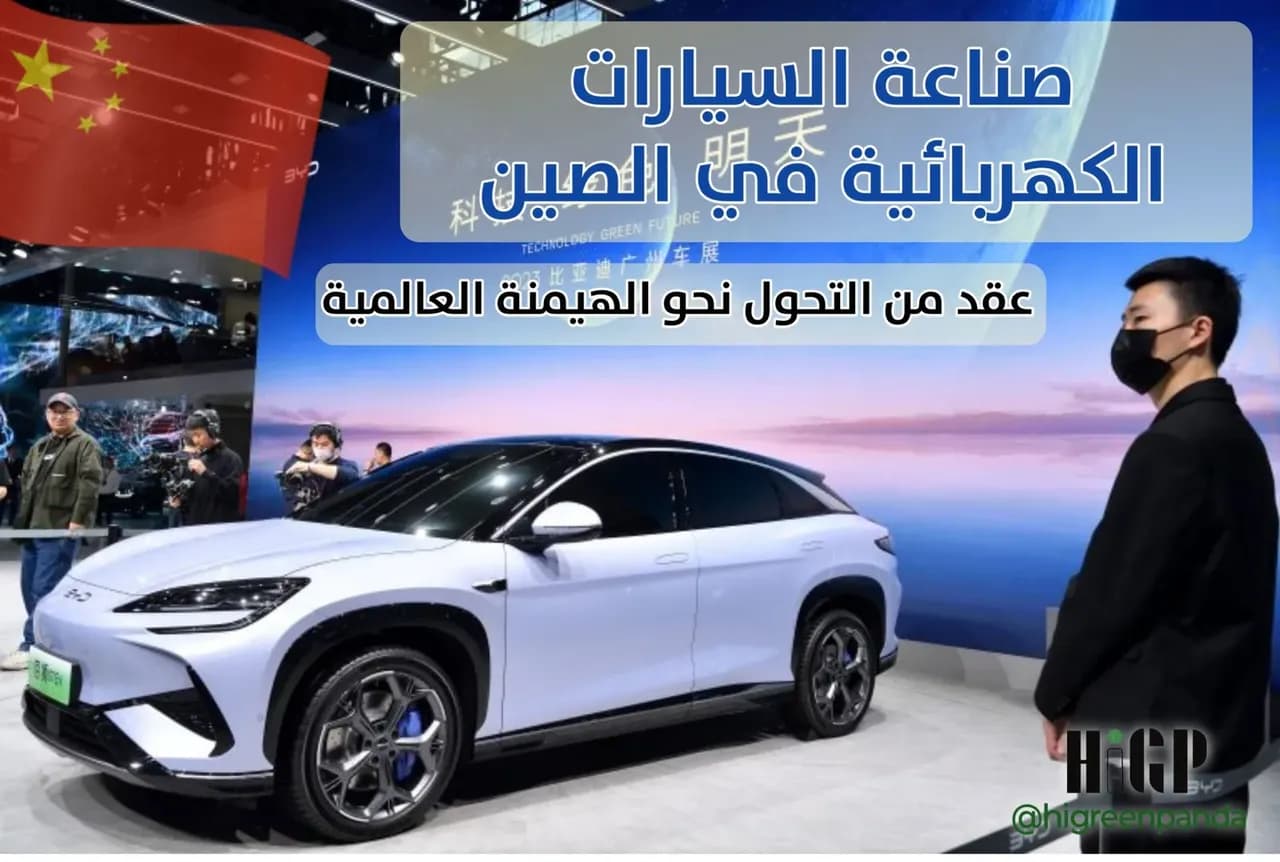
Chinese electric cars now sit in showrooms from Riyadh to Muscat, and suppliers message you daily with offers on vehicles, batteries and chargers. To judge those offers you need to know how China's electric vehicle industry grew so fast, who the serious players are, and what can go wrong between the factory and your port. By the end of this guide you will know the history in brief, the product categories worth importing, and the checks to make before you pay a deposit.
How China decided to lead in electric vehicles
In the last decade China made a strategic shift towards global dominance in electric vehicles. According to Bloomberg, the turning point was visible in 2014, when President Xi Jinping visited SAIC Motor Corp., one of China's largest carmakers. During that visit he stressed that developing new energy vehicles was central to China's ambition to lead the sector.
Bloomberg quotes Xi's words from a Xinhua report: 'The path to becoming a powerful nation in the automotive industry lies in developing new energy vehicles.' The speech did not come from nowhere. Bloomberg notes that guiding principles published in 2012 had already pointed the industry towards fuel-efficient and alternative energy vehicles, and they paved the way for the 2014 speech.
From humble beginnings
The starting point was small. According to Bloomberg, about 75,000 electric and hybrid vehicles were sold in China in 2014, and about 533,000 were exported in the same year. At that time foreign carmakers such as Volkswagen and General Motors dominated the Chinese market through joint ventures with local partners. Bloomberg notes that this foreign influence was crucial in turning China from 'a nation of bicycles to a nation of cars'. Local brands that worked without a foreign partner were seen as technically inferior.
Tesla's arrival changed the pace
Tesla entered China in 2019 and became the first foreign carmaker to build a complete electric vehicle manufacturing plant in Shanghai. Bloomberg describes this as a significant shift. The plant raised the bar on cost and quality, pulled a local supply chain up to its standard, and forced Chinese brands to innovate faster. Many of the battery, motor and electronics suppliers that grew around it now sell worldwide.
Where China's EV industry stands today
China is now the world's largest producer and exporter of electric vehicles and of the batteries inside them. Brands such as BYD, Geely, Chery, MG (owned by SAIC), Changan, NIO, Xpeng and Zeekr compete at home in a crowded market with frequent price cuts, which pushes them to look abroad. Since 2024 the United States and the European Union have raised tariffs on Chinese EVs, and that has made the Gulf, the wider Middle East and Africa more important to Chinese exporters.
Behind the cars sits the supply chain that gives China its edge: battery cells, battery management systems, motors, power electronics and charging equipment, much of it built on highly automated lines. The broader picture is covered in China's green energy sector, from solar to battery vehicles and in how China leads smart manufacturing.
Why battery chemistry matters in the Gulf
Chinese makers use two main battery types. Lithium iron phosphate (LFP) cells are heavier for the same range but tolerate heat better, last more charge cycles and cost less per kWh. Nickel-based (NMC) cells give more range for the weight but need more careful cooling. For taxis, delivery vans and buses in 45°C summers, LFP is often the safer choice. Whatever you buy, ask the supplier for the cell maker, the chemistry, the warranted number of cycles and the warranty terms in years and kilometres, and get the answers in the contract rather than in a chat message.
What a Gulf importer can buy from China's EV sector
- New vehicles through official channels: most large brands appoint one distributor per country. If a brand already has a dealer in your market, direct imports may face warranty, parts and registration problems.
- Export-registered used vehicles: China allows some nearly new cars to be registered and exported as used. Check your country's age limits and whether the car has a local warranty.
- Spare parts and consumables: brake pads, filters, tyres, body panels and lights for Chinese models already on Gulf roads. Demand grows as the fleet ages.
- Charging equipment: AC wallboxes of 7 to 22 kW for homes and offices, and DC fast chargers for fuel stations and car parks.
- Light electric vehicles: e-bikes, scooters, golf carts and low-speed utility vehicles for resorts, compounds and campuses.
Charging equipment and parts usually offer the easier start. The order sizes are smaller, the rules are clearer, and you avoid the dealer-rights problem that comes with cars. A first order of 20 to 50 wallboxes or a mixed pallet of fast-moving parts lets you test demand and after-sales support without tying up the capital a container of cars needs. Keep a record of every fault and return in the first six months; it tells you whether the supplier deserves a larger order.
How to import electric vehicles or EV equipment from China
- Confirm the rules at home first. Ask your customs broker about vehicle homologation, age limits for used cars, the duty rate (5% is common in the GCC) and any conformity certificate needed for chargers.
- Check the brand's distribution in your country. If an official distributor exists, ask the factory whether it will supply you at all, and in writing.
- Specify for Gulf conditions. Ask for GCC-specification vehicles or parts rated for ambient heat above 45°C, with suitable air-conditioning and battery cooling.
- Verify the supplier. For cars, trace the vehicle identification numbers and ownership documents. For chargers and parts, ask for the business licence, factory address and test reports.
- Order a sample or a single unit and test it in your market before a volume order.
- Book an inspection before the balance is paid. For vehicles, check battery state of health, software language and region settings, and body condition.
- Arrange freight suited to lithium batteries. Vehicles travel RoRo or in containers declared as dangerous goods, and battery packs need proper UN packaging and paperwork.
Sea transit from Shanghai or Shenzhen to Jebel Ali or Dammam usually takes 18 to 30 days, longer for Aden or Red Sea ports depending on routing. Dangerous-goods cargo can wait longer for space, so plan an extra week. A forwarder experienced in shipping and freight from China will know which lines accept battery cargo on your route.
Common mistakes when buying Chinese EVs and parts
- Buying a Chinese-market car whose software, navigation and voice control only work in Chinese and cannot be updated outside China.
- Assuming a car sold as new can be registered at home without checking homologation and the manufacturer's warranty in your country.
- Ignoring heat. Batteries and chargers rated for mild climates can derate or fail in a Gulf summer.
- Shipping batteries or battery-powered goods without dangerous-goods declarations, which leads to rejected bookings or fines.
- Buying chargers with the wrong plug standard or without the local conformity certificate.
- Paying the full price to a trader who cannot show where the vehicle came from.
Opportunities beyond trading cars
The biggest openings for Gulf businesses are often around the car rather than the car itself. Charging networks for residential compounds, fleet electrification for delivery and taxi firms, battery recycling and after-sales parts all need Chinese equipment and know-how. China's wider push into clean power, set out in China's renewable energy investment, means suppliers can bundle solar, storage and charging into one package.
The best way to meet these suppliers is in person. Auto China in Beijing and Auto Shanghai alternate each spring, and the Canton Fair in Guangzhou has sections for vehicles and parts. Visiting a factory tells you more than a catalogue: look at the test equipment, the warehouse and who else they export to.
What to do next
This week, decide which part of the EV chain fits your business: vehicles, parts, chargers or light vehicles. Call your customs broker to confirm the certificate, duty and any age limit that applies. Then request quotes and specifications from three suppliers and ask each one for export references in the Gulf. If you plan to visit China, HiGreenPanda can arrange trade fair accompaniment with interpreters and factory visits in Shenzhen and Shanghai. Before any order, fix the inspection date and the dangerous-goods paperwork with your forwarder.
本文解答的问题
How did China become the leader in electric vehicles?
Guiding principles in 2012 pointed the industry towards new energy vehicles, and in 2014 President Xi Jinping told SAIC that this was the path to becoming a powerful car nation. Tesla's Shanghai plant from 2019 raised standards and pushed Chinese brands to innovate faster.
Can I import Chinese electric cars to Saudi Arabia or the UAE?
Yes, but the car must meet local homologation and registration rules, and used cars may face age limits. If the brand has an official distributor in your country, direct imports can lose warranty and parts support. Confirm the rules with your customs broker first.
Are Chinese EVs suitable for Gulf heat?
Many models are sold in GCC specification with stronger air-conditioning and battery cooling. Ask for heat ratings in writing and avoid Chinese-market cars whose software and settings are not built for export.
How are electric vehicles shipped from China?
Vehicles travel by RoRo vessel or in containers declared as dangerous goods because of their lithium batteries. Transit to Gulf ports usually takes 18 to 30 days, and battery cargo can wait longer for space.
What EV products are easiest to import from China?
Spare parts and charging equipment are usually the simplest start. Orders are smaller, the conformity rules are clearer, and you avoid conflicts with the brands' official car distributors.
HiGreen Panda Marketing